Understanding Automation in AI Development Workflows
Automation in AI development workflows is revolutionizing the way organizations approach machine learning and artificial intelligence. By streamlining processes and enhancing productivity, automation allows teams to focus on innovation rather than mundane tasks. But what exactly does AI development workflow automation entail?
What is AI Development Workflow Automation?
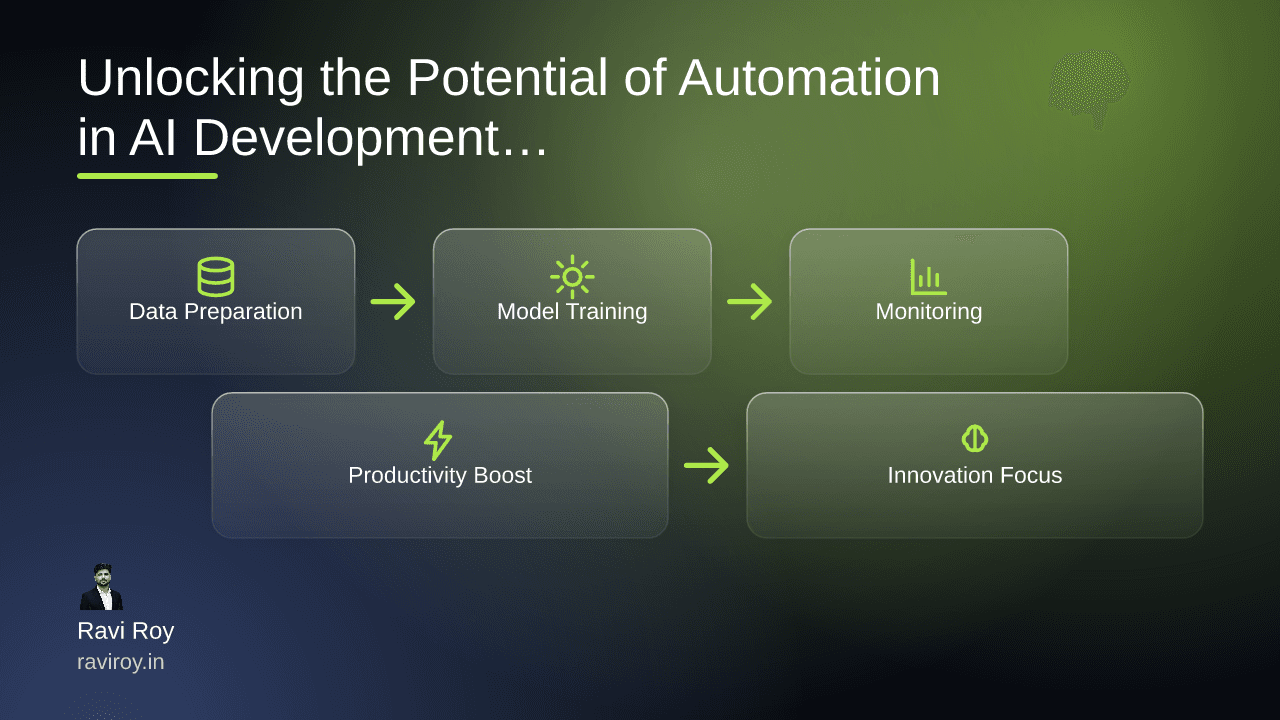
AI development workflow automation refers to the systematic integration of automation tools and techniques into the various stages of AI projects. This includes everything from data collection and processing to model deployment and monitoring. Key components include:
Data Preparation: Automating data collection, cleaning, and transformation to ensure high-quality inputs.
Model Training: Utilizing machine learning frameworks that automate hyperparameter tuning and model evaluation.
Monitoring: Implementing tools that continuously evaluate models to ensure they meet performance standards.
The role of automation is pivotal in enhancing productivity within AI projects. For example, manual data cleaning can take hours or even days, but automation reduces this to mere minutes, allowing teams to focus on more strategic aspects of AI development.
How Automation Differs from Traditional Automation
Traditional automation methods often focus on repetitive, rule-based tasks, like data entry or basic calculations. In contrast, AI workflow automation is tailored to the complexity of machine learning processes. Unlike rule-based automation, AI systems can learn from data, adapt to changes, and make decisions based on the insights derived from that data. This flexibility fosters creative problem-solving and accelerates development cycles.
Benefits of Automating AI Development Workflows
The shift towards automation in AI development brings tangible benefits that are reshaping how teams operate.
Increased Efficiency and Accuracy
One of the hallmark advantages of automation is its ability to significantly reduce manual errors in AI tasks. By minimizing human intervention, automation enhances accuracy in data preparation and model training. For instance, using automation tools can ensure consistent data cleaning processes, resulting in more reliable models and quicker iterations.
Streamlined Collaboration
Automation fosters better collaboration among cross-functional teams. By integrating tools that enable real-time data sharing and communication, team members can better align their efforts. Tools like Jupyter Notebooks integrated with collaborative platforms allow data scientists and engineers to work together seamlessly, thus preventing bottlenecks that can occur in manual workflows.
Enhanced Scalability
As AI applications grow, the need for scalability becomes crucial. Automation allows organizations to easily scale their AI operations without compromising on quality. For instance, cloud-based machine learning platforms can automatically provision resources based on demand, allowing for cost-effective scaling that traditional methods may struggle to achieve.
Key Areas for AI Application in Development Workflows
Several critical areas benefit greatly from automation, inevitably transforming the landscape of AI development.
Data Preparation and Cleaning
Automating data preparation processes is essential given the vast volumes of data that AI projects handle. Advanced automation tools can clean and organize data according to specified parameters, integrating error-checking features that ensure only the best quality data is fed into models.
Model Training and Testing
Automation plays a crucial role in optimizing model training and testing procedures. Automated hyperparameter tuning, for example, allows algorithms to efficiently search through possible configurations without manual input, drastically reducing the time to find optimal models. Continuous integration and continuous deployment (CI/CD) pipelines can help streamline testing, ensuring that every model undergoes rigorous evaluation before deployment.
Deployment and Monitoring
Once models are deployed, continuous monitoring is essential. Automated tools can track model performance in real-time, alerting teams to potential issues before they impact the end-users. This proactive approach facilitates quick remediation steps, ensuring that AI applications maintain their performance levels without requiring excessive human oversight.
Challenges in Implementing AI Workflow Automation
Despite the clear benefits, implementing AI workflow automation comes with its own set of challenges.
Technical Hurdles
Deploying automation tools can encounter various technical challenges, from compatibility issues with existing systems to the complex nature of tools required to automate machine learning processes. Organizations must ensure that their infrastructure can support the added capabilities without causing disruptions.
Cultural Resistance in Teams
Cultural resistance is another significant hurdle. Team members familiar with traditional workflows may resist adopting new automation technologies. It's vital to communicate the long-term benefits and provide adequate training to build confidence in the new processes.
Integration with Existing Systems
Integrating new automation systems with legacy technologies often poses a major challenge for organizations. The underlying platforms may not support the advanced features required for seamless AI automation, necessitating investments in new technologies or significant upgrades to existing systems.
Emerging Trends in Automation for AI Development
As the landscape of AI continues to evolve, several emerging trends are shaping the future of automation in development workflows.
MLOps and Its Role in Life Cycle Management
MLOps, or Machine Learning Operations, has emerged as a critical framework in managing the machine learning lifecycle. It aims to streamline collaboration between data science and operations teams, ensuring that automated processes are maintained throughout the model’s lifecycle. This includes version control, monitoring, and model deployment.
The Rise of AI-Native Development Approaches
AI-native development approaches are transforming traditional workflows by focusing on systems that are inherently designed for AI projects. This evolution includes techniques like low-code platforms that allow rapid development and deployment without the need for extensive programming knowledge.
Sustainable Green AutoML Techniques
The push for sustainability is influencing automation strategies in AI. Green AutoML techniques aim to minimize the environmental footprint of machine learning processes, making it essential for organizations to not only optimize performance but also consider energy efficiency in their automated operations.
Real-World Case Studies of Automated AI Workflows
To truly grasp the impact of automation in AI workflows, let's explore some real-world applications.
Industry Examples
One notable example comes from the healthcare sector, where an innovative AI company automated the analysis of medical images. By streamlining data processing and model training, they achieved a tenfold increase in efficiency, drastically reducing the time from data ingestion to diagnosis. Similarly, in the e-commerce industry, automation tools have been applied to optimize inventory management through predictive analytics, enabling precise demand forecasting.
Lessons Learned from Automation Implementations
From various implementations, it’s clear there are common pitfalls to avoid. Over-automation can lead to loss of oversight, while under-automation can prolong inefficiencies. Best practices include phased implementation of automation tools and continuous performance evaluations to refine processes based on feedback.
Conclusion
Automation in AI development workflows holds the promise of transforming how we build and scale AI applications, increasing efficiency and accuracy while enabling collaboration and sustainability. The key to leveraging this potential lies in understanding the benefits, challenges, and best practices associated with implementing automation.
What specific automation tools or strategies have improved your AI development workflow?
💬 Join the conversation — share your take in the comments and tell us what you’d add.