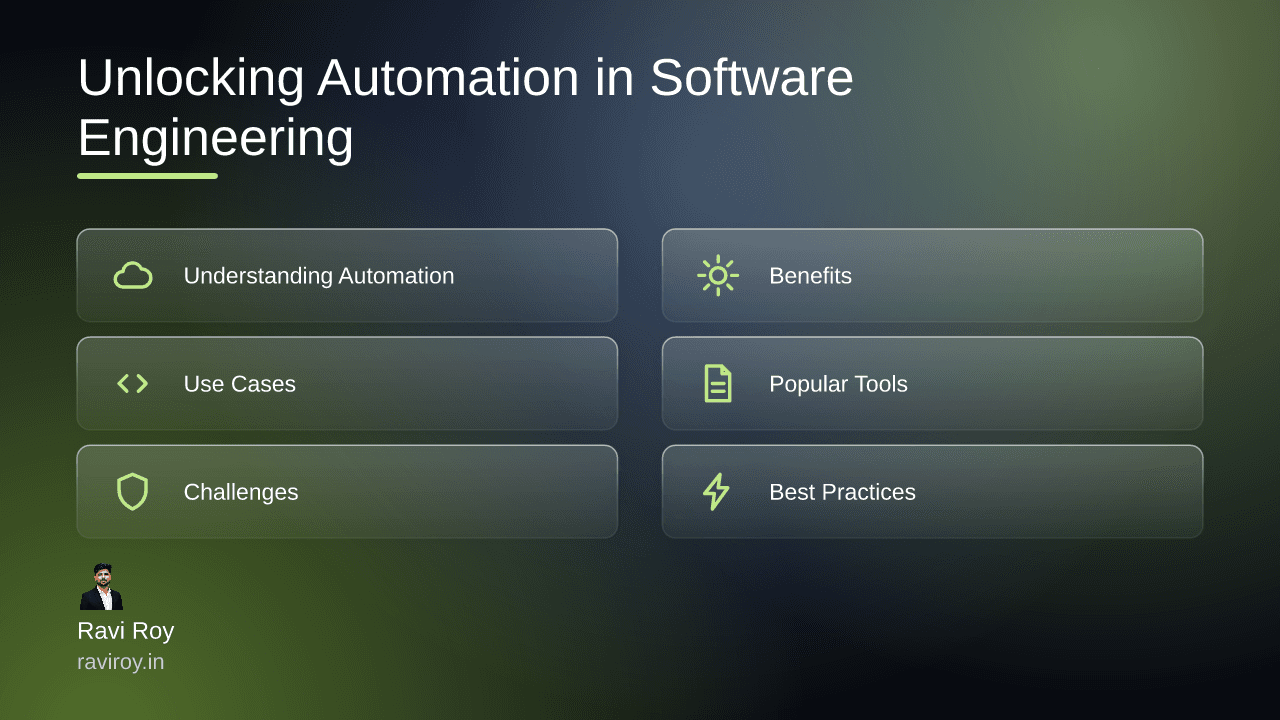
Unlocking Automation: The Power of Cloud-Based Automation in Software Engineering
Software engineering is in the midst of an evolution where speed and efficiency are paramount. With cloud-based automation taking center stage, engineers are not just improving their workflows; they’re transforming how teams collaborate and innovate.
Understanding Cloud-Based Automation
What is Cloud-Based Automation?
Cloud-based automation refers to the use of cloud computing resources to automate various software engineering processes. This approach streamlines workflows, enhances productivity, and reduces the risk of human error. By centralizing automation, teams can develop, test, and deploy applications faster and more reliably.
Key Components of Cloud Automation
Central to cloud-based automation is Infrastructure as Code (IaC). IaC allows engineers to manage and provision IT infrastructure through code, making deployments repeatable and error-free. This fundamental practice enables quicker adjustments and scaling in a cloud environment.
Additionally, cloud automation shines in multi-cloud and hybrid environments. By leveraging diverse cloud services, organizations can optimize costs and performance. For instance, deploying a highly available application across multiple clouds ensures redundancy and resilience.
Benefits of Cloud-Based Automation
Increased Efficiency
Automation helps eliminate repetitive manual tasks, reducing the time developers spend on mundane operations. Automated testing and infrastructure provisioning allow them to focus on coding and innovation. According to research, teams practicing automation can decrease deployment times by up to 90%.
Enhanced Security with Automation
Data security is a top priority for all software engineering teams. Cloud automation plays a critical role in enhancing security by enabling consistent configurations and automated compliance checks. For example, automating security updates helps mitigate vulnerabilities without manual intervention, ensuring a more secure coding environment.
Cost Savings
One of the most compelling advantages of cloud-based automation is the potential for cost savings. Automation reduces the likelihood of errors, which are often costly in terms of downtime and the resources needed for remediation. Organizations can also optimize their cloud resource usage, minimizing excess spending on unnecessary services.
Common Use Cases of Automation in Software Engineering
DevOps Integration
DevOps is fundamentally about improving collaboration and sync between development and operations. Cloud-based automation allows teams to automate everything from code checks to deployment workflows, fostering a culture of continuous integration and continuous deployment (CI/CD). This synergy helps teams deliver new features faster and resolve issues quickly.
Serverless Architectures
Serverless architectures are another area where automation shines. They allow software engineering teams to build and deploy applications without worrying about the underlying infrastructure. For example, using AWS Lambda, developers can execute code in response to events without provisioning servers, significantly reducing deployment complexity.
CI/CD Pipelines
Continuous Integration and Continuous Deployment (CI/CD) pipelines are integral to modern software development. Automation within CI/CD allows for rapid testing and deployment, making it easier to push updates or new features. Integrating tools like Jenkins or CircleCI can facilitate automated build, test, and deployment processes, enhancing overall software quality.
Popular Tools for Cloud-Based Automation
Top Automation Tools
When discussing cloud-based automation, a few tools consistently stand out:
AWS Lambda: A serverless compute service that runs code in response to events and automatically manages the compute resources.
Terraform: An open-source tool for building, changing, and versioning infrastructure safely and efficiently. It enables the practice of IaC.
Jenkins: A well-known automation server used to automate building, testing, and deploying software.
Comparison of Automation Solutions
Choosing the right tool requires careful consideration. For example, AWS Lambda is excellent for event-driven functions, while Terraform excels in configuring infrastructure. Jenkins offers a flexible automation platform with extensive plugin support but requires more setup and resources. Understanding the specific needs of your project is critical in selecting the right solution.
Challenges of Cloud-Based Automation and Solutions
Common Challenges
Despite its benefits, organizations face challenges when implementing cloud-based automation. Complexity in tools, cost of implementation, and security concerns can hinder progress. Understanding these obstacles is essential for effective implementation.
Addressing Integration Issues
To address integration challenges, teams can adopt a unified strategy where automated processes are clearly defined and documented. Additionally, investing in training for staff ensures everyone can leverage the tools effectively, thus promoting a collaborative approach to automation.
Best Practices for Cloud Automation
Establish Clear Objectives
Before diving into automation, it's crucial to establish clear objectives. Identify which processes can be automated and set KPIs to measure success. This clarity eliminates wasteful efforts and focuses resources on achieving tangible results.
Implementing Continuous Monitoring
Even after automating, continuous monitoring is vital. Automated systems need regular checks for effectiveness and efficiency. Implementing logging and alerting systems can help ensure automation remains aligned with business goals.
Documentation and Knowledge Sharing
Good documentation fosters collaboration and ensures that team members can understand and utilize automation processes effectively. Establish a culture of knowledge sharing where teams can discuss successes and challenges openly, helping improve overall strategies.
The Future of Cloud-Based Automation
Trends to Watch
The field of cloud-based automation is continually evolving. Key trends include edge computing, which brings computation closer to data sources, and event-driven architectures that enable systems to react in real-time to user interactions.
Role of AI and Machine Learning
Artificial intelligence and machine learning are reshaping automation. These technologies can enhance operational efficiency by predicting issues before they arise and automating decisions based on real-time data.
As cloud-based automation continues to grow, organizations that harness these advancements will be better equipped to adapt and thrive.
Have you encountered specific challenges or successes with cloud-based automation in your projects? What tools or strategies have you found most effective?
💬 Join the conversation — share your take in the comments and tell us what you’d add.