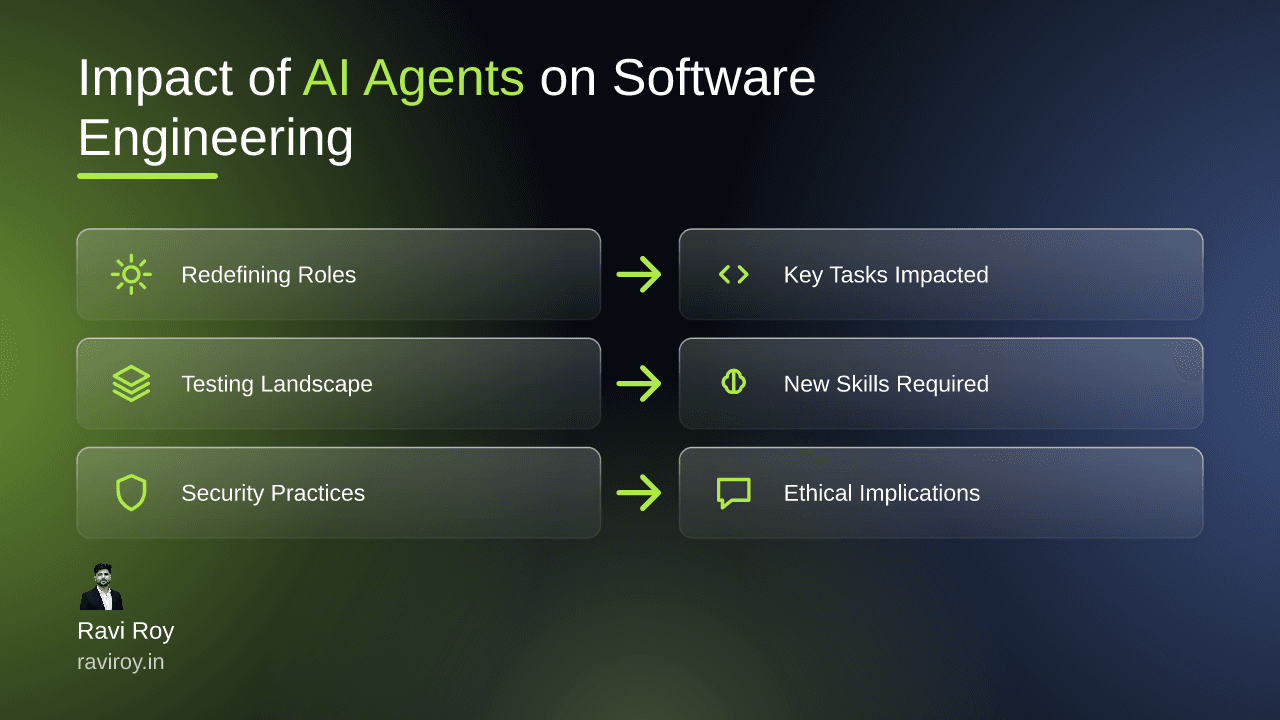
Understanding the Impact of AI Agents on Software Engineering Practices
Imagine walking into a software engineering workplace and finding AI agents handling code reviews, bug detection, and even design suggestions. This isn’t a scene from a sci-fi movie; it’s the emerging reality of the software engineering landscape today. As AI agents become integral to the development process, they are not just tools; they are reshaping the very fabric of software engineering roles.
How AI Agents Redefine Software Engineering Roles
The Shift from Developer to Orchestrator
Traditionally, software engineers were tasked primarily with writing code. In today's AI-augmented world, their role has evolved significantly. Engineers are now becoming orchestrators, integrating various AI tools into the software development lifecycle (SDLC). This shift allows them to focus more on system design and high-level decision-making rather than getting bogged down in repetitive coding tasks.
By leveraging AI's capability to handle mundane chores, engineers can now prioritize creative problem-solving and strategy, ensuring that their roles are not only more efficient but also more fulfilling. It's about understanding how to capitalize on AI capabilities rather than simply incorporating them into existing roles.
New Responsibilities in the Age of AI
With this new orchestration role, engineers are tasked with understanding and managing a diverse range of AI tools. They must learn how to select the right AI systems, set up workflows, and maintain the quality of AI-generated outputs. This shift introduces a fresh set of responsibilities that emphasize an engineer's ability to assess risks and manage systems, rather than solely producing software code.
Key Tasks Impacted by Agentic AI Systems
Automation in the Software Development Lifecycle (SDLC)
AI agents have ushered in a new era of automation within the SDLC. From automating code reviews to bug detection and even deployment, these agents can take over the repetitive tasks that once consumed significant portions of developers' time.
For instance, AI-driven code review tools can run instantly on each commit, providing feedback that might take a human reviewer hours to compile. This not only enhances the speed of development but also improves the overall quality of the code being produced.
Enhanced Code and Design Suggestions
Another transformative impact of AI is its ability to offer real-time code and design suggestions. Intelligent code generation tools can analyze existing codebases and provide contextual recommendations, allowing engineers to make informed decisions quickly.
For example, when writing a function, an AI tool can suggest the best practices or even complete the function based on patterns observed in similar implementations. This streamlines the development process considerably, making it much easier for engineers to adhere to industry standards and best practices.
Changing Landscape of Software Testing with AI Agents
AI-Driven Testing Tools
With AI agents, testing isn't just about finding bugs anymore; it's about implementing sophisticated testing strategies. Machine learning algorithms can now predict where bugs are likely to reside based on historical data, enabling targeted testing.
For instance, anomaly detection can be employed to automatically identify when an application behaves unexpectedly, helping teams rectify issues before they impact the user experience.
Continuous Integration and Deployment Enhancements
The introduction of AI also enhances continuous integration and deployment (CI/CD) processes. By analyzing past deployments and learning from outcomes, AI agents can identify the most efficient paths for upcoming releases, thereby facilitating faster integrations across development cycles.
Imagine setting up a CI/CD pipeline with AI agents that can predict potential integration issues before they arise—this not only saves time but significantly reduces stress for development teams.
New Skills Required for Working with AI Agents
Understanding AI and ML Fundamentals
As software engineers embrace AI agents, acquiring knowledge of AI principles and machine learning becomes paramount. Understanding algorithms, data structures, and the underlying mechanics of AI tools will empower engineers to make better decisions in how they integrate and manage these systems.
This upskilling ensures that engineers are not left behind but are rather equipped to engage actively with AI technology, fostering a symbiotic relationship between human and machine.
Data Management and Ethics in AI
The ethical implications of AI usage are increasingly critical. Engineers must navigate the complexities of data management, ensuring that they use data responsibly and transparently. Issues such as data privacy, consent, and bias must be at the forefront of their considerations.
Learning to identify biases in AI algorithms is essential to mitigate risks and ensure fair outcomes in software applications. As AI continues to evolve, so must the ethical standards by which engineers operate.
AI Agents and Software Security Practices
Identifying Vulnerabilities through AI
AI agents are becoming invaluable in the realm of software security, primarily by identifying vulnerabilities in real-time. These tools can analyze code for security flaws and flag potential risks before they escalate into serious problems.
For example, a secure coding AI can automatically scan codebases for common vulnerabilities such as SQL injection and XSS, providing developers with instant feedback. This proactive approach helps organizations maintain robust security standards while minimizing human oversight errors.
Automated Security Auditing
Automation extends to security auditing as well. By streamlining audit processes, AI agents can significantly decrease human error and enhance the consistency of security evaluations. This not only saves time but also elevates the overall security posture of the organization.
Imagine running an AI audit that can assess dozens of security parameters across various applications in minutes, compared to the days or weeks it would take a human auditor. Such capabilities dramatically improve the reliability of security measures.
Ethical Implications and Limitations of AI Agents
Addressing AI Bias
While the benefits of AI agents are considerable, the risks associated with AI bias must be carefully monitored. AI systems trained on biased data sets can produce erroneous outputs that perpetuate inequalities or inaccuracies in software.
Addressing these biases requires a conscious effort from software engineers to regularly evaluate and monitor the data used in AI training processes. Continuous assessment helps ensure that AI-generated outputs remain reliable and equitable.
Challenges in AI-Generated Code Quality
Another limitation worth noting is the quality of AI-generated code. While AI can be remarkably efficient, it doesn't always guarantee reliability. Engineers must evaluate the quality and performance of AI-generated snippets thoroughly to avoid unforeseen problems.
For instance, if an AI tool generates code without adequate context, the result could be subpar. Thus, engineers should prioritize thorough testing and validation to ensure AI-enhanced output meets their coding standards.
Real-World Implementations: Case Studies
Successful Examples of AI Integration
In practical applications, several organizations have reaped significant benefits from AI integration into their workflows. For example, a major tech company implemented AI-driven code review tools that reduced the average review time by 60%, allowing engineers to focus on more complex tasks.
Another case involved using AI to optimize resource allocation in project management, leading to improved project delivery times and enhanced team productivity. These success stories highlight the transformative potential AI brings when embedded within software engineering practices.
Lessons Learned from AI Failures
Conversely, the journey isn't without its pitfalls. Exploring AI project failures, a prominent fintech company’s initiative to automate customer service via an AI chatbot provides valuable insights. This project suffered from a lack of context awareness, resulting in frequent user frustrations.
The key takeaway? Engineers must not only implement AI tools but also ensure they are contextually aware and effectively trained. Monitoring and iterating post-implementation are crucial to harnessing AI's full potential without falling victim to its limitations.
Conclusion
The influence of AI agents in software engineering practices is undeniable, reshaping everything from roles to responsibilities, and even security protocols. As engineers embrace their new orchestrator role, understanding the challenges and advantages becomes crucial for navigating this evolving landscape.
What challenges or successes have you experienced with AI agents in your software engineering projects? Share your stories and insights below!
💬 Join the conversation — share your take in the comments and tell us what you’d add.