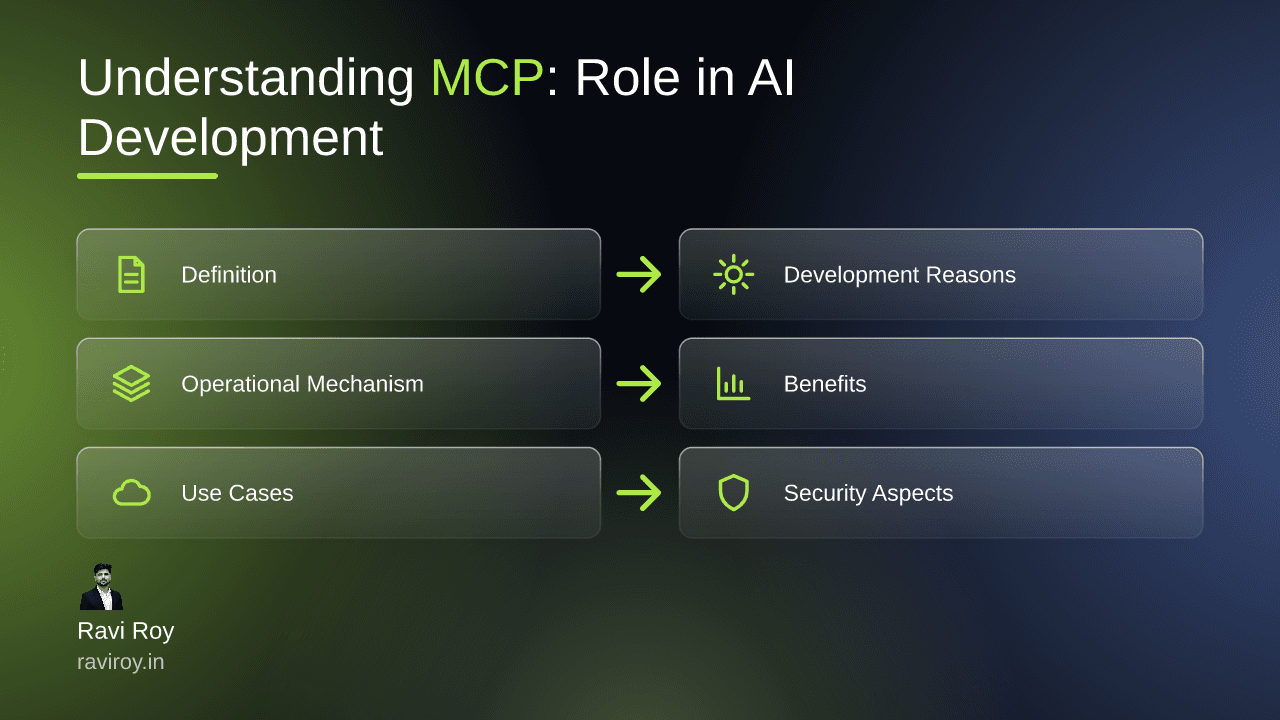
What is the Model Context Protocol (MCP)?
Introduction to MCP
The Model Context Protocol (MCP) is revolutionizing the way AI systems interact with data, providing a standardized framework that streamlines communication and enhances functionality. At its core, MCP is designed to facilitate seamless interactions between different AI models and data sources, enabling these systems to work together more effectively. This newfound synergy is crucial for improving decision-making and ensuring real-time access to relevant information.
Key Features of MCP
MCP's primary features include:
Standardization of Interactions: By creating a common set of rules for how AI systems communicate, MCP eradicates the inconsistencies that often plague AI models, leading to smoother integrations.
Enhanced Real-Time Information Access: With MCP, AI systems can tap into a wealth of live data, making their outputs more accurate and timely. This capability is particularly essential in fast-paced industries where decisions based on outdated information can lead to significant issues.
Why Was MCP Developed?
Addressing Major Challenges
The inception of MCP was a response to several pressing challenges in AI development. As AI systems became more complex, issues such as fragmented data access, inconsistent model performance, and a proliferation of information silos emerged. Without a cohesive framework like MCP, these challenges stifled innovation and hampered productivity.
The Evolution of AI Needs
As AI applications started penetrating various industries, the need for reliable and coherent information became paramount. Traditional methods led to frequent hallucinations—instances where models generated convincing but incorrect responses—due to fragmented data. MCP aims to address these issues by providing a cohesive interface that reduces complexity across AI workflows, thereby improving accuracy and reliability.
How Does MCP Work?
Core Components of MCP
Understanding the architecture of MCP reveals its robust capabilities. At its core, MCP consists of:
Contextual Adaptors: These adaptors translate input data into a format that is easily understood by different AI models. By framing data according to the context of its intended usage, MCP enhances comprehension and relevance.
Communication Protocols: MCP utilizes state-of-the-art communication standards to ensure quick data transfer between systems. This minimizes downtime and increases overall system efficiency.
Integration with AI Systems
Integrating MCP into existing AI frameworks may seem daunting, but its design is inherently supportive of various architectures. By using RESTful APIs, developers can streamline the integration process, allowing for efficient data flow. For instance, an AI healthcare assistant could utilize MCP to pull up-to-date patient medical records across multiple hospitals in real-time, facilitating timely interventions.
{
  "context": "healthcare",
  "adaptor": "medical_records_adaptor",
  "data_source": "patient_database",
  "desired_output": "latest_patient_info"
}
Benefits of Using MCP
Enhanced AI Capabilities
One of the most significant advantages of incorporating MCP is the significant improvement in AI decision-making capabilities. By providing access to real-time data and standardizing interactions, MCP allows AI systems to make informed decisions quickly, reducing the risk of errors.
Streamlining Workflows
MCP also simplifies complex workflows that involve multiple AI models, enabling automation across tasks. This can lead to faster product development cycles and eliminate unnecessary redundancies. For example, in finance, a company may use MCP to automate risk analysis, ensuring timely insights into market changes and potential impacts.
Applications and Use Cases of MCP
Broad Industry Adoption
Industries are rapidly adopting MCP to harness its capabilities. From finance to healthcare, organizations leverage this protocol to improve outcomes and drive efficiencies. For example, MCP is instrumental in automating compliance checks in financial services, ensuring that regulations are met without manual intervention.
Specific Use Cases
Healthcare: Integrating MCP into telemedicine systems enables doctors to access the latest research and patient histories seamlessly, improving diagnostic accuracy.
Finance: In investment management, MCP helps automate trading strategies by providing real-time market data, allowing firms to respond promptly to fluctuations.
Looking ahead, the potential expansions of MCP into sectors such as education and logistics could usher in innovative solutions for data-driven decision-making.
MCP vs. Retrieval-Augmented Generation (RAG)
Key Differences
While both MCP and RAG aim to enhance AI capabilities, they do so in fundamentally different ways. MCP focuses on standardization and interoperability among various AI models, while RAG emphasizes retrieving and integrating external knowledge, such as databases or documents, to augment responses.
Choosing Between MCP and RAG
The choice between MCP and RAG often depends on the specific needs of a project. If real-time communication between models is a priority, MCP is likely the better choice. However, if external knowledge integration is crucial, RAG may offer more significant advantages. There’s also potential for combining the two, creating a robust AI ecosystem that leverages the strengths of both protocols.
Security Considerations with MCP
Addressing Security Risks
Implementing MCP is not without its challenges, particularly regarding security. Potential vulnerabilities may arise from integrating numerous data sources, leading to threats like unauthorized access or data breaches.
Best Practices
To secure MCP in AI applications, organizations should adopt best practices such as:
Data Encryption: Ensure all data transfers are encrypted, safeguarding against interception.
Access Controls: Implement strict access control policies, restricting data access based on user roles.
Maintaining compliance with regulations such as GDPR or HIPAA is also critical, especially when sensitive data is involved.
By understanding the functions and benefits of the Model Context Protocol, organizations can better navigate the complexities of AI development. What challenges have you encountered with AI development that you think MCP could help solve?
💬 Join the conversation — share your take in the comments and tell us what you’d add.