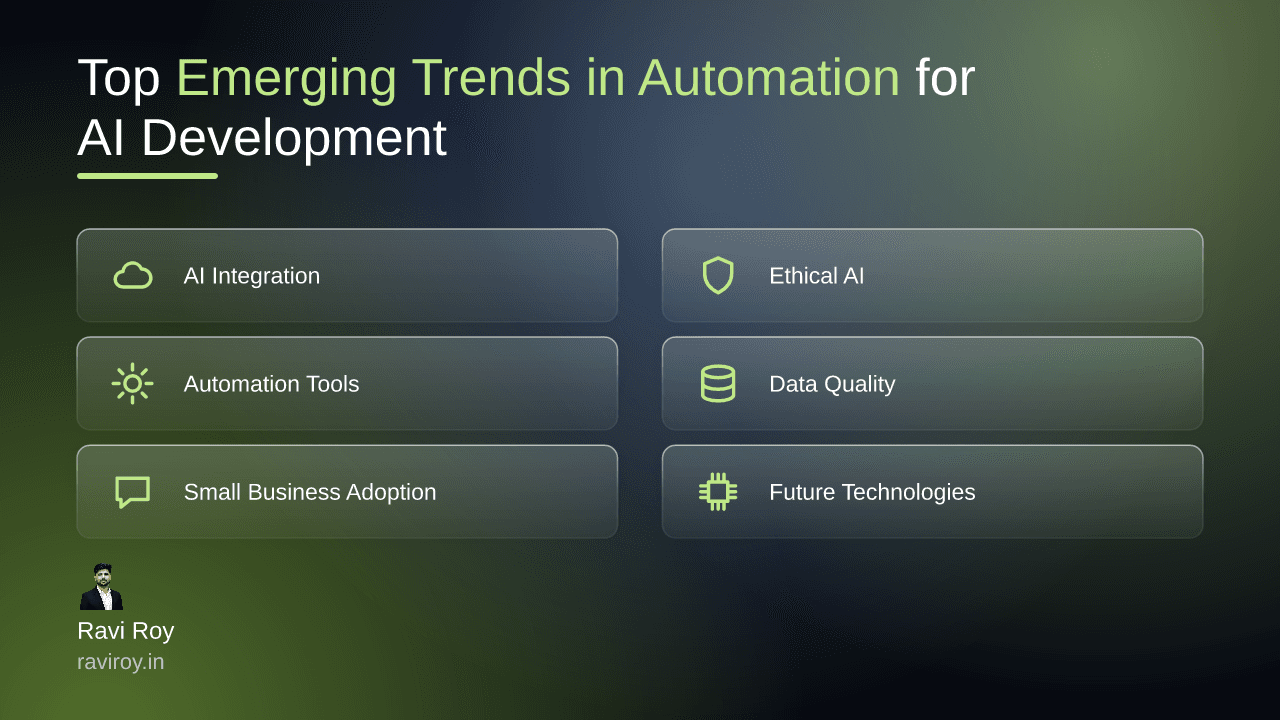
Understanding the Landscape of Automation in AI Development
In 2024, automation will be the backbone of AI development, propelling progress at an unprecedented speed. As businesses scramble to harness its full potential, understanding the current state and challenges of automation in AI is crucial.
The Current State of AI Automation
Automation in AI development is increasingly relied upon to streamline processes, enhance operational efficiency, and enable rapid iteration. Currently, AI systems leverage automation for data preprocessing, model training, and continuous monitoring of performance metrics. For instance, tools like TensorFlow and PyTorch allow developers to set up automated pipelines that integrate data processing with model training workflows (source).
Moreover, automation facilitates testing and deployment, making it easier to catch errors early and reduce time-to-market. Continuous Integration/Continuous Deployment (CI/CD) practices are becoming standard in AI projects, with platforms like GitHub Actions enabling seamless automation of tasks from code commit to deployment.
Key Challenges Facing Automation in AI
Despite the advancements, various hurdles impede the smooth integration of automation within AI frameworks:
Integration Complexity: Merging automated systems with existing tools can lead to significant bottlenecks. Many organizations face issues regarding incompatible technologies or processes that hinder seamless workflows.
Data Quality: For AI models to perform well, the data fed into them must be clean, relevant, and comprehensive. Poor quality data can sabotage automation efforts, leading to inaccurate results or model failures.
Trust Issues: Stakeholders often fear the unpredictability of autonomous systems. Concerns regarding ethics and bias in AI automation hinder broad adoption, demanding transparent practices to build confidence.
Prominent Trends in AI Automation for 2024
As we move further into 2024, several trends are emerging in the automation of AI development that promise to redefine the landscape.
Integration of MLOps with DevOps and CI/CD
The integration of Machine Learning Operations (MLOps) with traditional DevOps processes enhances efficiency in automation. By aligning these functions, teams can ensure that machine learning workflows are treated with the same rigor as software development. This combination fosters collaboration among data scientists, software engineers, and operations teams, resulting in quicker turnaround times.
For example, utilizing tools like Kubeflow allows organizations to create reproducible workflows that automate model deployment, making it easy to manage the lifecycle of machine learning models within existing CI/CD pipelines.
Generative AI's Role in Code Generation
Generative AI technologies, such as OpenAI's Codex, are making waves in code generation, significantly speeding up automation processes. By enabling developers to write code using natural language prompts, these platforms reduce the learning curve associated with new programming languages.
Consider a developer tasked with building an API. They could prompt Codex to create the foundational code, significantly reducing the time spent on boilerplate tasks and allowing the developer to focus on intricacies unique to the project.
The Impact of Low-Code/No-Code Platforms
The advent of low-code and no-code platforms democratizes AI automation by allowing non-technical users to build applications without extensive programming knowledge. Tools like Microsoft Power Apps and Google AppSheet enable businesses to automate workflows quickly and without the heavy investment in software development.
However, while these platforms simplify automation, they also come with limitations concerning scalability and customization. Businesses must assess their specific use cases to determine whether these solutions align with their long-term needs.
Focus on Ethical and Explainable AI
As companies ramp up their automation initiatives, ensuring ethical AI practices has never been more critical.
Understanding Ethical AI Principles
Ethical AI emphasizes transparency and fairness in algorithms, particularly in how data is collected and used. Importance lies in adhering to ethical guidelines that govern AI development and deployment. The lack of ethical considerations can lead to biased outcomes and eroded trust, which can damage reputations and lead to regulatory scrutiny.
Strategies for Building Trustworthy AI Systems
Organizations can employ various strategies to become champions of ethical automation. For instance, implementing regular audits to examine models for biases can help identify unwanted patterns before they manifest in real-world applications. Additionally, engaging diverse teams in the development process can provide varied perspectives and solutions that align with broader ethical standards.
Technologies Shaping the Future of Automation
Several technologies are beginning to redefine what's possible in AI automation.
Digital Twin Technology
Digital twins are virtual replicas of physical systems that simulate real-time performance. Within the context of automation, they allow for immediate feedback on system performance, enabling organizations to optimize processes and resource allocation. For instance, a manufacturing facility could use digital twins to simulate various production scenarios, determining the most efficient methods before implementation.
Edge Computing Applications
Edge computing is changing the game by facilitating quicker processing of data at the source, minimizing latency, and providing immediate insights. This technology enhances AI automation by allowing devices to analyze data in real time, which is particularly useful in sectors like healthcare and telecommunications. For example, smart sensors in medical devices can autonomously monitor patients and provide immediate alerts based on real-time data analysis.
Challenges and Solutions in Automation Integration
Successfully integrating automation in AI development isn't without its challenges.
Common Integration Pitfalls
Organizations often encounter misalignment between automation goals and the company's infrastructure. These pitfalls can range from inadequate documentation to insufficient training, ultimately leading to project delays or failures.
Best Practices for Successful Automation
Here are some best practices to improve the chances of successful automation integrations:
Thorough Planning: Conduct a detailed assessment of existing systems to identify integration points. This should include setting clear objectives and KPIs to monitor success.
Prioritize Documentation: Maintain comprehensive documentation throughout the automation process. This will aid in onboarding new team members and reducing knowledge variability.
Engage End-Users: Involve end users early in the development process to gain insights that can guide design choices, thereby reducing the risk of misalignment.
Regular Feedback Loops: Create mechanisms for continuous feedback, allowing for agile responses to any integration challenges that may arise.
The Future of Small Business Adoption of AI Automation
Small businesses are increasingly looking to AI automation not only to compete but also to thrive in a challenging economic landscape.
Barriers for Small Businesses
Common barriers include limited budgets, a lack of technical expertise, and hesitation in adopting new technologies. These factors can stall progress and hinder small businesses from capitalizing on automation's benefits.
Strategies for Effective Implementation
However, there are successful strategies small businesses can undertake:
Start Small: Begin with pilot projects that require minimal investment. This allows businesses to test scalability and assess the potential ROI before committing to larger initiatives.
Leverage Partnership Resources: Collaborate with local tech communities or universities to access resources, expertise, and even funding opportunities that can ease the automation journey.
Documentation and Training: Making investments in robust training programs and documentation to empower existing staff can enhance overall workplace productivity.
As small businesses showcase successful implementations of AI automation, these case studies will serve as motivation for others to take the leap.
Conclusion
As we look towards the future, understanding the trends, challenges, and technologies shaping automation in AI development is pivotal. With the potential to transform industries, pave new paths for efficiency, and set standards for ethical practices, 2024 is gearing up to be an exciting year in this realm.
What specific trend do you think will have the most impact on AI automation in the next few years, and why?
💬 Join the conversation — share your take in the comments and tell us what you’d add.