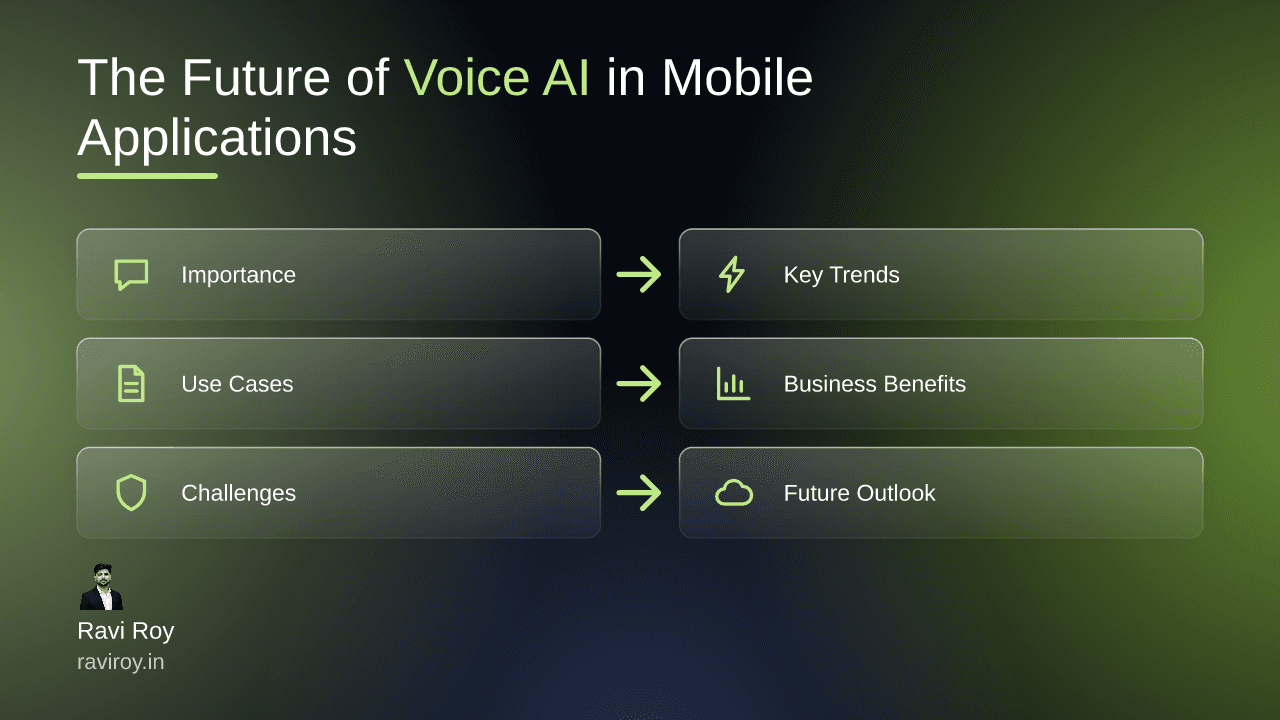
Understanding the Importance of Voice AI in Mobile Applications
Voice AI isn't just a buzzword; it's becoming an indispensable component of modern mobile applications. The astounding growth in Voice AI adoption is reshaping the way users interact with their devices. With over 50% of all searches projected to be voice-based by 2025, the significance of integrating Voice AI into mobile applications is undeniable.
Why Voice AI is Gaining Traction
The statistics speak for themselves: mobile applications that incorporate voice technology see a 20% increase in user engagement. The ease of interaction provided by voice assistants accelerates actions that traditionally required multiple taps or scrolling. Imagine ordering groceries or setting appointments simply by speaking a command. This speed and convenience contribute heavily to user satisfaction.
User Experience Benefits of Voice AI
The role of Voice AI in enhancing user experiences cannot be overstated. Users can access information and services more intuitively, making interactions feel more natural. The introduction of contextual voice commands allows for a seamless transition between tasks, effectively reducing friction. This level of streamlined interaction enhances not only user satisfaction but also loyalty, as users feel empowered and appreciated.
Key Trends Shaping the Future of Voice AI
As we look to the future, several key trends are emerging that will shape how Voice AI is utilized in mobile applications.
Hyper-Personalization and Human-Like Conversations
The future of Voice AI lies in creating hyper-personalized experiences. Apps like Spotify and Netflix have already started utilizing voice personalization, allowing users to receive tailored recommendations based on their previous choices. Imagine a scenario where your voice assistant remembers your favorite genres and suggests shows or playlists accordingly, making interactions feel more human-like and engaging.
Multimodal and Contextual Understanding
Voice AI is evolving to comprehend multimodal inputs—adapting not only to what you say but also to how you say it and the context in which it's said. For instance, a voice command followed by a touch-based request on a mobile interface could open a new dimension of interaction. App developers invested in enhancing this capability can dramatically elevate the user experience.
Enhanced Accuracy and Real-Time Processing
Technological advancements in natural language processing (NLP) have led to significant improvements in the accuracy of voice recognition systems. Real-time processing enhances user interactions by minimizing response delays. For example, voice-activated banking apps can authenticate transactions quickly, improving both safety and efficiency.
Real-World Use Cases of Voice AI in Mobile Apps
Voice AI is more than just a theoretical concept; it’s already making waves across various industries.
Industry-Specific Applications
In e-commerce, platforms are leveraging Voice AI to allow customers to shop simply by speaking. Users can add items to their cart or seek product suggestions without needing to type or scroll. Similar applications are seen in healthcare, where apps employ voice recognition for clinical diagnostics. For instance, software that converts spoken symptoms into medical terminology is revolutionizing patient interactions.
Innovative Features Driven by Voice AI
Unique features fueled by Voice AI, such as voice-activated shopping lists or hands-free navigation, showcase the transformative potential of this technology. According to research, these features significantly enhance user engagement, leading to increased sales and customer satisfaction. Businesses adopting such innovations find a measurable impact on their bottom line.
Benefits for Businesses Adopting Voice AI
Businesses are looking to Voice AI not just to keep up but to pull ahead in today's competitive landscape.
Cost-Effectiveness and Efficiency
Integrating Voice AI can help companies slash operational costs. For example, customer service bots that assist users via voice reduce the need for large customer support teams. Feedback from companies like Google and Amazon shows an increase in efficiency after implementing Voice AI.
Enhancing Customer Satisfaction
Voice AI’s capacity to streamline interactions contributes not only to user retention but also to new customer acquisition. Studies reveal that users are 30% more likely to return to an app that offers easy voice interactions. By creating a more intuitive user experience, businesses can increase loyalty and create brand ambassadors.
Challenges and Considerations for Future Development
Despite its numerous benefits, the integration of Voice AI comes with its own set of challenges that must be addressed.
Addressing Privacy and Security Concerns
Privacy concerns remain paramount in the Voice AI landscape. With an increasing amount of sensitive data being handled through voice commands, businesses must adopt stringent security measures. Users need reassurance that their data is safe, and companies must prioritize transparency and compliance to build trust.
Emotional Recognition and Sentiment Analysis
The integration of emotional recognition technology presents an opportunity and a challenge. While it can enhance user experiences, emotional misinterpretations could lead to user frustration. Understanding emotional context is critical; companies must ensure that their AI tools are sophisticated enough to handle nuanced interactions effectively.
Looking Ahead: The Future of Voice AI in Mobile Apps
As Voice AI technology evolves, new integrations and capabilities are on the horizon that promise to further transform user interaction.
Integration with AR/VR Technologies
The rise of augmented and virtual reality presents an exciting avenue for Voice AI. Imagine a world where you can give voice commands in AR environments—manipulating virtual objects simply by stating your desires. This capability could dramatically change how users interact with applications across various sectors.
Expanding Multilingual Capabilities
Globalization means apps need to cater to diverse user bases. The next big leap for Voice AI will be expanding multilingual support, allowing for real-time translations and conversations in any language. This enhancement will not only engage a broader audience but will also enrich user experiences globally.
Voice AI is paving the way for a future where mobile applications become even more intuitive and user-friendly. As you explore the potential of Voice AI, think about your own experiences. How do you believe Voice AI can evolve in mobile applications to enhance your daily interactions?
💬 Join the conversation — share your take in the comments and tell us what you’d add.