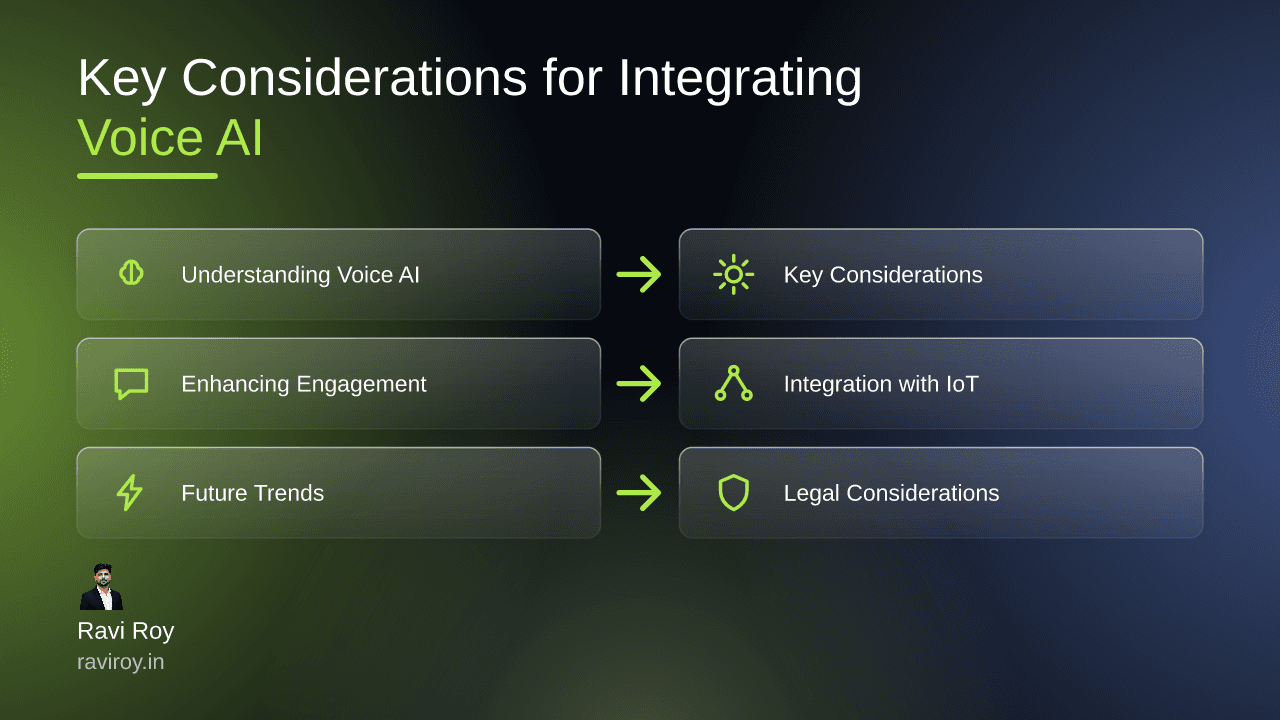
Understanding Voice AI and Its Role in Mobile Apps
Voice AI is transforming how users interact with mobile applications, providing intuitive experiences that enhance accessibility and usability. As mobile app developers, understanding the potential of Voice AI is crucial for staying ahead in a competitive market.
What is Voice AI?
Voice AI refers to technologies that enable applications to understand and respond to spoken language. This includes components such as speech recognition, natural language processing (NLP), and text-to-speech capabilities. These technologies empower users to engage with apps using natural voice commands, making interactions smoother and more human-like.
Benefits of Voice AI for Mobile Applications
The integration of Voice AI offers numerous advantages for mobile applications:
Enhanced User Interaction: Voice interactions are faster and often more enjoyable than typing. Users can engage hands-free, allowing multitasking.
Statistics Highlighting Growth: According to a report by Statista, over 50% of all searches will be voice searches by 2025. This rapid growth underscores the necessity for app developers to prioritize Voice AI.
Incorporating Voice AI into mobile apps not only enhances usability but also increases user retention and satisfaction.
Key Considerations for Integrating Voice AI
When integrating Voice AI into mobile applications, several critical factors must be considered to ensure a successful deployment.
Choosing the Right SDKs and APIs
A plethora of SDKs and APIs are available today, each offering unique functionalities. Here are some popular choices:
Google Assistant SDK: Great for creating custom voice experiences leveraging Google's machine learning capabilities.
Amazon Alexa Skills Kit: Ideal for developers looking to integrate with Amazon's voice ecosystem.
Microsoft Azure Speech Services: Offers comprehensive speech recognition, speaker identification, and text-to-speech services.
Selecting the right SDK or API is essential for building reliable Voice AI functionalities—consider your app's requirements and user base when making your decision.
Ensuring Speech Recognition Accuracy
Achieving high speech recognition accuracy is non-negotiable for Voice AI success. Here are some best practices to ensure this:
Sound Quality: Use high-quality microphones in your app to capture clear audio.
User Training: Encourage users to speak clearly; even subtle accents can affect recognition.
Contextual Understanding: Implement NLP to provide context-specific responses, enhancing accuracy and user satisfaction.
Addressing Accessibility Features
Voice AI can significantly improve accessibility for users with disabilities. Here are some considerations to incorporate:
Voice Commands for Navigation: Implement voice commands that allow users to navigate through the app effortlessly.
Personalized Voice Profiles: Allow users to create personalized voice profiles, making interactions more intuitive and supportive.
By addressing accessibility, developers not only comply with legal obligations but also expand their user base and enhance user satisfaction.
Enhancing User Engagement with Voice AI
Voice AI can significantly drive user engagement, making interactions more personalized and dynamic.
Personalization Through Voice Interactions
By integrating Voice AI, you can create tailored experiences for users. Here are some strategies to leverage:
Contextual Conversations: Use voice inputs combined with backend data to tailor responses. For instance, if a user frequently queries local events, your app should proactively recommend upcoming local activities.
User Preferences: Capture vocal preferences over time, allowing your app to adjust its responses based on user behavior.
Voice Commerce Opportunities
Voice AI is also poised to revolutionize commerce in mobile applications. Here’s how:
Voice-Activated Purchases: Enable users to make purchases using voice commands. Amazon's Alexa has successfully paved the way here, and mobile apps can follow suit by simplifying the transaction process.
Enhanced Product Discovery: Utilize voice searches to allow users to find products more quickly. Imagine a user saying, "Show me blue running shoes," and the app responds with relevant options instantly.
These features can turn passive users into active buyers, significantly boosting conversion rates.
Integration with Smart Devices and IoT
Integrating Voice AI with smartphones and IoT devices can provide seamless user experiences.
Creating Seamless User Experiences
The integration process should focus on interoperability:
Unified Commands: Design voice commands that work across multiple devices (like smart speakers, wearables, and smartphones).
Real-time Responses: Ensure that voice commands trigger real-time actions, such as adjusting temperature settings on smart thermostats or turning on lights in smart homes.
Case Studies of Successful Voice AI Integration
Spotify: Leveraging voice commands for playlist selections has improved user experience, allowing hands-free control while driving.
Domino's Pizza: Their app allows users to place orders using voice commands, streamlining the purchase process and enhancing customer satisfaction.
Challenges such as latency and compatibility can arise when integrating Voice AI, but with careful planning and execution, these can be managed effectively.
Future Trends in Voice AI for Mobile Development
Looking ahead, several innovative trends are emerging in the Voice AI landscape.
Emerging Technologies and Innovations
Voice Biometrics: Adding security through voice recognition can enhance user trust while allowing for user-specific interactions.
Conversational AI: This technology is expected to make voice interactions more fluent and human-like, leading to deeper user engagement.
User Behavior Changes with Voice-First Apps
As more users adopt voice-first behaviors, app developers must adapt by prioritizing voice-activated features. Innovations such as smart home integrations are paving the way for new user interactions, where voice control becomes the primary method for engagement.
Legal and Ethical Considerations in Voice AI
As with any technology, the rise of Voice AI comes with legal and ethical ramifications.
Data Privacy Issues
Compliance with data protection regulations is paramount. Developers must be transparent about what data is collected through voice interactions and how it is used. The GDPR guidelines are an excellent framework for safeguarding user data.
Best Practices for Ethical Voice AI Development
User Consent: Always obtain explicit user consent for data collection.
Data Minimization: Only collect the minimum amount of data necessary for app functionality.
Regular Audits: Regularly review and audit data practices to ensure compliance.
These practices can help mitigate risks associated with user privacy and foster a culture of trust around Voice AI applications.
Integrating Voice AI into your mobile applications can revolutionize user experiences, drive engagement, and keep you ahead of competitors. What challenges have you faced when integrating Voice AI in your mobile apps, and how did you overcome them?
💬 Join the conversation — share your take in the comments and tell us what you’d add.