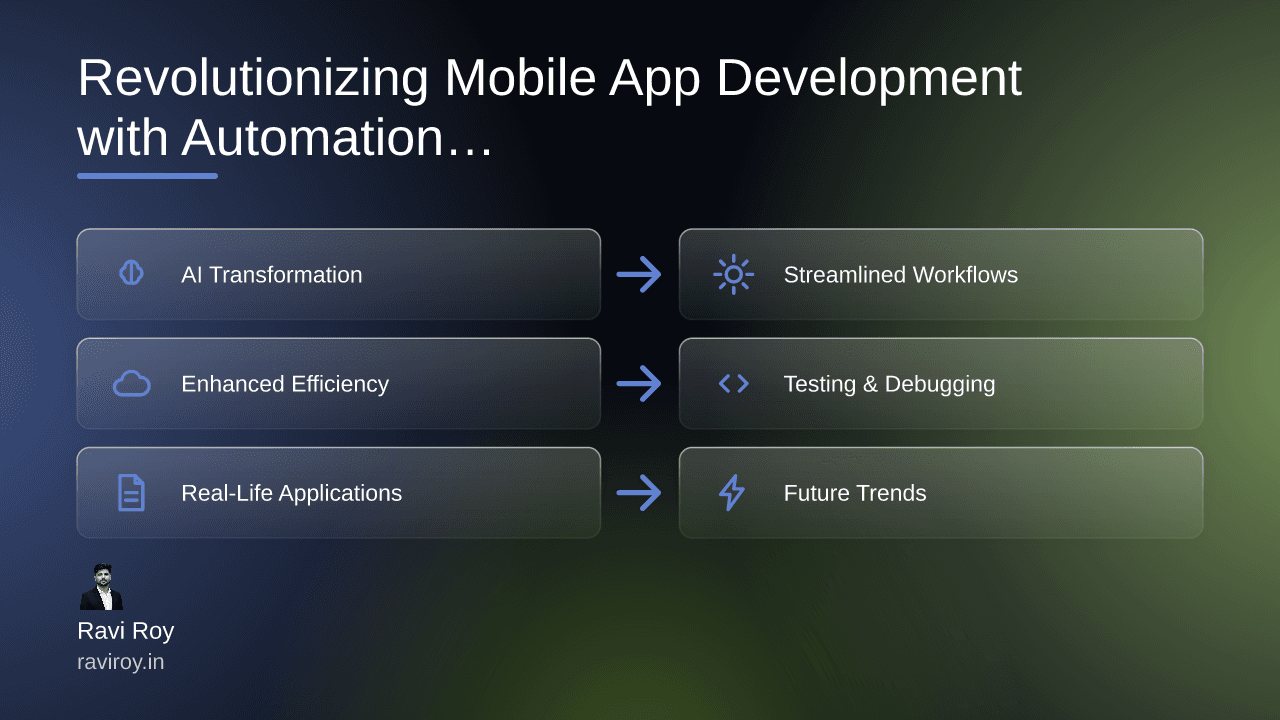
How AI Automation Tools Are Transforming Mobile App Development
The mobile app development landscape is witnessing a profound shift, driven by AI automation tools that enhance efficiency and enable innovation. As companies strive to deliver intelligent apps that meet user expectations, the integration of these tools becomes essential for streamlining workflows and improving overall performance.
The Rise of Intelligent Apps
AI-powered automation tools are revolutionizing mobile app development, enabling the creation of smarter applications. Tools like TensorFlow and IBM Watson provide developers with powerful capabilities, allowing them to incorporate features such as voice recognition and personalized user experiences. These intelligent apps leverage predictive analytics, tailoring functionalities based on user behavior and preferences.
Streamlined Development Workflows
Automation in mobile development is not just about adding sophisticated features; it fundamentally changes how apps are built. By automating repetitive tasks—such as code generation, API integration, and user interface design—developers can focus on more strategic elements. This results in development workflows that are not only faster but also more organized. According to recent studies, teams that integrate automation tools in their processes save up to 30% of their time spent on repetitive tasks.
Benefits of Integrating Automation in Mobile App Creation
The integration of AI in mobile app development offers multiple benefits that drive improved performance and business outcomes.
Enhanced Efficiency and Productivity
Automation tools enhance efficiency by rapidly handling processes that would typically require significant human effort. For instance, Adobe’s AI-powered tool, Sensei, streamlines design processes and allows developers to focus more on innovation. Companies that have adopted automation have reported up to a 50% reduction in development time, enabling faster time-to-market for their products.
Cost-Effectiveness of AI Solutions
Implementing AI technologies not only boosts productivity but also offers significant cost savings. Businesses leveraging tools like AppGyver or Bubble report reduced development and operational costs. For example, a startup that used a low-code platform for its mobile app cut its development budget by nearly 40%, showcasing the financial feasibility of integrating AI solutions.
AI Automation in Testing and Debugging Mobile Apps
The role of AI automation extends significantly into the realms of testing and debugging, crucial phases in the app development lifecycle.
Automated Testing Frameworks
Automated testing frameworks, like Selenium and Appium, facilitate efficient testing processes, especially unit and integration testing. Such automated tests can execute multiple scenarios, ensuring that the app functions as intended before launch. This reduces human error and improves the reliability of the final product.
AI in Bug Detection
In contrast to traditional manual debugging methods, AI-driven debugging tools, such as Test.ai, utilize machine learning algorithms for real-time bug detection. These tools analyze large amounts of code, identifying patterns that may lead to issues, thus enabling teams to resolve bugs faster. Real-world cases show that companies employing AI for debugging significantly reduce post-launch bugs by 60%.
Challenges in Integrating AI with Mobile Applications
Despite the myriad advantages, integrating AI with mobile applications comes with its own set of challenges that developers must navigate.
Technical Hurdles
Incorporating AI into mobile applications often presents technical hurdles, including integration complexity and compatibility issues with legacy systems. Developers may face roadblocks like insufficient infrastructure or lack of training on new AI tools, impeding implementation. Overcoming these hurdles requires clear strategies, such as starting small with pilot projects to build experience.
Data Privacy Concerns
With the introduction of AI, data privacy concerns become more pronounced. Applications employing AI frequently handle sensitive user data, necessitating robust privacy measures. Developers need to comply with regulations like GDPR while ensuring user consent and data protection are prioritized. Strategies such as data anonymization and encryption can help mitigate these concerns, fostering user trust.
Leading AI Tools for Mobile App Development
Numerous AI tools are available to assist developers in streamlining their mobile app creation processes, encompassing low-code platforms and advanced AI features.
Low-Code/No-Code Solutions
Platforms like Mendix and OutSystems provide low-code solutions, which enable developers to build apps rapidly with minimal manual coding. These tools often include AI functionalities that improve the design process, making it easier for non-technical users to contribute to app development.
Advanced AI Features
Advanced AI tools, such as Google’s AutoML, are designed to enhance mobile app functionality. They enable machine learning models to be integrated seamlessly, empowering developers to deploy sophisticated analytics without extensive data science knowledge. User reviews indicate satisfaction with the speed and effectiveness of these advanced features, further validating their value in mobile development projects.
Case Studies: Real-Life Applications of AI Automation
Several companies have successfully integrated AI automation into their app development processes, showcasing the practical applications and lessons learned.
Successful Implementations
Take the example of a healthcare startup that adopted AI-powered automation for its mobile app development. By implementing predictive analytics, the company could offer personalized health insights, boosting user engagement by 75%. Their success demonstrates how AI can significantly enhance app functionality and user satisfaction.
Lessons Learned
However, not every implementation is seamless. A retail app that attempted to use AI for inventory management faced challenges with user adoption despite initial success. Key takeaways include the importance of user feedback in refining features and the necessity of iterative testing to ensure functionality meets user needs.
Future Trends in AI Automation for Mobile App Development
As the technology landscape evolves, several trends are emerging that will shape the future of AI automation in mobile app development.
Emerging Technologies
Innovations such as machine learning and edge computing are on the horizon, promising to enhance mobile app capabilities even further. These technologies enable real-time processing and analytics directly on devices, reducing latency and improving user experiences.
Predictions for the Next Decade
Experts predict that the integration of AI in mobile app development will continue to advance, leading to more intuitive and responsive applications. Developers are encouraged to stay ahead of the trend by embracing ongoing education and remaining adaptable to new tools and processes that emerge.
As AI automation tools continue to advance, the possibilities for mobile app development are vast. What specific AI automation tools have you used in your mobile app projects, and how have they impacted your development process?
💬 Join the conversation — share your take in the comments and tell us what you’d add.