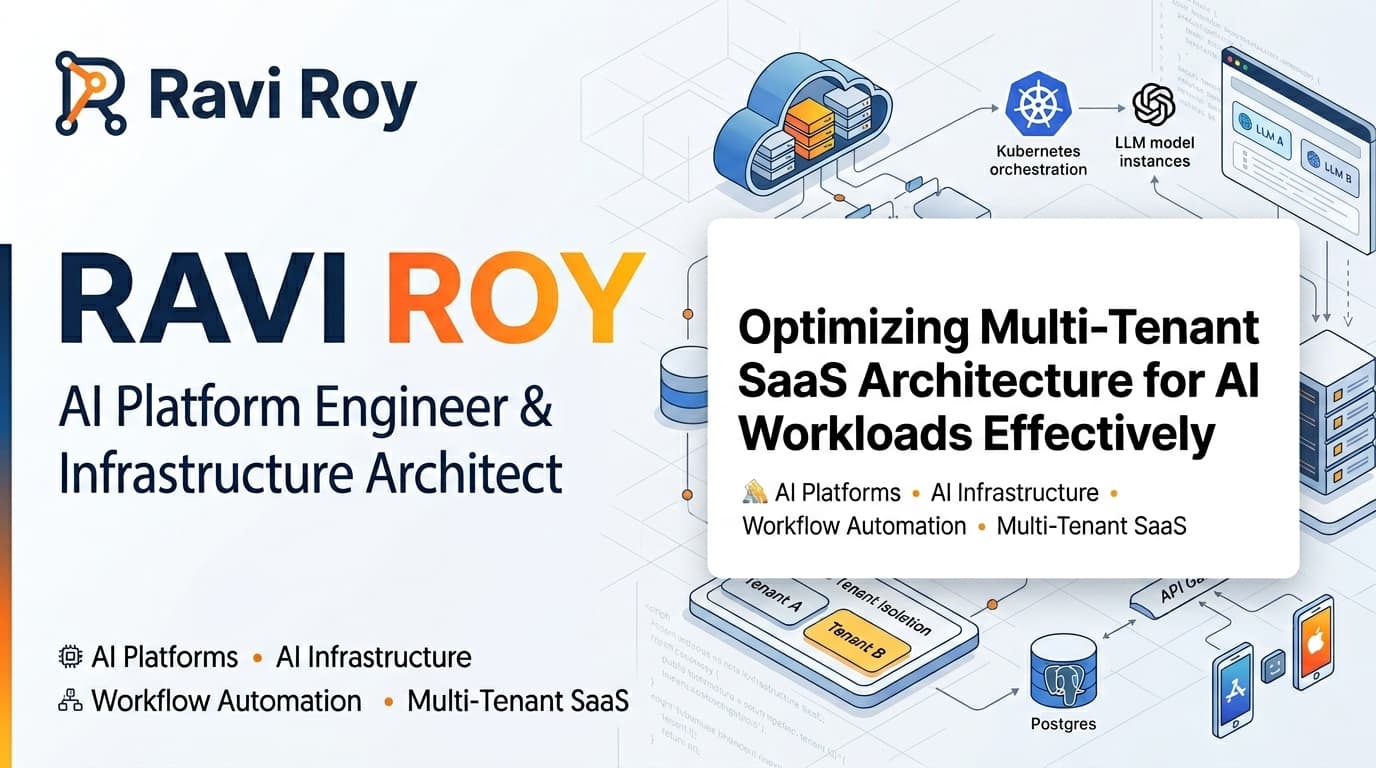
Understanding Multi-Tenant SaaS Architecture
In the realm of cloud computing, multi-tenant SaaS architecture stands out as a game changer, particularly for businesses looking to efficiently manage AI workloads. Its unique characteristics allow for a more streamlined approach, where a single instance of software serves multiple clients, or tenants, with optimal resource allocation and scalability.
What is Multi-Tenant SaaS?
Multi-tenant SaaS (Software as a Service) refers to a cloud computing model where a single software application is shared among multiple users or organizations. Each tenant's data and configurations are kept separate, yet the underlying infrastructure is shared, thus maximizing resource usage. Core characteristics of this architecture include:
Shared Resources: Multiple tenants utilize a common infrastructure, leading to efficient resource management.
Scalability: Organizations can easily scale their usage without the need for substantial hardware changes.
Centralized Updates: All tenants receive updates simultaneously, maintaining consistency across the platform.
Benefits of Multi-Tenant Architecture
The benefits of utilizing a multi-tenant architecture are numerous:
Cost Efficiency: Economies of scale allow lower operational costs, as resources are shared among tenants.
Performance Optimization: Pooling resources can lead to better performance, as workload can be allocated dynamically based on demand.
Tenant Isolation: Even though resources are shared, the architecture is designed to ensure strong tenant isolation for security and performance, limiting exposure to data breaches and ensuring efficient processing of workloads.
Optimizing for AI Workloads
Optimizing multi-tenant SaaS for AI workloads involves understanding the specific needs of AI applications and the unique challenges they present.
Key Components of an AI-Optimized Multi-Tenant SaaS Platform
Creating an AI-optimized multi-tenant platform requires careful planning of critical components:
Resource Management: Tools that dynamically allocate resources based on the demands of AI workloads are essential. This includes the ability to provision additional computational power during peak times.
Orchestration Tools: Using advanced orchestration tools can help automate the deployment and management of AI applications across different tenants.
One effective approach is tenant-aware MLOps (Machine Learning Operations), which allows for better management of machine learning processes tailored to individual tenant needs.
Isolation and Security in Multi-Tenant AI SaaS
Isolation and security are crucial in a multi-tenant environment, especially for AI workloads that often handle sensitive data. Multi-tenancy ensures that:
Data Security: Each tenant's data remains isolated, reducing the risk of data leakage.
Performance Guarantees: Resource allocation strategies help to maintain consistent performance across tenants, avoiding situations where heavy usage by one tenant impacts others.
Implementing strict access controls and continuous monitoring tools further enhances the security of AI workloads in a multi-tenant setting.
Technologies Supporting Multi-Tenant SaaS for AI
The technology stack utilized in multi-tenant SaaS platforms significantly impacts their efficiency and scalability.
Role of Kubernetes in Multi-Tenant Architectures
Kubernetes has emerged as a leader in managing containerized applications, including multi-tenant SaaS models. Its benefits include:
Resource Distribution: Kubernetes offers robust multi-tenancy capabilities, making it easier to allocate resources effectively across tenants.
Auto-Scaling: It can automatically scale resources up or down based on the real-time demand of workloads, particularly useful for fluctuating AI processing needs.
The containerization approach simplifies application deployment, updates, and scaling, aligning perfectly with the demands of AI workloads.
Microservices and Serverless Approaches for Scalability
Incorporating microservices and serverless architectures can greatly enhance performance and scalability for AI applications:
Microservices: These allow for workload separation and greater agility in development, facilitating faster deployment cycles.
Serverless Computing: By adopting a serverless approach, organizations can scale on-demand, paying only for what they use, which is particularly beneficial during peak AI processing times.
Both of these technologies encourage modular design, enabling teams to innovate rapidly while maintaining a focus on performance.
Best Practices for Designing Scalable AI SaaS Platforms
To build a competitive and reliable multi-tenant SaaS platform for AI, several best practices should be considered.
Cost-Benefit Analysis of Isolation Models
Understanding different isolation models—such as dedicated, isolated, and shared environments—is essential. Each model has its financial implications:
Dedicated Environments: Higher costs due to full hardware and resource allocation.
Isolated Environments: Moderate costs, balancing performance and security needs.
Shared Environments: Most cost-effective but may introduce risks to performance and security.
A deep analysis will guide decision-making on which model suits specific business needs.
Implementing AI-Driven Resource Management
AI-driven resource management strategies can greatly enhance the effectiveness of a multi-tenant architecture. Techniques such as:
Dynamic Resource Allocation: Automatically adjusting resources based on observed usage patterns.
Predictive Analytics: Anticipating workload spikes and provisioning resources ahead of time.
Additionally, integrating edge computing can provide further efficiency, minimizing latency and optimizing computational tasks close to data sources.
Case Studies and Real-World Applications
Successful implementations provide valuable insights and lessons for developing multi-tenant AI solutions.
Successful Implementations of Multi-Tenant AI Solutions
Numerous organizations have thrived using multi-tenant AI solutions. For instance, leading analytics platforms have successfully deployed multi-tenant architectures, achieving significant cost savings and improved performance, ultimately allowing them to focus resources on innovation instead of maintenance.
Lessons Learned from Failed Multi-Tenant AI Applications
However, not all implementations are successful. Several case studies highlight common pitfalls such as:
Inadequate Scaling: Underestimating real-time demands can lead to poor performance.
Weak Security Protocols: Failing to segregate tenant data risks breaches.
Learning from these failures underscores the importance of robust design and continuous feedback to iterate on existing frameworks.
Future Trends in Multi-Tenant SaaS for AI
As technology evolves, so too does the landscape of multi-tenant architectures tailored for AI workloads.
Predictions for Evolving Multi-Tenant Architectures
Future trends suggest a shift towards greater tenant isolation, enhanced security protocols, and improved data governance models. These innovations will broaden the applicability of multi-tenant architectures across different industries.
Advancements in AI and Their Impact on SaaS
Emerging advancements in AI technologies, including natural language processing and advanced data analytics, will begin to revolutionize SaaS models. Organizations must remain agile to adopt new tools that foster seamless integration and collaborative workloads.
Cross-industry applications of AI-driven multi-tenant solutions will become increasingly common, enabling businesses to leverage insights from varied data sources more efficiently than ever before.
Conclusion
Optimizing your multi-tenant SaaS architecture for AI workloads is not just a technical challenge; it's an opportunity to redefine your service delivery and customer satisfaction. As technologies and methodologies evolve, embracing a forward-thinking approach will ensure you stay competitive.
Start optimizing your multi-tenant SaaS architecture today to unlock the full potential of AI workloads.