Understanding Edge AI in Mobile Applications
In a world increasingly driven by mobile technology, Edge AI stands out as a game-changing force. By processing data directly on devices, Edge AI enhances not only performance but also user experience and privacy.
What is Edge AI?
Edge AI refers to the deployment of artificial intelligence algorithms directly on edge devices, such as smartphones and tablets, rather than relying solely on cloud computing. This architecture minimizes the lag associated with sending data to a centralized server for processing and then receiving the results. Essentially, it puts the power of AI exactly where it’s needed—right at the user's fingertips.
The key components of Edge AI include:
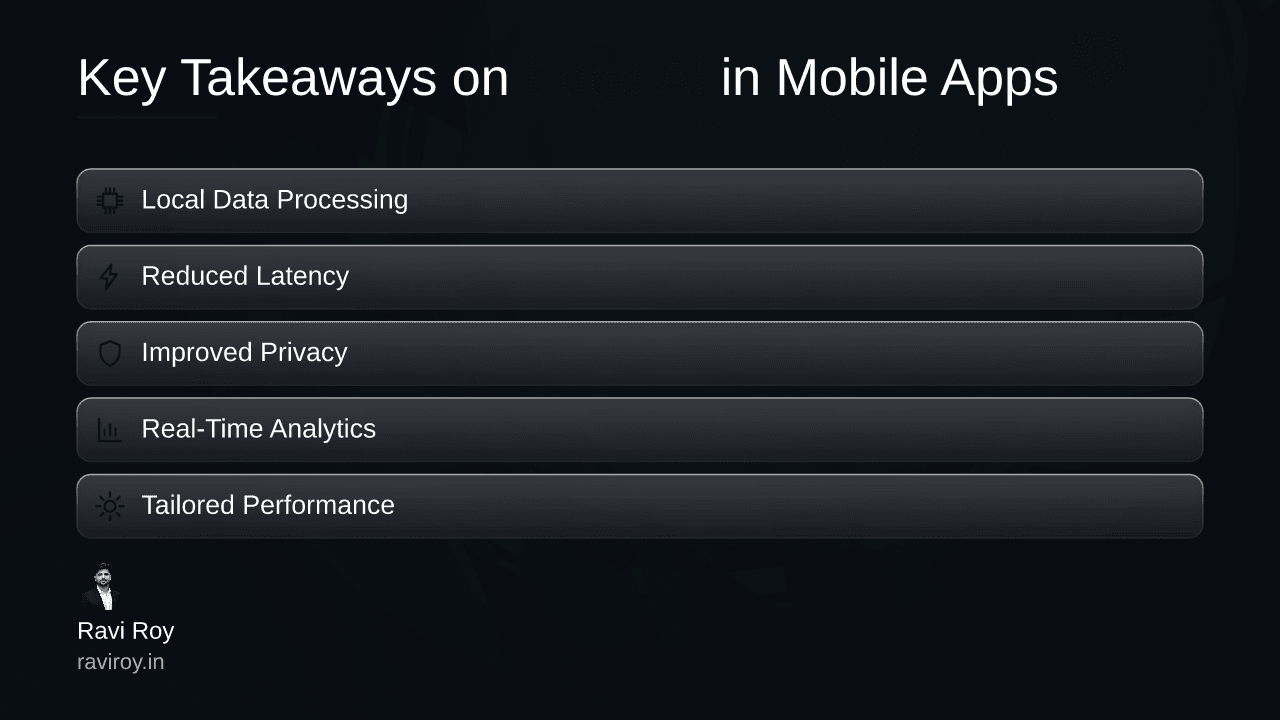
Local Data Processing: Data is processed locally on the device, which allows for real-time analytics and decision-making.
Machine Learning Models: These models are trained on devices to meet specific needs, leading to tailored performance.
Importance of Edge AI in Mobile
The integration of Edge AI in mobile applications offers several distinct advantages.
Reduced Latency: With data being processed on the device, the time taken to send information to the cloud and back is eliminated. For instance, in augmented reality apps, immediate feedback is crucial for user engagement.
Improved Privacy: By processing data locally, sensitive user information isn’t transmitted over the internet, reducing the risk of breaches. This is particularly relevant in healthcare apps, where patient data confidentiality is paramount.
Current Trends in Edge AI for Mobile Apps
As Edge AI continues to evolve, several key trends are shaping its application in mobile technologies.
Real-Time Data Processing
Real-time data processing has become a staple in many applications, from navigation to gaming. For example, voice assistants like Google Assistant leverage Edge AI to quickly understand and respond to user commands, significantly enhancing the user experience. Applications can recognize speech almost instantaneously, offering a seamless interaction.
Enhanced User Experiences
Edge AI enables customized experiences by analyzing user habits and preferences locally. For instance, streaming services can provide personalized recommendations without needing to analyze data centrally. This personalization results in increased user satisfaction and retention.
Security and Privacy Considerations
Mobile applications that utilize Edge AI often incorporate advanced security measures. These measures enable applications to detect unusual activity in real-time. For example, banking apps are using Edge AI to monitor transactions directly on the device, identifying fraudulent activity without sending data back to the cloud.
Use Cases of Edge AI in Mobile Applications
The applications of Edge AI in mobile platforms are diverse and impactful.
Healthcare
Mobile health applications are utilizing Edge AI for continuous patient monitoring. Wearable devices can analyze vital signs in real-time, flagging irregularities instantly. This capability allows for timely interventions that can significantly improve patient outcomes.
Retail
In the retail sector, applications that track consumer behavior are increasingly leveraging Edge AI. These apps provide insights by analyzing foot traffic and purchasing patterns, leading to personalized offers and enhanced customer experiences. For instance, AR-based applications enable users to visualize products in their homes before purchasing, merging physical and digital shopping experiences seamlessly.
Smart Cities
Edge AI is crucial in the development of smart city applications. From traffic management systems that optimize flow in real-time to waste management solutions that predict pick-up needs, Edge AI simplifies complex data processing and enhances urban operations. For example, sensors can analyze data on air quality and adjust city resources accordingly, leading to healthier environments.
Challenges in Implementing Edge AI
Despite its advantages, implementing Edge AI isn't without hurdles.
Technical Limitations
There are several technical challenges in deploying Edge AI. Limited computational power in devices can restrict the complexity of machine learning models that can be utilized. Additionally, managing data throughput and ensuring consistent AI performance across diverse devices can be tricky.
Integration with Existing Systems
Incorporating Edge AI into legacy applications poses another challenge. Many businesses still operate on outdated systems that may not support modern AI capabilities. Transitioning these systems to accommodate Edge AI technologies requires careful planning and investment, along with a solid strategy for data management.
Future Prospects of Edge AI in Mobile Applications
As we look ahead, the potential of Edge AI in mobile applications continues to expand.
Innovations on the Horizon
Future advancements might include enhanced machine learning models capable of self-learning on user devices, leading to even greater personalization. Also, as 5G technology becomes widespread, the possibilities for Edge AI applications will multiply, enabling faster and more reliable mobile experiences.
Regulatory Considerations
However, developers must also be aware of regulatory frameworks that may affect Edge AI development. Privacy laws, such as GDPR and CCPA, are pivotal in shaping how data is collected and processed. Staying compliant will not only be necessary for legal reasons but will also reassure users about the safety of their personal data.
Key Takeaways and Considerations
Edge AI is set to revolutionize the mobile application landscape. From enhancing user experiences to improving data privacy and processing speed, its significance cannot be overstated. As challenges like technical limitations and system integration are addressed, the future looks promising.
For developers and businesses, the call to action is clear: explore the possibilities that Edge AI can offer and begin crafting applications that not only meet current user demands but also anticipate future trends.
What specific Edge AI features would you want to see in future mobile applications, and why?
💬 Join the conversation — share your take in the comments and tell us what you’d add.