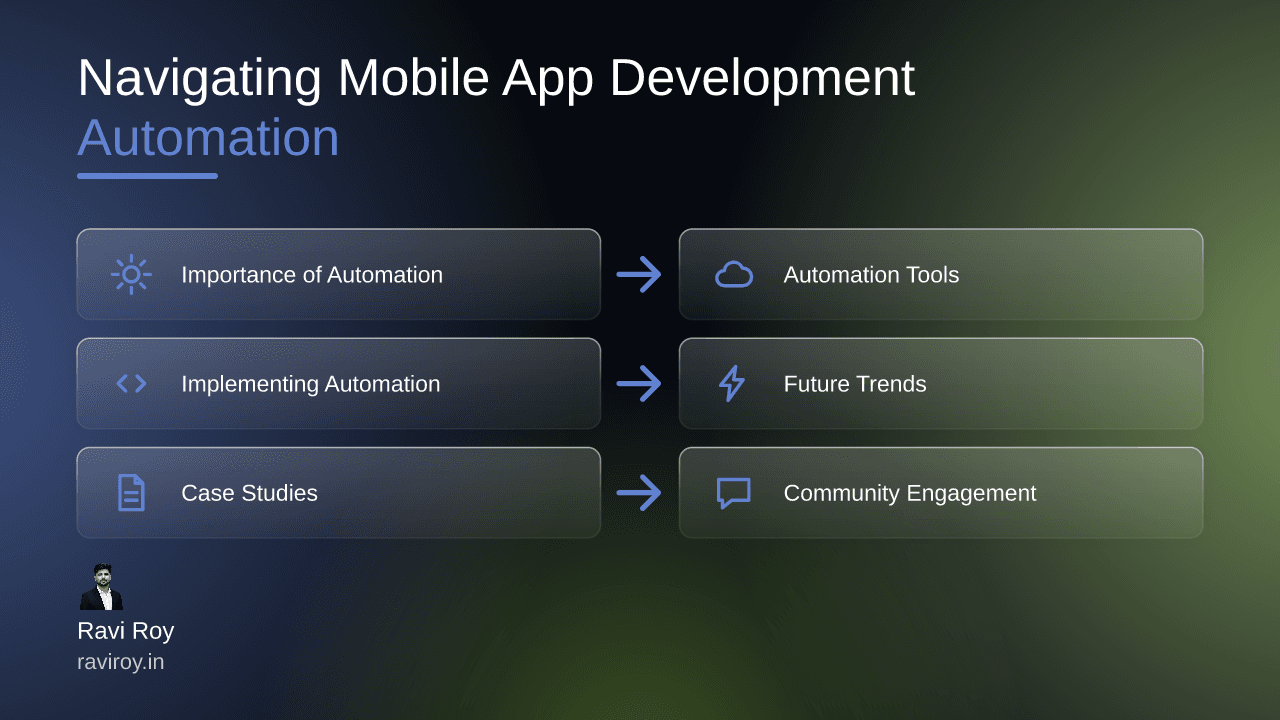
The Importance of Automation in Mobile App Development
Mobile app development is evolving, and automation is at the forefront of this transformation. Embracing automation not only simplifies complex processes but also propels your app toward success faster than ever before.
Why Automate Mobile App Development?
Automating mobile app development brings an array of advantages. The first step toward increasing efficiency in the development lifecycle is recognizing which tasks can be automated rather than handled manually. This reduction in manual labor decreases the risk of human error and ensures a consistent outcome throughout the development process. Moreover, automation allows for faster time-to-market for new features, giving businesses a competitive edge.
In addition to improving individual team performance, automation fosters collaboration between development and operations. Teams that communicate well, equipped with shared automated processes, find themselves developing more robust applications and improving overall project quality.
Key Benefits of Automation
Increased Efficiency: Automation enables quicker iterations and faster deployment cycles, allowing organizations to respond to market demands and user feedback in real time.
Enhanced Consistency: By standardizing processes, automation helps maintain consistent app performance and user experience across various platforms, reducing bugs and discrepancies.
Faster Time-to-Market: With automation streamlining repetitive tasks, your team can focus on innovation and feature development rather than routine chores.
Improved Collaboration: Automation helps in aligning development and operations teams, facilitating smoother workflows and communication, which enriches project outcomes.
Automation Tools and Technologies for Mobile Development
Understanding the tools available is crucial to exploit automation's full potential in mobile development.
Key Tools for Automation
Several tools stand out for automating mobile app development:
Bitrise: This platform specializes in continuous integration and continuous deployment (CI/CD) processes, ensuring that every change is tested and deployed seamlessly.
Jenkins: A widely used CI/CD tool that supports multiple languages and provides a strong plugin ecosystem, Jenkins is instrumental in automating repetitive tasks within the development pipeline.
Low-code/No-code Platforms: These platforms empower developers and non-developers alike to create applications with minimal coding. They allow teams to focus on building functionality instead of writing extensive code.
Integrating AI and Machine Learning
AI tools are making waves in mobile app development. Integrating AI enables developers to enhance app personalization and performance continuously. For example, companies can leverage machine learning algorithms to analyze user behavior patterns and guide further development, creating a more tailored experience for users.
Furthermore, automation tools also support cross-platform app development, allowing teams to build applications that run seamlessly on multiple devices. This reduces redundancy and accelerates the process of bringing apps to various markets.
Implementing Automation in Your Development Workflow
Implementing automation is a systematic approach that hinges on understanding your workflow and needs.
Step-by-Step Guide to Implementation
Identify Repetitive Tasks: Begin by pinpointing which tasks in your workflow are repetitive and could benefit from automation.
Select Appropriate Tools: Choose automation tools that align well with your project requirements and team skills. Research options, their capabilities, and user experiences before making a selection.
Train Your Team: Ensure your team understands automation best practices. Conduct workshops or training sessions to get everyone on the same page.
Address Challenges: Look out for common pitfalls such as tool integration issues and team resistance. Creating a culture where automation is embraced rather than feared is paramount.
Common Challenges and Solutions
While automation brings numerous benefits, it may also introduce challenges, such as:
Integration Issues: Tools may not always work seamlessly together. To mitigate this, invest time in configuring and testing integrations during the early stages.
Resistance from Team Members: Some team members might be hesitant to adapt to new technologies. Open discussions about the advantages of automation often help in reducing resistance and winning buy-in.
Future Trends in Mobile App Development Automation
Looking ahead, the landscape of mobile app development automation shows promising trends.
AI-Native Applications
AI-native apps are expected to leverage on-device intelligence, offering users more engaging and responsive interactions. This trend will likely shape how we approach user behavior and preferences, leading to smarter app functionalities.
Touchless UI and Voice Technologies
Emerging technologies like voice interfaces and touchless UIs are set to transform user experience. With advancements in 5G networks, applications will benefit from lower latency and higher bandwidth, leading to real-time processing that enhances functionality. As IoT and blockchain integration becomes more common, they will add new dimensions to mobile app security and functionality.
Case Studies: Successful Automation Implementations
Learning from others is a powerful way to understand the breadth of automation’s impact in mobile app development.
Real-World Examples of AI in App Personalization
Numerous companies are harnessing AI to improve user engagement significantly. Those using AI effectively in app personalization have reported measurable results, including increased user retention and satisfaction.
Impact of 5G on Mobile App Development
5G technology is revolutionizing mobile apps by enabling applications that load faster and support richer media content. Touchless UIs driven by 5G connectivity lead to improved accessibility features across various apps, making them more user-friendly and efficient.
Engaging the Community: Your Experiences with Automation
The mobile app development landscape thrives on community insights and shared experiences.
Soliciting Opinions and Insights
We invite you to discuss the tools you use for automating mobile development. How have they shaped your workflow?
Share Your Automation Journey
What challenges did you face during the adoption of automation in your projects? How did you overcome them? There’s so much we can learn from each other’s experiences in the evolving world of automation.
What automation tools have you found most impactful in your mobile app development projects?
💬 Join the conversation — share your take in the comments and tell us what you’d add.