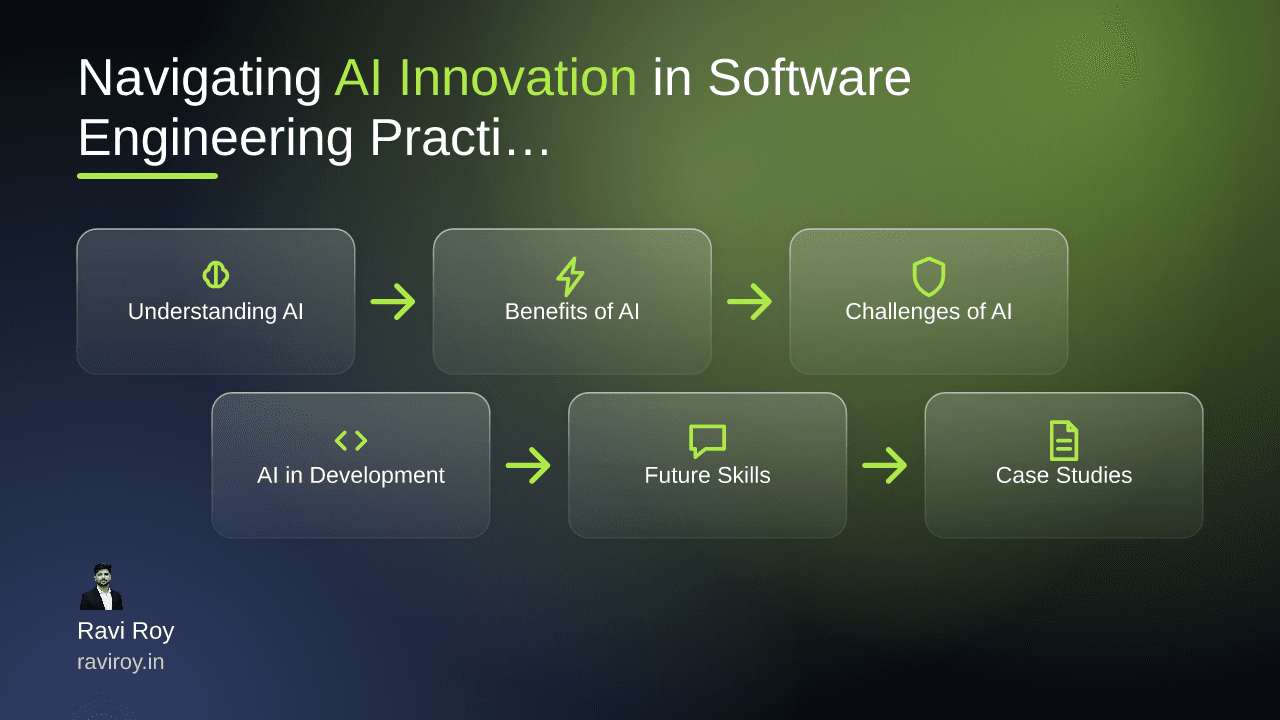
Understanding AI Innovation in Software Engineering
AI innovation in software engineering is not just a buzzword; it’s a transformative force reshaping how we design, develop, and maintain software. At the heart of this transformation are technologies like machine learning, natural language processing, and automation, driving efficiency and innovation across the board.
Definition of AI Innovation
AI innovation refers to the integration of artificial intelligence technologies into traditional software engineering practices. This encompasses various tools and methodologies that leverage machine learning algorithms, natural language processing capabilities, and automation technologies to enhance development processes. Instead of relying solely on manual methods, engineers can now harness AI to streamline workflows and achieve unprecedented levels of productivity.
Impact on Traditional Practices
The impact of AI on traditional software engineering practices is profound. Historically, software development has been linear and manual, often leading to bottlenecks and inefficiencies. However, with AI-integrated approaches, engineers are witnessing a paradigm shift. Tasks that once required endless hours of coding and debugging can now be expedited through intelligent automation. This not only leads to faster development cycles but also opens the door to more innovative solutions that would have been impractical before AI came into play.
Benefits of AI in Software Engineering
Embracing AI in software engineering is akin to unlocking a treasure trove of benefits that can significantly enhance the development lifecycle.
Enhancing Productivity
Automation is one of AI’s most impactful contributions to software engineering. By taking over repetitive tasks, AI liberates engineers to concentrate on complex problem solving. For instance, mundane tasks such as code formatting and version control management can be managed by AI-enabled tools like GitHub Copilot, allowing developers to allocate more time for strategic planning and development.
Improving Code Quality
AI-driven tools can dramatically improve code quality by detecting bugs and suggesting improvements in real-time. Platforms like SonarQube use AI algorithms to analyze code bases, identifying potential vulnerabilities before they escalate into significant issues. This capability not only boosts the reliability of the software but also enhances team confidence in the code they produce.
Streamlining Project Management
AI can optimize resource allocation and timelines, ensuring projects stay on track. Tools like Jira Automation leverage machine learning to analyze past projects, providing insights that help teams manage workloads more effectively and predict project durations. By reducing administrative overhead, developers can focus more on delivery than on logistics.
Challenges Presented by AI Integration
While the advantages of AI are plentiful, integrating this technology comes with its own set of challenges that Software Engineers must navigate.
Skill Gaps Among Developers
One significant hurdle is the skill gap that exists among developers when it comes to using AI tools effectively. The transition to AI-integrated workflows requires upskilling, as existing developers may not have experience with these new technologies. Companies need to invest in training programs to ensure teams are equipped to leverage these advancements.
Ethical Considerations
AI in software engineering also raises critical ethical considerations. When AI systems make decisions, understanding the rationale behind these decisions can be opaque, leading to ethical dilemmas, especially in sensitive domains like healthcare or finance. As we integrate AI, we must prioritize transparency and accountability in decision-making processes to avoid potential pitfalls.
Potential Job Displacement
Concerns about AI displacing human roles can create anxiety within teams. While it’s true that some tasks may become obsolete, it's crucial to view AI as a collaborative partner rather than a replacement. Rather than replacing developers, AI can empower them, enabling a focus on higher-level thinking and complex problem-solving.
AI's Role Throughout the Software Development Lifecycle
AI’s presence is felt across the entire software development lifecycle, revolutionizing every stage from requirements gathering to deployment.
Revolutionizing Requirements Gathering
In the initial stages of development, AI can significantly enhance the requirements-gathering process. Leveraging natural language processing, AI tools can analyze user feedback and documentation to derive actionable insights. For instance, tools like Aha! use AI to automatically prioritize features based on user sentiment analysis, resulting in a more user-driven product development approach.
AI in Coding and Development
AI-driven coding assistants are becoming essential tools for modern developers. Platforms like Tabnine utilize machine learning algorithms to predict and autocompletes code snippets based on context, accelerating the development timeline. This can also help junior developers by suggesting best practices and reducing the chances of common coding mistakes.
Testing and Quality Assurance
The testing phase is crucial, and AI is selectively enhancing this process. AI can accelerate testing cycles, automating the identification of bugs and performance bottlenecks. Tools like Test.ai allow developers to create smart test suites that adapt as the code evolves, making QA more efficient and less prone to human error.
Deployment and Monitoring Enhancement
In deployment, AI plays a pivotal role in continuous integration and continuous deployment (CI/CD) processes. Automation tools coupled with AI can monitor performance metrics in real-time, flagging anomalies that might indicate underlying issues post-deployment. This proactive monitoring ensures that problems can be addressed before they escalate, maintaining software integrity.
Future Skills for AI-Driven Software Engineering
As AI continues to evolve, engineers will need to adapt to thrive in this new landscape.
Technical Skills
Key technical skills necessary for effective AI integration include proficiency in machine learning frameworks, data analysis, and understanding of AI algorithms. Familiarity with platforms like TensorFlow or PyTorch will become increasingly vital for those looking to leverage AI in their workflows.
Soft Skills
Equally important are soft skills such as collaboration and communication. The ability to work effectively in cross-functional teams will be critical as AI becomes a common element in software projects. Engineers must be adept at translating complex AI concepts into actionable insights for non-technical stakeholders.
Continuous Learning
Developers must foster a mindset of lifelong learning to keep pace with rapidly changing technologies. Continuous professional development through online courses, workshops, or industry conferences will be essential for staying relevant in an AI-driven landscape.
Real-World Case Studies of AI in Software Development
The practical implications of AI in software development are best illustrated through real-world examples.
Success Stories
Many companies have successfully leveraged AI to enhance their software engineering practices. For instance, Facebook employs AI to monitor and combat misinformation by analyzing content and user interactions. Similarly, firms like Google are utilizing AI to optimize their search algorithms, resulting in enhanced user experiences.
AI Failures and Lessons Learned
Despite the successes, there have also been notable failures. The integration of AI at Microsoft's Tay, a chatbot that had to be shut down due to inappropriate responses, highlights the importance of rigorous training and ethical considerations. This serves as a lesson for developers to understand the implications and consequences of AI decisions thoroughly.
Navigating the burgeoning landscape of AI in software engineering presents both challenges and opportunities. By embracing this technology, engineers can enhance productivity, improve code quality, and streamline processes—but they must also address the ethical considerations and skill gaps that arise.
What specific AI tools or practices have you found most beneficial in your own software engineering projects?
💬 Join the conversation — share your take in the comments and tell us what you’d add.