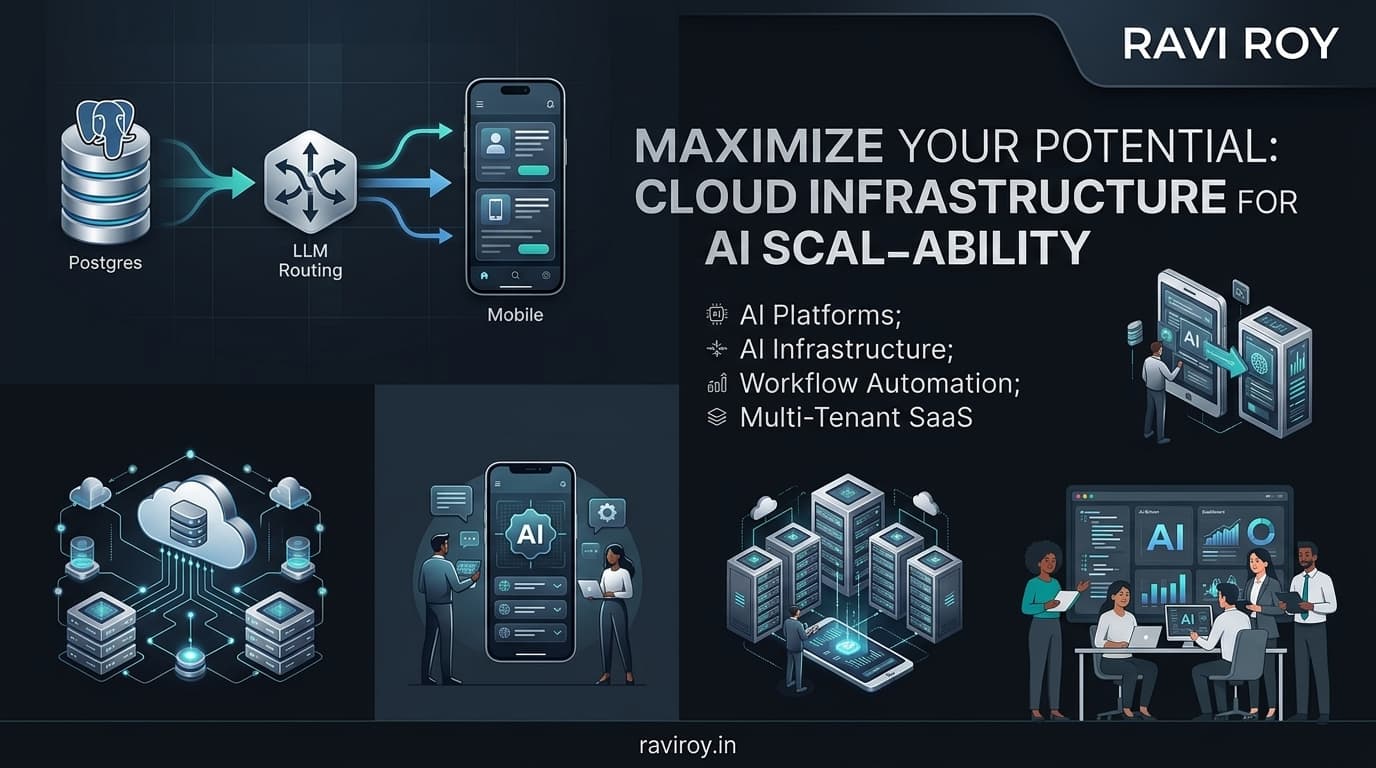
Maximize Your Potential: Cloud Infrastructure for AI Scalability
Imagine scaling your AI initiatives effortlessly while minimizing the complexities of traditional infrastructure. Cloud infrastructure for AI is not just a choice; it's a strategy for innovation and growth that companies are increasingly adopting.
Understanding Cloud Infrastructure for AI
Key Benefits of Cloud Infrastructure for AI
Cloud infrastructure forms the backbone of modern AI solutions. Comprising scalable storage, powerful computing resources, and flexible networking, the right cloud environment enhances AI capabilities. One significant advantage of using cloud services is cost-effectiveness; you pay only for what you use. This model is particularly beneficial for AI workloads, which can vary greatly in resource needs, enabling businesses to allocate budgets more efficiently.
Additionally, cloud platforms offer immense scalability. With elastic compute power on demand, organizations can scale their systems up or down based on workload requirements. Companies like Netflix and Spotify have thrived using cloud infrastructure, demonstrating how agility allows for rapid innovation and adaptation to consumer needs.
Comparison: Cloud vs. On-Premises AI Solutions
When comparing cloud solutions to on-premises setups, the disparity in flexibility becomes evident. On-premises AI solutions often have fixed capacities, potentially leading to underutilization or resource strain. Conversely, cloud infrastructure provides the ability to deploy resources swiftly, accommodating spikes in demand without significant lead time.
Moreover, maintaining on-premises infrastructure can entail high capital expenditures and ongoing maintenance costs. In contrast, cloud providers take care of updates and maintenance, allowing firms to concentrate on development rather than infrastructure management. Firms like Airbnb have successfully leveraged these advantages by migrating their operations to cloud platforms, experiencing both improved performance and lower costs.
How Cloud Platforms Support AI Training and Deployment
Infrastructure Requirements for AI Workloads
Successful AI training and deployment hinge on the right infrastructure requirements. Major cloud platforms like AWS, Azure, and Google Cloud offer critical features, including GPU and accelerator-backed services. These technologies significantly enhance processing capabilities, a vital requirement for the complex calculations involved in AI training.
Cloud environments are also designed to support hybrid and multicloud deployments—allowing organizations to blend the best elements of different platforms. For instance, a company might utilize Azure for specific services while retaining AWS for others, ensuring optimal performance and cost-effectiveness.
Choosing the Right Cloud Provider for AI
Selecting a cloud provider is crucial for ensuring the success of AI projects. Each provider offers unique features that cater to different needs. For example, AWS excels in services for data lakes and machine learning, while Google Cloud is known for its advanced AI and machine learning capabilities.
Businesses such as Lyft have harnessed cloud resources to implement AI solutions efficiently. Their ability to manage heavy traffic data through scalable cloud services is a testament to the effectiveness of the relational match between the cloud provider and the AI project’s requirements.
Leveraging Edge-Enabled AI in Cloud Infrastructure
Benefits of Edge Computing for AI
The intersection of edge computing and artificial intelligence presents invaluable opportunities for real-time data processing. Edge-enabled AI reduces latency by processing data closer to the source, significantly improving response times for applications that require immediate insights.
Industries like healthcare and automotive are already adopting this technology. For instance, remote monitoring devices in healthcare can analyze data in real-time, providing immediate alerts and improving patient outcomes.
Integration Strategies
To successfully integrate edge AI with cloud solutions, organizations must adopt strategic approaches. One effective method is to ensure a seamless data flow between edge devices and the cloud infrastructure. This can involve deploying lightweight AI models on edge devices while leveraging the cloud for deeper analytics and data archival.
Successful adopters like Tesla utilize this approach, processing vast amounts of vehicle data locally before syncing to their cloud for broader insights—effectively merging on-premises agility with cloud-depth analysis.
Cost Optimization Strategies for Scalable AI Deployments
Managing Cloud Costs for AI Workloads
Cloud costs can spiral out of control without a solid management strategy. Organizations must deploy techniques for monitoring and controlling expenses associated with AI projects. Utilizing cloud cost management tools can help identify usage patterns, allowing organizations to streamline expenses.
Consider employing a tagging system for all cloud resources. Tags enable precise tracking of costs related to specific projects, providing clear visibility into spending.
Optimizing Resource Usage
Efficient optimization of resource usage is vital. Best practices for managing GPU workloads during AI training include scheduling compute time to avoid wastage and optimizing model training algorithms to reduce GPU demands. Additionally, organizations must analyze the trade-offs between performance and cost effectively.
High-performing models may be expensive to run, but thorough analysis can reveal opportunities to lower costs without sacrificing performance.
Challenges and Considerations in Cloud-Based AI
Potential Pitfalls to Avoid
Migrating to cloud infrastructure can present pitfalls. Common challenges organizations face include poor planning, lack of cloud skills, and underestimating the demands of AI workloads. These issues can lead to project delays and unexpected costs.
Organizations should ensure that any migration includes thorough risk assessments and an understanding of cloud-native best practices.
Regulatory and Security Concerns
One of the foremost concerns with cloud infrastructures is data security. Companies must implement robust security protocols, ensuring compliance with regulations such as GDPR or HIPAA. Utilizing cloud providers with strong compliance certifications can alleviate some of these concerns, but organizations are ultimately responsible for their data governance strategies.
Regular audits and proactive compliance reviews will help maintain a secure environment while leveraging the cloud.
Future Trends in Cloud Infrastructure for AI
Emerging Technologies
Emerging technologies, such as generative AI and advanced machine learning algorithms, are set to revolutionize cloud infrastructure. These trends will likely demand more adaptable cloud environments, capable of handling increased computational loads while offering ease of scalability.
Organizations must prepare for evolving requirements, ensuring their cloud strategies are future-proofed against rapid technological changes.
Industry-Specific AI Platforms
The growth of industry-specific AI platforms hosted on cloud services will further redefine how businesses operate. For instance, manufacturing sectors may rely on tailored AI solutions that enhance production efficiency, using cloud capabilities for large-scale data analysis and real-time monitoring.
Anticipating these market shifts will be crucial for organizations aiming to remain competitive and innovative.
Ready to harness the power of cloud infrastructure for your AI initiatives? Let’s explore how we can help you scale effectively.