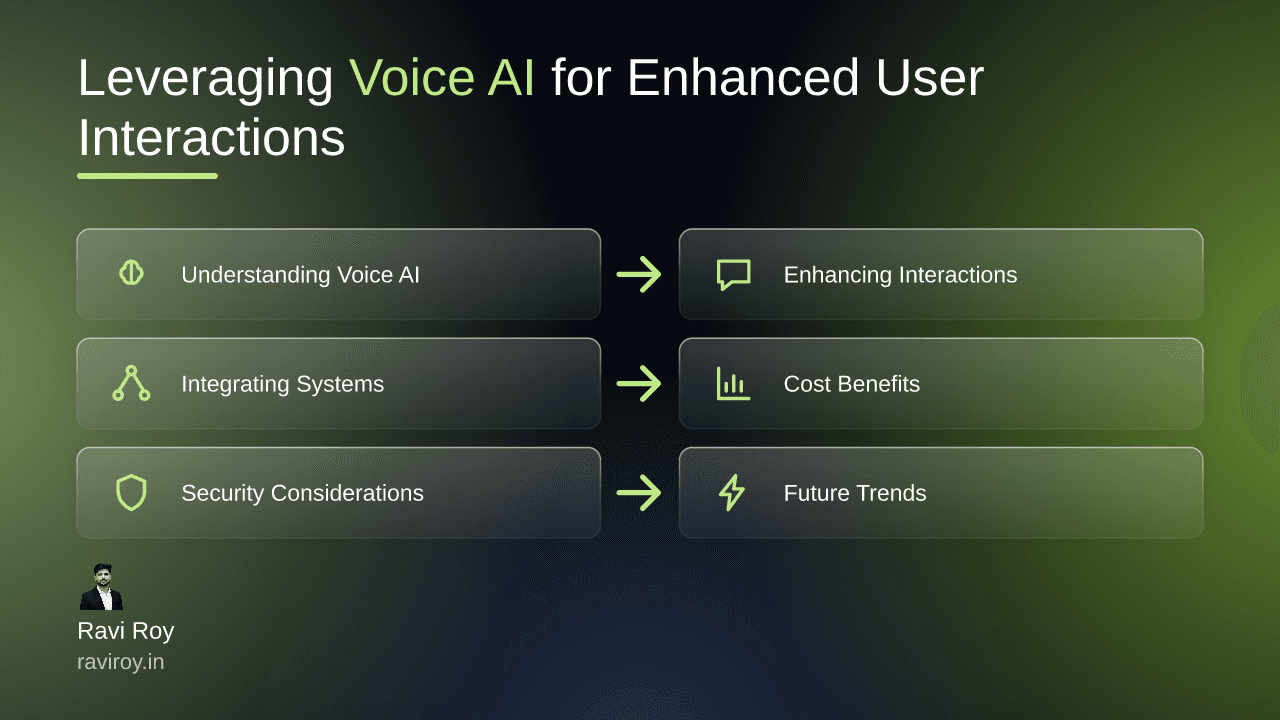
Leveraging Voice AI for Enhanced User Interactions in SaaS Products
Imagine a world where your software can hold conversations as seamlessly as your best customer service representative. That's not just a fantasy—it's the reality enabled by Voice AI technology, transforming how users interact with SaaS products. Utilizing Voice AI can significantly boost user engagement and satisfaction, paving the way for innovative interactions.
Understanding Voice AI and Its Impact on SaaS
What is Voice AI?
Voice AI refers to technology that allows users to interact with applications and systems using natural language. It encompasses features like speech recognition, natural language processing (NLP), and text-to-speech capabilities, making interactions smoother and more intuitive. Essentially, Voice AI enables machines to understand, process, and respond to human speech, bridging the gap between technology and user experience (source).
The Role of Voice AI in SaaS
In the realm of SaaS, Voice AI plays a vital role in enriching user interactions. By streamlining communication, it enhances user engagement and satisfaction. For example, leading platforms like Salesforce have integrated voice-enabled functionalities, allowing users to dictate notes directly into CRM systems, significantly reducing the time spent on manual data entry. This not only elevates productivity but also fosters a more user-friendly environment.
Enhancing Customer Interactions with Voice AI
Human-like Conversation Interfaces
Voice AI creates conversation flows that mimic human interactions, allowing users to engage in a more natural way. By leveraging machine learning, these systems can adapt over time, learning from user interactions to improve responses. A notable example is Amazon's Alexa for Business, which enables teams to manage tasks through voice commands, making software interaction intuitive.
Real-time Automation
Real-time automation facilitated by Voice AI can streamline workflow efficiency. By automating routine tasks—like scheduling meetings or retrieving data—companies can maintain a laser-sharp focus on customer engagement. For instance, companies utilizing AI-driven voice solutions have reported reduced customer wait times, leading to enhanced satisfaction and loyalty. A case study of a SaaS platform showed an average 30% increase in customer interactions due to real-time query handling with Voice AI.
Integrating Voice AI with Existing Systems
Deep Integration with CRM Tools
Integrating Voice AI with CRM systems enables better data utilization and interaction analysis. By allowing voice commands within the CRM, businesses can enhance their data input process, leading to cleaner, more actionable insights. For instance, integration with platforms such as HubSpot can enable users to log activities just by speaking.
Challenges in Implementation
However, integrating Voice AI is not without challenges. Common hurdles include technical limitations, integration costs, and user training. It's crucial for SaaS companies to recognize these challenges early on and plan accordingly. A potential solution is to develop a phased integration approach, where businesses gradually incorporate voice technology while monitoring customer feedback. This method allows for adjustments along the way, ensuring a smoother transition.
Cost Benefits and ROI of Voice AI
Cost Savings from Automation
The automation capabilities of Voice AI can lead to substantial cost savings. By minimizing human error and reducing the time spent on repetitive tasks, companies can redirect resources toward revenue-generating activities. A recent analysis demonstrated that businesses utilizing Voice AI experienced a 25% reduction in operational costs within the first year of implementation.
Long-term ROI
Exploring the long-term ROI reveals even more compelling reasons to adopt Voice AI in SaaS. Companies that integrate voice technology not only see immediate operational benefits but also long-term customer retention. For example, one SaaS company observed a 40% increase in customer retention rates after implementing Voice AI features, which underscored the value of personalized interactions and the significance of user voice.
Security and Compliance Considerations
Ensuring Data Security
Implementing Voice AI necessitates stringent security measures to protect sensitive information. Technologies employed should include data encryption, user authentication, and constant monitoring for anomalies. These protective measures are essential for maintaining user trust, especially in industries with high compliance standards, such as healthcare and finance.
Compliance with Regulations
SaaS companies must remain vigilant about compliance with various industry regulations when deploying Voice AI. Guidelines such as GDPR and HIPAA impose strict rules on data handling, especially for voice data. Regular audits and adherence to best practices in voice data management are crucial. Experts recommend conducting compliance assessments during the early phases of Voice AI integration to avoid future legal pitfalls.
The Future of Voice AI in SaaS: Trends and Innovations
Emerging Technologies: AR/VR Integration
The integration of Voice AI with AR/VR technologies is poised to redefine user interactions within SaaS. Imagine training through immersive environments controlled by voice commands, facilitating a seamless learning experience. Such innovations could dramatically enhance training efficiency across industries, from healthcare to corporate training.
Multilingual Applications
As businesses expand globally, the demand for multilingual voice AI applications becomes crucial. Developing systems that understand and respond in multiple languages can broaden market reach and improve user satisfaction. Companies that adopt multilingual capabilities are likely to outperform their competitors by catering to diverse customer bases more effectively.
Conclusion
Voice AI is no longer a luxury but a necessity for SaaS companies aiming to stay competitive. By enhancing user engagement, streamlining operations, and ensuring better security measures, businesses can leverage this technology to revolutionize customer interactions.
How has your company implemented Voice AI, and what challenges or successes have you experienced?
💬 Join the conversation — share your take in the comments and tell us what you’d add.