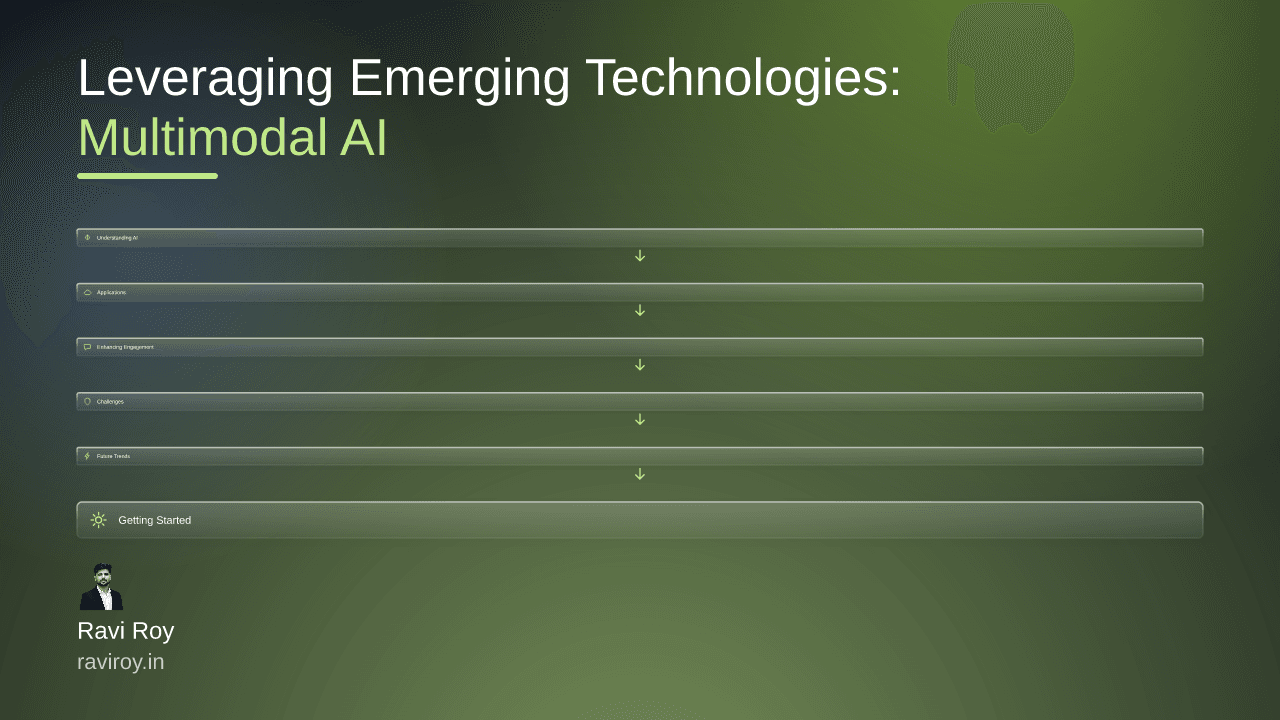
Understanding Multimodal AI and Emerging Technologies
Emerging technologies are reshaping how we interact with information and services, and at the forefront of this transformation is multimodal AI. By leveraging multiple modes of input—text, audio, and visual data—multimodal AI offers a richer, more intuitive experience. But what exactly does this mean?
What is Multimodal AI?
Multimodal AI refers to systems designed to process and understand various types of data simultaneously. For instance, imagine a virtual assistant that can analyze spoken commands, recognize visual cues, and interpret text simultaneously to provide contextual responses. This holistic understanding enables applications to deliver a seamless user experience that mimics human-like comprehension.
At its core, multimodal AI incorporates three key components:
Text: Natural language processing allows systems to understand and generate human language.
Audio: Speech recognition and synthesis facilitate interactions through voice, enhancing accessibility.
Visual: Computer vision interprets images and videos, allowing systems to recognize objects and movements.
Key Features of Emerging Technologies
Emerging technologies provide invaluable resources that complement multimodal AI systems, enhancing their capability and effectiveness. These include:
Big Data: Massive datasets enable AI to learn patterns and improve over time.
Cloud Computing: Provides the computational power necessary for processing complex algorithms.
Internet of Things (IoT): Connects devices and feeds data into AI systems, enriching the user experience through real-time data.
Together, these features foster innovative applications and redefine user interactions across various sectors.
Applications of Multimodal AI in User Experiences
Multimodal AI is not just a theoretical concept; it is actively being utilized to transform user experiences across multiple industries.
Case Studies: Real-World Applications
Several major companies have emerged as pioneers in leveraging multimodal AI. For example, Google integrates voice commands with visual search capabilities, allowing users to snap a photo and search using both sight and sound. Microsoft’s Azure Cognitive Services utilize text, speech, and vision recognition to create powerful tools that developers can integrate into their applications, enhancing user interactivity.
Industry-Specific Examples
The unique applications of multimodal AI extend into various sectors:
Retail: Retailers are implementing multimodal AI to create personalized shopping experiences. For instance, AI-driven recommendation engines analyze customer data from both online behavior and in-store interactions.
Healthcare: In the medical field, multimodal AI improves diagnostic accuracy by synthesizing data from radiology images, patient histories, and real-time patient monitoring to produce comprehensive analyses.
Entertainment: Platforms like Netflix and Spotify use multimodal AI to curate personalized content. By analyzing users' viewing habits, preferences, and even visual cues from in-app interactions, these platforms suggest new movies or songs tailored to individual tastes.
Enhancing User Engagement Through Multimodal AI
To truly captivate users, businesses are recognizing the importance of crafting engaging experiences through multimodal AI.
Interactive Interfaces
Multimodal AI fosters engaging interactive interfaces that blend text, voice command, and visual feedback. For example, smart home assistants respond to spoken queries with both voice answers and visual displays, making information digestible and easier to grasp. This interplay encourages users to stay engaged longer, as it offers a diverse and stimulating interaction method.
Personalization Techniques
The role of personalization in user engagement cannot be understated. Multimodal AI leverages user data to tailor experiences uniquely. By tracking interactions across platforms, it can recommend personalized content or services that meet individual preferences. For instance, a music app might analyze a user’s listening patterns and create a tailored playlist that consists of their favorite genres and songs.
Challenges and Considerations in Implementing Multimodal AI
While the benefits of multimodal AI are clear, organizations must navigate several challenges during implementation.
Data Privacy Concerns
As businesses utilize multimodal AI to enhance user experiences, they must address ethical implications such as data privacy. Collecting and processing diverse data types raises concerns about user consent and data security. Companies must ensure that they are compliant with privacy regulations and transparent about how they use consumer data to avoid breaches of trust.
Technical Barriers
Additionally, technical hurdles can impede the seamless integration of multimodal AI systems. Organizations often face challenges such as:
Interoperability among various data formats,
The complexity of designing algorithms that effectively process multiple data modalities,
Insufficient trained personnel with expertise in both AI and the specific industry.
Addressing these technical barriers is crucial for maximizing the effectiveness of multimodal solutions.
Future Trends in Emerging Technologies and Multimodal AI
Looking ahead, the evolution of multimodal AI is poised to shape new trends and innovations in technology.
Predictions for the Next 5 Years
Experts forecast substantial growth in the adoption of multimodal AI. As computational power increases and algorithms become more sophisticated, we can expect advancements in real-time data processing, leading to even more personalized user experiences. Companies that invest in multimodal capabilities are likely to outpace competitors and set new standards for user engagement.
Innovative Emerging Technologies
Other emerging technologies, such as augmented reality (AR) and virtual reality (VR), complement multimodal AI by creating immersive experiences. These technologies can transform training simulations in various domains, including education and healthcare, by enabling simulations that integrate visual and audio inputs for better learning outcomes.
How to Get Started with Multimodal AI
For organizations and developers eager to explore multimodal AI's potential, the journey begins with understanding the available tools.
Tools and Platforms
There are several platforms and frameworks to build multimodal AI systems:
TensorFlow and PyTorch: These machine learning frameworks are pivotal for developing complex AI models.
OpenAI and Google Cloud AI: Offer pre-trained models and APIs to facilitate quick integration of AI capabilities.
Hugging Face Transformers: Ideal for building systems capable of processing a variety of data modalities.
Building Your First Project
Here’s a simple guide to kickstart your first multimodal AI application:
Choose a Problem: Identify a specific user experience challenge you want to address.
Select Data Sources: Gather datasets that include text, audio, and visual elements relevant to your problem.
Pick Tools: Use frameworks such as TensorFlow or PyTorch to develop your model.
Model Development: Train your model to analyze and interpret the multimodal data.
Testing: Evaluate your system’s responses and adjust your algorithms based on user feedback.
Iterate: Continuously improve the application by integrating more data and refining interactions based on user engagement.
Real-World Impacts of Multimodal AI on Society
As we consider the broader implications of multimodal AI, its influence on society becomes evident.
Cultural Shifts
Multimodal AI technologies are changing cultural perceptions about how humans interact with machines. The evolution of user-friendly interfaces has created a shift toward acceptance of technology as part of daily life, encouraging more creative and innovative applications in various domains.
Economic Considerations
Economically, the impact of multimodal AI extends to job creation and the necessity for evolving skill sets. As automation and AI technologies continue to proliferate, there's a growing demand for skilled workers who can navigate complex multimodal environments.
In conclusion, adopting multimodal AI isn't just an opportunity; it’s a necessity for those looking to stay competitive.
What unique opportunities or challenges have you encountered while adopting emerging technologies in your projects?
💬 Join the conversation — share your take in the comments and tell us what you’d add.