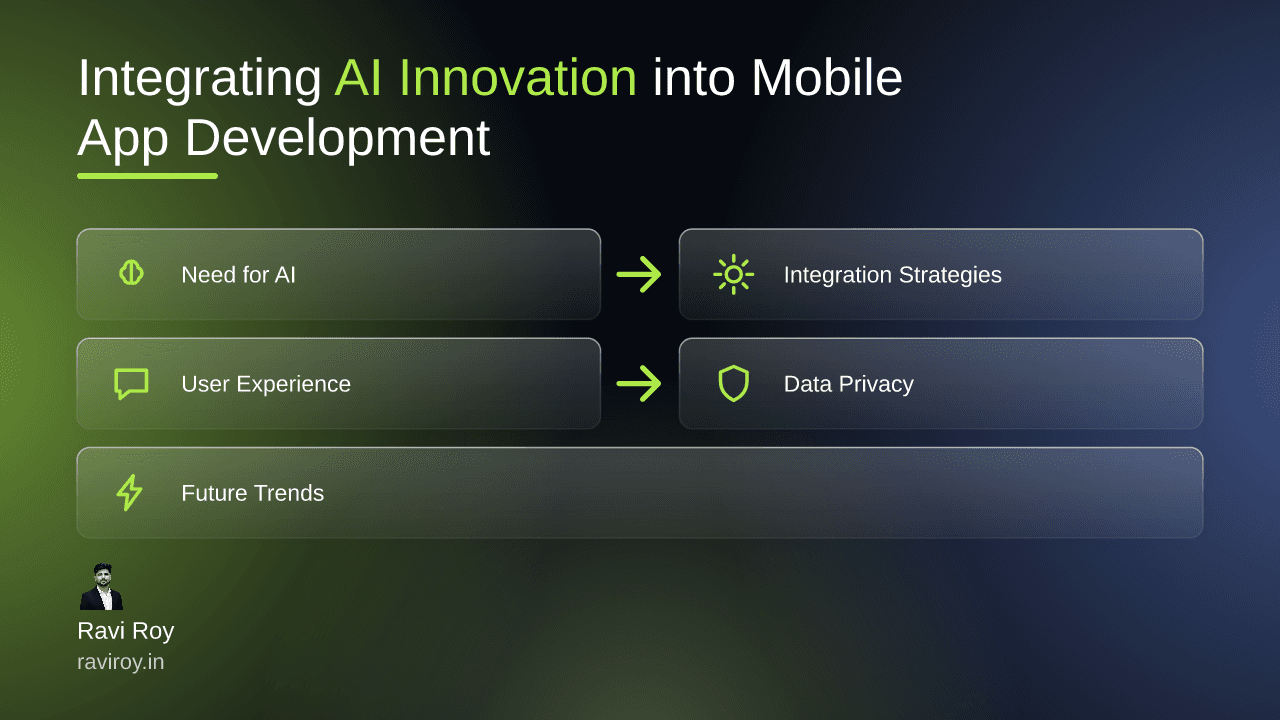
Understanding the Need for AI Innovation in Mobile Apps
As mobile technology evolves, the integration of AI innovation has emerged as a significant game-changer. Mobile apps are no longer mere tools; they are personalized extensions of daily life, demanding smarter solutions to engage users effectively.
Benefits of AI in Mobile Applications
AI enhances user engagement by offering personalized content and experiences tailored to individual preferences. For example, apps like Spotify use AI algorithms to analyze listening habits, curating playlists that resonate with users on a personal level. This not only keeps users hooked but also fosters brand loyalty.
Another advantage lies in AI's capacity to streamline development processes through automation tools. Consider the use of code generation or testing automation frameworks. These innovations can cut down development time significantly, allowing teams to focus on creating engaging user interfaces and robust back-end systems.
Real-world applications such as Uber demonstrate the power of AI in optimizing operations and enhancing user experience. AI drives the efficiency of routing and pricing mechanisms, ensuring users receive timely service while maximizing revenue for the platform.
Addressing User Needs with AI
To effectively address user needs, it’s essential for developers to leverage AI for insights derived from user data. Using analytics tools, developers can identify what users truly want, fine-tuning features that resonate with their audience. This responsiveness is a core competency in a saturated marketplace.
Strategies for Integrating AI Innovation
Choosing the Right AI Tools and Frameworks
Selecting the appropriate AI tools and frameworks hinges upon understanding the specific requirements of your app. Consideration of factors like scalability, ease of integration, and community support are crucial.
Some popular machine learning frameworks such as TensorFlow and PyTorch offer a robust foundation for implementing AI functionalities. TensorFlow excels in allowing developers to build complex neural networks, while PyTorch provides a more intuitive interface that is often favored for research and rapid prototyping.
Implementing AI-Driven Features
Practical implementation begins with identifying features that can benefit from AI integration. For example, an e-commerce app can utilize AI-driven recommendation systems to enhance sales. By ingesting user behavior data and purchasing history, the app can suggest products that users are statistically more likely to buy, resulting in increased conversions.
A case study worth examining is Netflix, which has effectively harnessed AI to recommend shows and movies tailored to user tastes, contributing to a vast engagement increase.
Approaches to AI Integration
On-Device Machine Learning (Edge AI)
Edge AI involves processing data on the user's device rather than in the cloud. This approach offers the benefit of real-time data processing, a feature that apps like Google Photos utilize to enhance image recognition and categorization efficiently.
By analyzing data on-device, Edge AI minimizes latency and improves user experience, particularly in areas with limited connectivity. This is crucial for apps that require immediate feedback, such as gaming or augmented reality applications.
Cloud-based AI Solutions
On the other hand, cloud-based AI solutions are invaluable for applications needing heavy computational power. These solutions boast virtually limitless processing capabilities, allowing complex models to run without burdening the user's device.
However, developers must be aware of the latency issues that come with cloud solutions, particularly when data must be transmitted to and from remote servers. Successful apps like Slack effectively mix cloud processing with on-device capabilities to enhance user experience.
Enhancing User Experience with AI
Hyper-personalization Techniques
Hyper-personalization techniques rely on AI's ability to analyze vast amounts of user data quickly. By predicting individual user needs, apps can provide tailored experiences that keep users engaged. For instance, in the fitness app sector, platforms like MyFitnessPal analyze user activity and dietary preferences to create personalized workout and meal plans.
AI for User Feedback and Adaptation
Incorporating user feedback loops into AI processes enhances adaptation over time. Apps can utilize feedback to train AI models continuously, ensuring evolving preferences are met. For example, LinkedIn employs this technique to refine job recommendations based on user interactions, making the platform even more relevant to job seekers.
Addressing Data Privacy and Security in AI Applications
Balancing Functionality with Security
The rise of AI in mobile apps comes with inherent data privacy concerns. It is crucial for developers to balance innovative functionalities with rigorous security protocols. Users are increasingly aware of how their data is used, and building trust is paramount.
Best practices for ensuring user data protection include employing encryption, anonymizing data, and conducting regular security audits. Employing a privacy-first approach not only safeguards user data but also enhances your brand's reputation.
Regulatory Considerations
Understanding key regulations, such as GDPR or CCPA, is essential for compliance in the development of AI-driven mobile applications. These regulations often dictate how user data can be collected, processed, and stored, making legal alignment a fundamental aspect of your development strategy.
Future Trends in AI for Mobile App Development
Generative AI's Role
Looking to the future, generative AI is predicted to revolutionize content creation within apps. Imagine AI composing personalized articles or generating images tailored to user tastes, which could open up entirely new avenues for engagement.
AI-Enabled Automation
Furthermore, AI-driven automation promises to streamline app updates and maintenance. By automating routine tasks, developers can allocate resources toward innovation rather than maintenance, enhancing productivity and creativity.
Emerging technologies in AI, such as advanced natural language processing and computer vision, will redefine how users interact with mobile applications, making experiences richer and more intuitive.
Integrating AI into mobile applications is not just a trend—it's a necessity for staying competitive. What challenges have you faced when integrating AI into your mobile applications, and how did you overcome them?
💬 Join the conversation — share your take in the comments and tell us what you’d add.