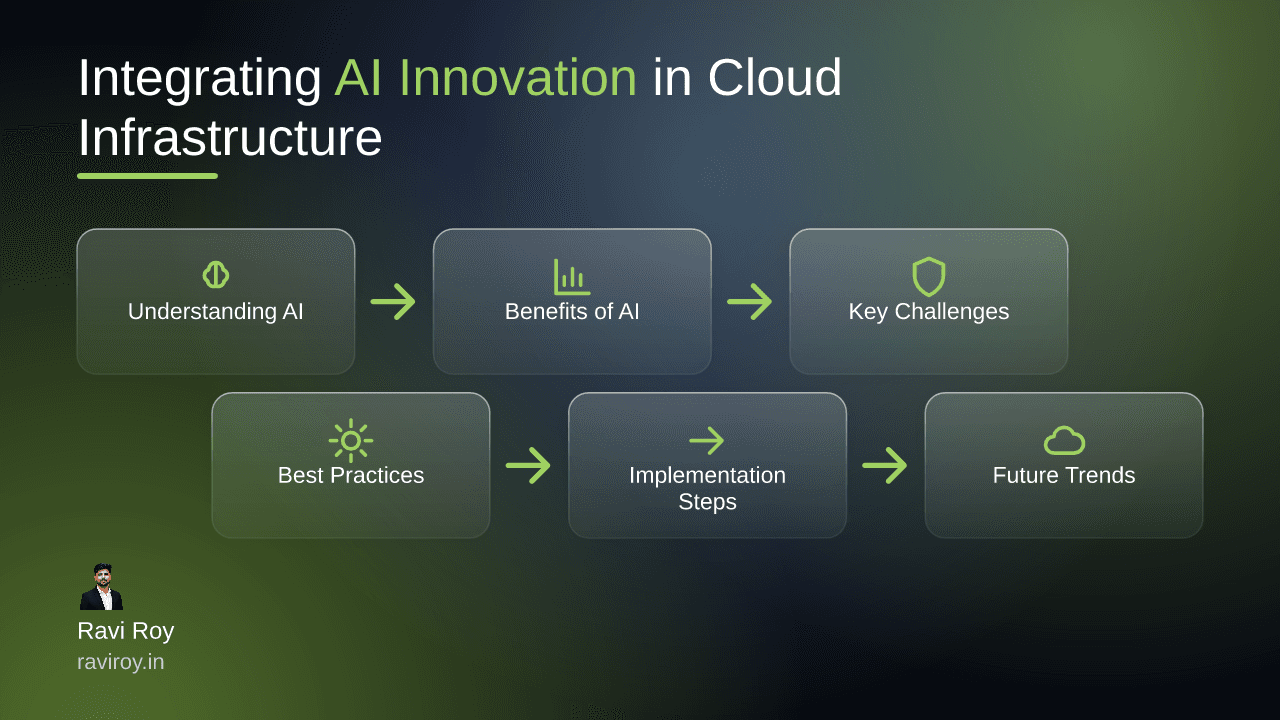
Understanding AI Innovation in Cloud Infrastructure
Artificial Intelligence (AI) innovation is changing how businesses operate and interact with technology. It’s more than just buzzword-fueled hype; it represents tangible advancements in automation, analytics, and customer experience that can profoundly impact cloud infrastructure.
Defining AI Innovation
AI innovation encompasses a broad spectrum of technological advancements, primarily involving machine learning, natural language processing, and intelligent automation. It allows systems to learn from data, adapt to new inputs, and perform tasks that traditionally required human intelligence. In the context of cloud infrastructure, AI innovation translates to efficient resource management, smarter data processing, and enhanced user experiences.
The Role of Cloud Infrastructure
Cloud infrastructure plays a pivotal role in fostering AI innovation. The scalability and flexibility of cloud environments allow organizations to easily adjust resources according to their computational needs. This adaptability is critical for running AI workloads that can fluctuate dramatically in processing power requirements. Additionally, cloud platforms provide a vast array of tools and services that enable developers to deploy and manage AI solutions effectively, from data ingestion to model training and inference.
Benefits of Integrating AI Innovation in Cloud Systems
Integrating AI innovation into cloud systems provides numerous advantages that enhance both performance and operational efficiency.
Enhanced Performance
AI can significantly optimize performance in cloud applications. For instance, using AI algorithms for predictive analytics enables better resource allocation and workload management. By forecasting traffic requirements and automatically adjusting resources, businesses can minimize latency and improve user satisfaction.
Cost Efficiency
A major benefit of incorporating AI into cloud infrastructure is cost efficiency. AI-driven optimizations can reduce downtime by streamlining processes and proactively identifying failures before they occur (for instance, using anomaly detection algorithms). Moreover, the intelligent allocation of resources ensures that companies only pay for what they need, leading to better budget management and reduced overall costs.
Improved Security
Data security is a prime concern for cloud infrastructure, and AI can enhance safety measures dramatically. Implementing AI-powered security solutions allows for real-time threat detection and automated responses to potential breaches. Techniques such as behavioral analytics can identify unusual activities and flag them for review, making cloud environments safer from cyber threats.
Key Challenges in AI Integration
While the benefits are considerable, integrating AI into cloud systems is not without its challenges.
Technical Barriers
Technical challenges often arise during AI integration. These include compatibility issues between existing systems and new technologies, the need for specialized talent, and potential performance bottlenecks. Ensuring interoperability between legacy systems and modern AI solutions can be particularly daunting.
Ethical Considerations
Ethical implications are another critical area of concern. The deployment of AI technologies can raise questions about bias in algorithms, decision transparency, and accountability. It's essential to establish governance frameworks that address ethical concerns while promoting responsible AI use within cloud infrastructure.
Data Privacy Issues
Data privacy laws, such as the GDPR, introduce complexities in AI deployment. Organizations must ensure compliance when handling sensitive information, necessitating robust data management and protection strategies. Understandably, balancing AI capabilities with privacy concerns remains a significant challenge for many businesses.
Best Practices for Implementing AI Innovation
To effectively integrate AI into your cloud infrastructure, adopting best practices can help streamline the process and mitigate challenges.
Hybrid AI Frameworks
Utilizing hybrid AI frameworks can enhance cloud operations by providing the flexibility to deploy AI applications across diverse environments, whether on-premises or in the cloud. This approach allows companies to leverage the best of both worlds, taking advantage of robust, scalable cloud resources while keeping sensitive data closer to home when necessary.
Automation in AI Operations
Automation is vital for streamlining AI processes in the cloud. Tools such as AI Model Management Platforms can automate routine tasks associated with model training and deployment, reducing manual workload and accelerating time-to-market for AI solutions. Implementing continuous integration and continuous deployment (CI/CD) pipelines ensures smooth operational flow and rapid iteration.
Leveraging Edge Computing
Edge computing can significantly improve AI processing and responsiveness, especially when low latency is critical. By processing data closer to the source, organizations can reduce bandwidth costs and enhance the performance of real-time applications, boosting overall user experiences.
Steps to Successfully Integrate AI with Cloud Infrastructure
Integrating AI into cloud infrastructure involves a series of methodical steps to ensure success.
Assessing Current Systems
Start by evaluating your existing cloud infrastructure to identify areas that can accommodate AI integration. This includes assessing performance metrics, resource utilization, and identifying potential bottlenecks. Understanding current capabilities will guide the formulation of an effective strategy.
Developing a Framework
Once you have assessed your systems, it's time to develop a robust framework tailored for AI workloads. It should include policies for data handling, security measures, and protocols for continual performance evaluation. A well-defined framework provides a roadmap for integrating AI technologies smoothly.
Implementing Iteratively
Adopt an iterative implementation approach to reduce risk and fine-tune performance over time. Start with pilot projects that allow for testing and refinement before full-scale deployment. Gathering feedback at each stage of the process can highlight areas for improvement and contribute to the overall success of the integration.
Case Studies of Successful AI Integration
Learning from those who have successfully integrated AI into their cloud infrastructures can provide valuable insights.
Notable Success Stories
Many organizations have effectively utilized AI to enhance their cloud systems. For example, a major financial institution leveraged AI to optimize their customer service operations by implementing chatbots in their cloud infrastructure. This not only improved response times but also reduced operational costs by allowing human agents to focus on more complex inquiries.
Lessons Learned
Key takeaways from these success stories include the importance of continuous learning and adaptation. Regularly updating AI models based on new data and refining operational practices can lead to sustained improvements. Additionally, fostering an organizational culture that is open to change encourages innovation and helps address challenges proactively.
Future Trends in AI and Cloud Integration
As technology evolves, so too do the possibilities for AI and cloud integration.
Sustainability in AI Solutions
A growing trend is the push for sustainability in AI-powered cloud solutions. Organizations are increasingly prioritizing energy-efficient practices in their AI operations, from optimizing algorithms to reducing the carbon footprint of data centers. This movement not only meets growing regulatory pressures but also resonates with environmentally conscious consumers.
Emerging Technologies
Emerging technologies, such as quantum computing and advanced machine learning frameworks, are set to influence AI integration in future cloud systems. Preparing for these innovations can position organizations at the forefront of this technological evolution, granting them competitive advantages in their respective industries.
With AI innovation continuously reshaping cloud infrastructure, businesses must navigate both opportunities and obstacles. What challenges have you faced while integrating AI into your cloud infrastructure, and how did you overcome them? Your experiences could provide valuable insights for others on this journey.
💬 Join the conversation — share your take in the comments and tell us what you’d add.