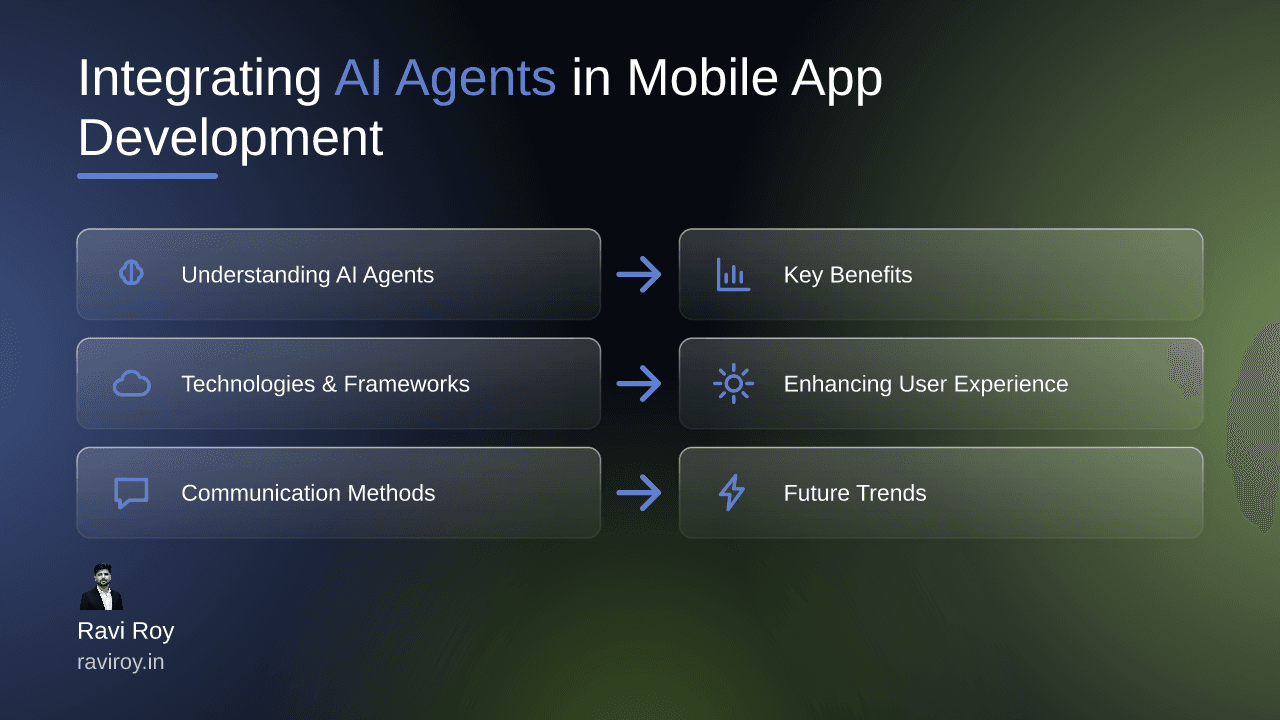
Understanding AI Agents in Mobile App Development
What are AI Agents?
AI agents represent a transformative leap in mobile app development, moving beyond simple algorithms to entities that learn, adapt, and interact in real-time based on user behavior. Specifically designed for mobile applications, AI agents leverage machine learning and natural language processing to provide a more intuitive and personalized user experience.
Imagine an app that not only remembers your previous preferences but anticipates what you might need next. This is the essence of AI agents—they continuously evolve their functionalities, making them increasingly relevant to user needs.
Differences from Traditional AI Features
While traditional AI features often perform predefined tasks without deep learning capabilities, AI agents stand apart by their ability to adapt. Classic AI functions depend heavily on rules set by developers, while AI agents can analyze user interactions, identify patterns, and refine their responses accordingly.
For example, a traditional recommendation system may only suggest items based on past purchases, whereas an AI agent evaluates real-time user interactions to offer suggestions that align with evolving preferences. This dynamic adaptability fundamentally enhances user engagement and satisfaction.
Key Benefits of Using AI Agents in Apps
Enhanced Personalization
One of the hallmarks of AI agents is their capacity for hyper-personalized experiences. By analyzing a user’s past interactions, an AI agent can tailor content or services in a way that traditional features simply cannot. Personalized greetings, custom recommendations, and even content adjustments can create a sense of individual connection between the app and the user.
Consider a fitness app that learns a user’s workout habits. Instead of generic training plans, an AI agent can develop a unique regimen based on real-time performance and user feedback, making the app feel more relevant and engaging.
Proactive and Context-Aware Assistance
Beyond personalization, AI agents offer proactive assistance by anticipating user needs before they are articulated. Imagine an app that can remind you about an upcoming deadline or suggest an article based on your current reading habits without you needing to ask. This proactive behavior not only improves engagement but fosters a seamless experience.
Research indicates that users are significantly more likely to remain engaged with apps that provide context-aware recommendations (source). These insights reveal that incorporating AI agents can lead to better retention rates and user satisfaction, showcasing a direct correlation between advanced proactive features and enhanced user experiences.
Technologies and Frameworks for AI Agents
Common Technologies
To cultivate AI agents, various technologies come into play. Machine learning libraries like TensorFlow and PyTorch are foundational for building AI capabilities. These tools offer pre-trained models that can be fine-tuned to specific app requirements.
Additionally, natural language processing (NLP) libraries such as SpaCy or NLTK facilitate communication between users and AI agents, enabling a more conversational experience. For anyone looking to start, these technologies are not just theoretically interesting; they have substantial practical applications.
Popular Development Frameworks
Frameworks like TensorFlow and Dialogflow simplify the development process for AI agents. TensorFlow serves as a powerful backend platform, making it easier to build and train models. Conversely, Dialogflow specializes in creating conversational interfaces, allowing developers to implement complex dialogues without excessive overhead.
For those eager to dive in, numerous resources are available. Websites like Towards Data Science and Google Developers are great starting points for tutorials and documentation on utilizing these frameworks effectively.
Enhancing User Experience with AI Agents
Conversational and Multimodal Interfaces
AI agents shine particularly in creating conversational and multimodal interfaces, enhancing the way users interact with applications. With the rise of voice-activated assistants, users are increasingly comfortable engaging with AI in conversational formats. This format allows for a more intuitive interaction style, breaking down traditional barriers associated with technology use.
For instance, a travel app equipped with an AI agent can allow users to inquire about destinations through voice commands, further enhancing user engagement. These interactions aren’t just about convenience; they enrich the overall user experience, making apps feel more approachable and enjoyable to use.
Examples of Successful Implementation
There are numerous case studies demonstrating the effectiveness of AI agents. Take the example of a personal finance app that integrates an AI agent to analyze spending habits and suggest budget adjustments. Users report higher satisfaction and loyalty to apps that provide such personalized financial advice. Analytics often reveal improved user engagement, as the app provides relevant recommendations based on real-time activity.
User feedback is unequivocally positive, emphasizing their delight in receiving tailored notifications and reminders. This shows that successfully implementing an AI agent can yield concrete benefits for both users and developers alike.
Communication Between AI Agents and Mobile Apps
Backend Integration
For AI agents to operate efficiently, they require seamless communication with backend services. This involves establishing robust APIs that allow the app to send and receive data to and from servers in real time. By ensuring that your AI agent can access current data and respond to inquiries almost instantaneously, you greatly enhance the user experience.
However, this integration is not without challenges. Developers must navigate various potential pitfalls, such as data synchronization issues or latency that might hinder real-time interactions.
Data Flow and Management
Data management plays a critical role in ensuring that AI agents function optimally. Clear pathways for data flow between the user interface and backend services need to be established. This involves not just managing user preferences but also ensuring that data is updated in real time to provide relevant and timely responses.
Many developers face challenges around data privacy and user consent when integrating AI agents. Striking a balance between personalized service and user trust is essential for successful implementation.
The Future of AI Agents in Mobile Development
Emerging Trends in Agentic AI
As AI technology continues to evolve, new trends are emerging, including intelligent automation and multi-agent systems. These advancements promise to enhance app capabilities significantly, allowing multiple AI agents to interact and collaborate for a richer user experience.
For instance, imagine an app where an AI agent guides you through a workout while another agent manages your nutrition plan, all in real time. This interconnected approach offers the potential for a more holistic experience compared to traditional, isolated AI functionalities.
Long-Term Benefits for Developers and Users
Embracing AI agents leads to long-term benefits for both developers and users. With advancements in agentic AI, developers can create more sophisticated apps capable of learning and adapting over time. This future of technology integration opens up pathways for apps to not only solve present-day challenges but also anticipate future user needs.
In the long run, users will enjoy more seamless and effective interactions with their apps, resulting in higher satisfaction and greater loyalty.
As you embark on your mobile app development journey, consider how you have seen AI agents impact user experiences in your own projects. Have you witnessed real-time adaptations that transformed your app’s engagement? Share your insights and experiences below!
💬 Join the conversation — share your take in the comments and tell us what you’d add.