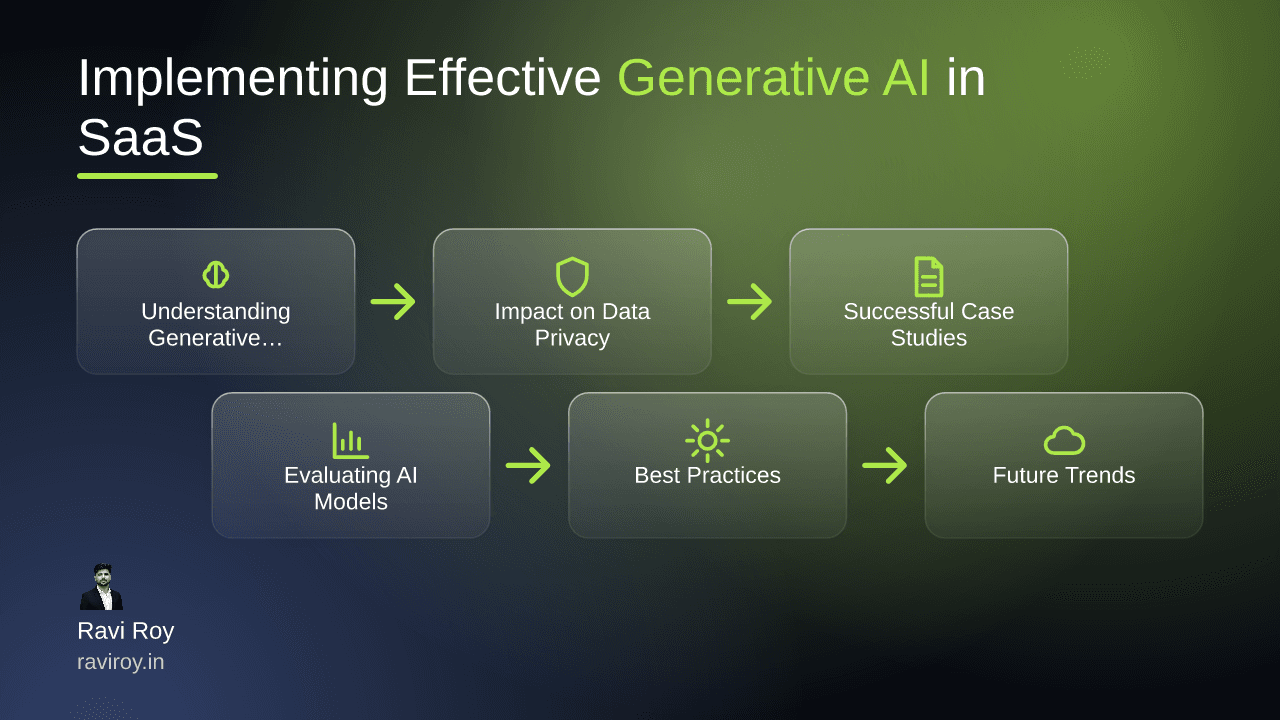
Understanding Generative AI and Its Applications in SaaS
Generative AI is revolutionizing how Software as a Service (SaaS) companies develop and deliver their products. This transformative technology not only streamlines workflows but also brings personalized experiences to users, making interactions more engaging and meaningful.
What is Generative AI?
Generative AI refers to algorithms that can create new content or data patterns by learning from existing information. Unlike traditional AI that merely analyzes data, generative AI can produce novel outputs, encompassing everything from text and images to music and code. Core functionalities include natural language processing, image generation, and automated data synthesis, allowing for dynamic interactions without human intervention.
Current Applications in SaaS
SaaS applications benefit from generative AI in a myriad of ways. From enhancing user experience to revolutionizing content creation, this technology can personalize interfaces and tailor recommendations based on user behavior. Beyond conventional chatbot implementations, generative AI aids in automating content generation for blogs, marketing materials, and personalized emails, significantly reducing manual effort while increasing accuracy.
Consider a SaaS platform that uses generative AI to analyze user data and generate customized reports. This capability not only enhances decision-making but also fosters user engagement by providing relevant insights tailored to individual needs.
Assessing the Impact of Generative AI on Data Privacy and Security
While generative AI presents exciting opportunities, it also raises critical data privacy and security concerns that must be addressed.
Data Privacy Concerns
The use of generative AI can lead to the processing of sensitive data, elevating risks related to data breaches and unauthorized access. A primary concern is the potential for unintentionally exposing private user information during the generation process. SaaS products must implement strict data anonymization techniques to mitigate these risks. Understanding the nuances of data privacy regulations, such as GDPR and CCPA, becomes paramount for SaaS providers aiming to leverage generative AI responsibly.
Security Protocols for SaaS
To ensure the secure integration of generative AI, SaaS platforms should adopt robust security protocols. This includes regular audits, encryption of sensitive data, and thorough access controls. It is also beneficial to stay abreast of compliance regulations to ensure that any implementation of generative AI aligns with industry standards. Incorporating AI-specific security measures, such as monitoring for anomalies in generated content, can further safeguard user data.
Case Studies of Successful Generative AI Implementations
Real-world case studies illustrate the powerful impact generative AI can have on SaaS applications.
Example 1: 7fa with Intelligent Document Processing
The innovative SaaS platform, 7fa, adopted generative AI for intelligent document processing. By leveraging NLP algorithms, 7fa was able to automate the extraction of relevant information from various document types, vastly improving operational efficiency. This implementation reduced processing times by over 50% while enhancing accuracy, allowing their clients to focus on core business functions without the burden of manual data entry.
Example 2: Predictive Analytics in SaaS Platforms
Another example is a SaaS platform employing predictive analytics to engage customers more effectively. By utilizing generative AI to analyze vast amounts of user interaction data, the platform could predict customer needs and preferences. This led to a tailored experience that increased user retention rates by 30% over six months. Such outcomes showcase how effective generative AI can be in transforming customer engagement into a personalized experience.
Evaluating AI Models for SaaS Environments
Choosing the right generative AI model is crucial for achieving desired outcomes in SaaS applications.
Comparison of Popular Generative AI Models
When evaluating AI models like GPT-3, BERT, and others, it's essential to consider factors such as performance, language support, and scalability. GPT-3 excels in generating human-like text and is especially valuable for content creation. BERT, on the other hand, is more effective in understanding the context of user inquiries, making it ideal for customer support applications.
Choosing the Right Model for Your SaaS
Selecting the right AI model starts by identifying the specific needs of your SaaS solution. Factors to weigh include:
Use case: Content generation vs. language comprehension
Integration capabilities: How well it fits into existing workflows
Cost-effectiveness: Budget limitations and expected ROI
By aligning model capabilities with business objectives, SaaS providers can ensure optimal performance and user satisfaction.
Implementing Generative AI: Best Practices
Successfully integrating generative AI necessitates a strategic approach.
Integration Strategies
A structured process for implementing generative AI includes these steps:
Assessment: Evaluate your existing SaaS systems to identify areas for AI integration.
Selection: Choose an appropriate generative AI model based on your assessment.
Testing and Validation: Pilot the model within a controlled environment to fine-tune functionalities.
Deployment: Roll out into the live environment while ensuring robust support systems are in place.
User Training and Adoption
Users must be trained to leverage generative AI effectively. Providing comprehensive training sessions and creating user-friendly documentation can facilitate smoother adoption. Encouraging feedback post-implementation will allow for continuous improvement and adaptation of the technology to meet user needs.
Future Trends in Generative AI for SaaS
The future of generative AI in SaaS is poised for impressive growth.
Emerging Technologies
As technology continues to evolve, cutting-edge developments such as federated learning and enhanced personalization techniques are on the horizon. These emerging technologies promise to further unlock the potential of generative AI, leading to even more sophisticated applications.
Predictions for the Next Five Years
Experts forecast that generative AI will become a standard feature in SaaS applications within the next five years. With increasing advancements in natural language processing and machine learning, one can expect notable shifts in how SaaS platforms create value. Organizations that harness these innovations early will likely gain significant competitive advantages.
As the landscape of generative AI evolves, it will be exciting to see how organizations adapt and innovate.
What challenges have you faced while integrating AI in your SaaS products, and how did you address them?
💬 Join the conversation — share your take in the comments and tell us what you’d add.