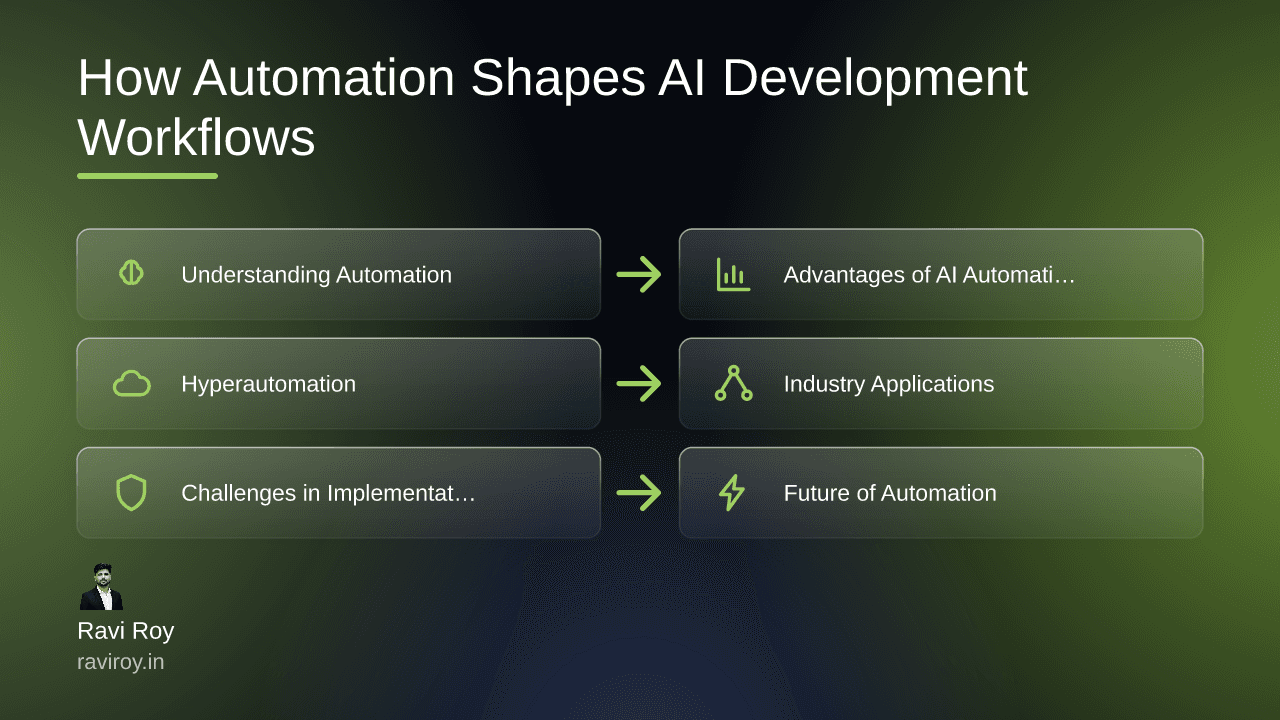
Understanding Automation in AI Development
What is AI Automation?
AI automation refers to the use of artificial intelligence technologies to streamline and enhance development workflows. This encompasses several components, including machine learning algorithms, data processing, and intelligent decision-making systems. By integrating AI into automation processes, teams can minimize repetitive tasks, thus allowing for more innovative, creative work. Leading tools like TensorFlow and OpenAI’s models offer functionalities that empower developers to automate testing, deployment, and data analysis effectively.
How Does AI Automation Differ from Traditional Automation?
While traditional automation employs fixed algorithms to execute repetitive tasks, AI automation leverages machine learning to adapt and learn from data. Traditional methods often require human intervention for improvements, whereas AI can dynamically adjust to new variables with minimal input. For instance, consider a traditional customer service chatbot that follows a pre-programmed script versus an AI-driven system that learns from user interactions, enhancing its responses over time.
Examples of AI Automation Tools in Action
Numerous AI automation tools have revolutionized workflows across various sectors. In software development, tools like GitHub Actions automate code testing and deployment, reducing the time developers spend on these tasks. Similarly, platforms such as Zapier enable businesses to automate workflows among various apps by using triggers and actions, streamlining operations significantly.
The Advantages of AI Automation
Benefits of AI Automation
One of the primary benefits of AI automation is the remarkable increase in workflow efficiency. By automating mundane tasks, organizations can not only enhance productivity but also allow their teams to focus on higher-value activities. An AI system can execute tasks faster than humans and at a lower cost, effectively delivering significant ROI.
The reduction of manual tasks directly correlates to a decrease in human error. For example, by using predictive analytics, AI can identify errors in real-time and rectify them before they escalate into larger problems.
Business Tasks Optimized by AI Automation
Take invoice processing as a case in point. Traditionally, this task involved manual data entry, resulting in inefficiencies and errors. With AI automation, businesses can employ tools that scan and interpret invoicing data autonomously—cutting processing times from days to just minutes and significantly reducing overhead.
In the realm of customer relationship management (CRM), AI can analyze customer data to automate marketing outreach, ensuring that communications are timely and relevant. Imagine a business that uses AI-driven insights to send personalized emails that adapt based on user behavior, dramatically improving engagement rates.
Hyperautomation and Intelligent Process Automation (IPA)
Understanding Hyperautomation
Hyperautomation refers to the trend where organizations increasingly deploy various automation tools, including AI, to enhance complex business processes. By utilizing multiple layers of automation technologies, businesses can achieve not only efficiency but also agility in their operations. For instance, automating supply chain processes through AI helps organizations respond quickly to fluctuating market conditions.
The Role of IPA in AI Workflows
Intelligent Process Automation (IPA) integrates AI technologies with traditional automation solutions to automate complex workflows. It enables businesses to analyze vast datasets, recognize patterns, and execute decisions intelligently. One notable example is how banks employ IPA to analyze transaction data for fraudulent activities. By automating alert systems and investigations, banks can prevent fraud more effectively than human analysts alone.
In retail, companies like Walmart have successfully implemented IPA to manage inventory through predictive analytics, ensuring they stock popular items before they run out, thus maximizing sales opportunities. Case studies reveal that institutions employing hyperautomation effectively can improve their decision-making process significantly.
Exploring Industry-Specific AI Automation Applications
AI Automation in Finance
In finance, AI automation plays a crucial role in tasks like risk assessment, fraud detection, and transaction monitoring. For example, platforms such as Kabbage use AI to assess creditworthiness in real-time, enabling faster loan approvals for small businesses. By analyzing diverse data points, these systems provide deeper insights into risk management than traditional credit scoring methods.
AI Automation in Healthcare
Healthcare is another sector benefiting immensely from AI automation. Hospitals utilize AI-driven systems for patient record management and diagnostic support. An example is IBM Watson, which analyzes medical literature and patient data to recommend treatment plans. This improves both patient outcomes and operational efficiencies, allowing healthcare providers to deliver timely care.
Comparative analysis shows that while the finance sector focuses on data integrity and transaction flow, healthcare concentrates on diagnostics and patient care optimization, demonstrating the adaptability of AI automation strategies across industries.
Challenges and Considerations in Implementing AI Automation
Ethical Implications
As with any technological advancement, ethical implications surrounding AI automation cannot be overlooked. Concerns about data privacy, bias in algorithms, and potential job displacement are critical discussions in this space. Organizations must ensure that their AI systems operate transparently and ethically to build trust among stakeholders.
Challenges for Small Businesses
For small businesses, the path to implementing AI automation may not be straightforward. Financial constraints and a lack of technical expertise can hinder adoption. However, tailored strategies—for instance, leveraging AI-as-a-Service platforms—can significantly lower barriers. Choosing scalable solutions allows small businesses to adopt automation gradually, without incurring hefty upfront costs.
The Future of Automation in AI Development
Trends Shaping the Future
As technological advancements unfold, several trends are predicted to influence the future of AI automation. Real-time data integration, for instance, will enhance decision-making processes, providing businesses with actionable insights instantaneously. Additionally, developments in natural language processing will enable more intuitive human-computer interactions, making AI systems even more accessible and user-friendly.
The Role of AI in Decision-Making
Emerging AI-native platforms are poised to redefine how decisions are made within organizations. Firms increasingly rely on AI to sift through vast volumes of data, filtering out noise to uncover trends and insights that drive strategic business moves. For example, platforms like Tableau are embedding AI features to help users derive insights autonomously, making data-driven decisions faster and more effectively.
As businesses continue to embrace automation, those who integrate AI into their workflows stand to gain a significant competitive edge.
What specific challenges have you faced in implementing AI automation in your workflows? Share your experiences and insights below!
💬 Join the conversation — share your take in the comments and tell us what you’d add.