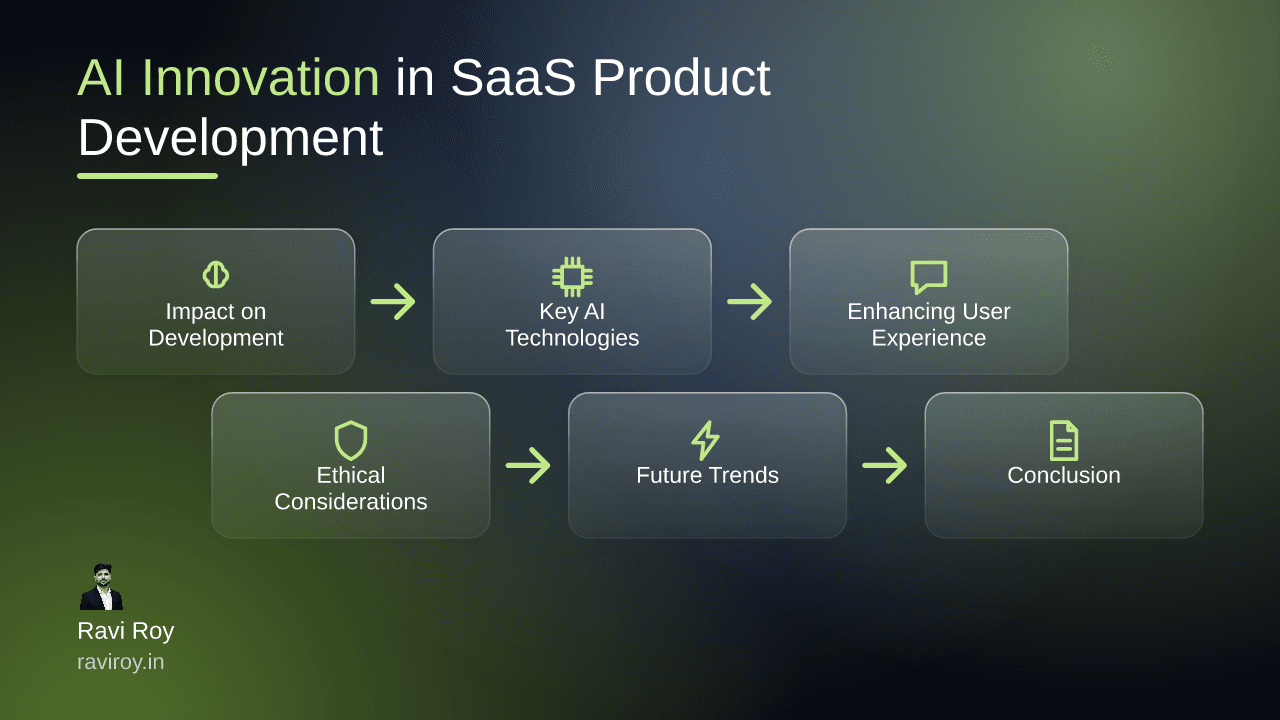
The Impact of AI Innovation on SaaS Development
As AI innovation reshapes the tech landscape, it's a game-changer for Software as a Service (SaaS) product development. In a market flooded with options, leveraging AI can mean the difference between being just another tool and a market leader. This article explores how AI can transform SaaS products by tackling inefficiencies, enhancing user experiences, and creating unparalleled value for both developers and end-users.
Why AI is Essential for Today's SaaS Products
The competitive environment surrounding SaaS products fosters innovation, making AI an essential component for differentiation. By embedding AI into their core functions, businesses can deliver smarter, faster, and more personalized solutions.
AI can analyze vast amounts of data, uncover patterns, and make predictions that inform decision-making. This predictive analytics capability not only enhances the product but also helps SaaS companies stay relevant in a rapidly evolving technological landscape. A SaaS platform that utilizes AI effectively can adapt its offerings based on user behavior and market trends, thereby maintaining an edge over competitors.
Key Business Problems AI Can Solve
Businesses frequently grapple with inefficiencies in traditional workflows. AI addresses these pain points by automating repetitive tasks, streamlining operations, and reducing the likelihood of human error. Consider the example of an automated invoicing system that employs machine learning algorithms to identify discrepancies and flag them for review.
Moreover, AI-driven insights can help SaaS businesses optimize their functions, leading to informed decisions that enhance performance and profitability. By incorporating AI solutions, businesses can reduce operational costs and significantly shorten their time to market, ensuring that they remain agile and responsive to consumer needs.
Key AI Technologies Driving SaaS Product Capabilities
What AI Technologies are Relevant?
Several AI technologies are critical to enhancing SaaS products. Key examples include:
Machine Learning (ML): This allows systems to learn from historical data, enabling predictive capabilities that can fine-tune offerings.
Natural Language Processing (NLP): NLP helps software understand and interpret human language, which is essential in applications ranging from chatbots to sentiment analysis tools.
These technologies not only enhance user experience but also improve the underlying architecture of SaaS products.
Exploring AI-Native vs. AI-Enabled Applications
When considering AI implementation, it's vital to understand the distinction between AI-enabled and AI-native applications. AI-enabled applications utilize existing AI technologies to enhance traditional functions, while AI-native applications are designed from the ground up to leverage AI capabilities at their core.
Transitioning from AI-enabled to AI-native can be a challenging process, often requiring significant investment in platform architecture and developer training. However, the benefits can be immense. For instance, companies like Salesforce have successfully transitioned to more AI-native functionalities, resulting in smarter recommendations and improved user engagement.
Case Study: Take a look at how Slack integrated ML algorithms for predictive text features. This not only enhanced productivity but also improved user satisfaction by offering context-aware suggestions.
Enhancing User Experience through AI Innovation
Hyper-Personalization Using AI
Hyper-personalization is transforming how businesses interact with their users. Techniques such as gathering user behavior data and leveraging AI algorithms can craft experiences that feel uniquely tailored for each individual. Companies can analyze user interactions to recommend relevant features, content, or even pricing structures, creating a personalized journey that drives engagement.
Imagine a project management tool that suggests task prioritizations based on historical deadlines and user workload. By deploying machine learning models that analyze past behavior, the system evolves with its users, becoming smarter over time.
AI-Driven Customer Support Solutions
AI integration in customer support can revolutionize service levels. Chatbots powered by NLP can manage basic queries, allowing human agents to focus on complex issues. Predictive response systems can recognize user sentiment and prioritize tickets based on urgency, leading to faster resolutions.
For example, Zendesk uses AI to assess ticket sentiment and auto-align issues with the appropriate resources, greatly improving response times and customer satisfaction.
Ethical Considerations in AI-Driven SaaS Development
Recognizing Bias in AI Models
While AI holds immense potential, it also poses ethical challenges, including bias in AI models. This can lead to unfair treatment and misrepresentation of certain user groups. Common biases stem from the data used for training, which can inadvertently reflect societal prejudices.
Ensuring Ethical Use of AI Technologies
SaaS developers bear the ethical responsibility of ensuring their AI models do not perpetuate bias. Best practices include diversifying training data, conducting regular bias assessments, and employing transparent AI practices. For example, companies can implement routine audits of their algorithms to ensure that no demographic is subjected to systemic disadvantage.
By following these guidelines, organizations can help ensure that their innovations serve all users equitably.
Future Trends in AI and SaaS Integration
Rise of No-Code/Low-Code AI Tools
The democratization of AI through no-code and low-code platforms is simplifying access for businesses that lack extensive technical expertise. These tools allow users to build sophisticated AI models without needing to know how to code, opening up opportunities for a broader range of organizations to harness AI's power.
The Future of Agentic AI in Workflows
Look ahead to the potential of agentic AI in optimizing workflows. These intelligent agents can autonomously manage tasks that traditionally required human intervention, providing organizations the agility needed in fast-paced environments. Predictive analytics, once a luxury for a few, will soon become standardized in SaaS offerings, powering smarter decision-making across industries.
Conclusion: Navigating the AI-Driven SaaS Landscape
AI innovation is transforming the SaaS landscape, enhancing products in ways once thought impossible. From solving critical business challenges to improving user experiences through hyper-personalization, the potential is boundless. As we look to the future, staying abreast of these changes and actively pursuing innovation in development strategies is vital for any organization aiming to thrive in an AI-driven world.
What AI innovations have you implemented in your SaaS product, and how have they impacted your development process?
💬 Join the conversation — share your take in the comments and tell us what you’d add.