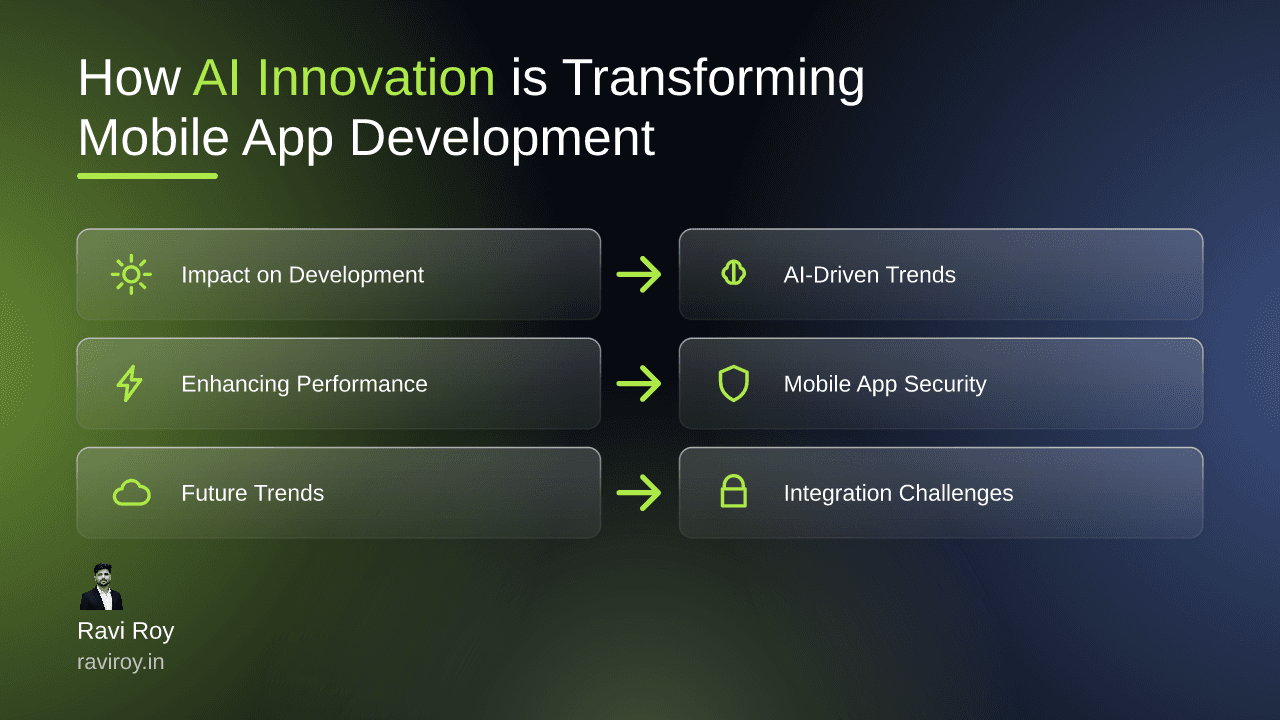
The Impact of AI Innovation on Mobile App Development
Mobile app development is undergoing a seismic shift, driven by AI innovation. From automating mundane tasks to personalizing user experiences, artificial intelligence is revolutionizing how apps are built, optimized, and utilized. The integration of AI technologies equips developers with tools that not only enhance efficiency but also deliver enriched user interactions.
How is AI transforming mobile app development?
AI's role in modern mobile app development is pivotal. It automates tedious tasks such as coding, debugging, and testing. For example, AI-driven development environments, like Microsoft's Visual Studio IntelliCode, suggest code completions and identify potential errors in real-time, significantly speeding up the development cycle.
Case Study: Spotify
Spotify integrates machine learning algorithms to curate tailored playlists for its users. By analyzing listening habits and user feedback, the app continually refines its recommendations, improving user satisfaction and engagement. The result? Spotify not only retains its user base but actively grows it through seamless, personalized experiences.
What are the benefits of AI integration in mobile apps?
The advantages of incorporating AI into mobile applications are manifold:
Efficiency: Automating repetitive tasks allows developers to focus on creative problem-solving and innovation.
Enhanced User Experiences: By leveraging machine learning, apps can provide highly relevant content tailored to individual user preferences.
Customization: AI enables dynamic adjustment of app features based on user interactions, making the app more intuitive and engaging.
AI-Driven Trends Reshaping User Experience
As AI technologies evolve, they are dramatically reshaping user interfaces and experiences. Mobile apps are now more than just tools; they are becoming personalized assistants.
Personalization through AI
Hyper-personalization is one of the most significant impacts of AI on user engagement. Analyzing user data allows apps to adapt to individual behaviors and preferences, creating a tailored experience that keeps users coming back.
Example: Netflix
Netflix uses AI algorithms to recommend films and shows based on previous viewing habits, time spent on different genres, and even the time of day a user tends to watch certain types of content. This intelligent personalization has played a vital role in enhancing user retention.
The role of conversational AI
Conversational AI, embedded in mobile apps through chatbots and voice assistants, is enhancing user interaction. Implementing natural language processing (NLP), apps now engage users in conversational manners, offering assistance and support at their fingertips.
Benefits and Challenges
While incorporating conversational AI can streamline user experience and reduce response times, it poses several challenges. Developers must ensure that the AI understands user queries effectively, which may require ongoing training and refinement to make interactions feel natural and intuitive.
Enhancing App Performance with AI Innovations
Artificial Intelligence also ramps up the performance of mobile applications, driving speed and responsiveness.
On-device AI processing
On-device AI processing brings numerous advantages, particularly regarding speed and privacy. By executing AI tasks on local devices rather than relying on cloud computing, apps can create quicker responses, leading to a seamless user experience.
Real-world Example: Apple’s Siri
Apple’s Siri processes voice commands locally in many instances, enabling faster responses and enhancing user confidentiality. This not only speeds up app interactions but also builds trust, as users are more comfortable knowing their data isn't constantly sent to the cloud.
Predictive analytics and user behavior
Predictive analytics utilizes user data to forecast future behaviors, allowing businesses to tailor their services effectively. Apps like Google Maps leverage predictive analytics to anticipate traffic conditions, suggesting the best routes based on historical data.
Real-World Application: Retail apps can analyze past shopping patterns to alert users about potential items of interest, creating a personalized shopping experience that encourages higher engagement.
AI's Role in Mobile App Security
While AI improves the functionality of mobile applications, it is also crucial for enhancing app security.
How AI enhances mobile app security
AI technologies play an essential role in strengthening mobile app security by identifying and mitigating potential threats in real-time. Through machine learning algorithms, these systems can detect unusual patterns that may indicate security breaches or fraudulent activities.
Implementation Example: Financial services apps employing AI-driven fraud detection systems can analyze numerous transactions in seconds, flagging suspicious behavior for further review.
Challenges posed by AI in security measures
Despite its benefits, AI in security is not without challenges. The complexity of implementing these solutions can create vulnerabilities if not done correctly. Furthermore, as algorithms evolve, so too do the methods employed by cybercriminals, creating an ongoing arms race in app security.
Example of Breach: In 2020, a significant data breach in a mobile app could have been mitigated through predictive AI, which would have flagged unusual login attempts based on user location and frequency.
Future Trends in AI-Driven Mobile App Development
Looking ahead, the future of mobile app development will be increasingly intertwined with AI technologies.
Generative AI and its impact on UI/UX design
Generative AI is set to revolutionize mobile UI/UX design. By applying algorithms that can generate designs based on user data and preferences, developers can create highly intuitive user interfaces that adapt dynamically to user interactions.
This technology not only enhances creativity but also optimizes the user experience through continuous improvement informed by real-time data.
Emerging AI development frameworks
Several emerging frameworks are making it easier than ever to incorporate AI into mobile apps. TensorFlow Lite and PyTorch Mobile provide developers with robust tools for building intelligent applications without the need for extensive knowledge in AI.
Speculating on future capabilities, we may soon see applications that can automatically learn and adapt to user needs without user input—essentially creating a personalized experience on autopilot.
The Challenges of Integrating AI in Mobile Apps
Despite the advantages, integrating AI into mobile applications presents specific challenges that developers must address.
Cost implications of AI technologies
The financial aspect of adopting AI technologies can be daunting. Development environments and hardware capable of supporting AI applications often come with significant costs, which can be a barrier for many organizations.
Technical challenges in AI implementation
Technical hurdles can also pose a challenge. Integrating AI systems often requires a specialized skill set that many development teams may not possess.
Strategies for overcoming challenges: Training existing staff, outsourcing AI expertise, or opting for AI-based platforms with built-in features can mitigate these challenges, enabling smoother integration.
Conclusion
As AI continues to redefine mobile app development, understanding the landscape of innovation is essential for developers and businesses alike. The impact of AI innovations is profound, enhancing functionality, user experience, and security, while also presenting unique challenges.
What specific AI innovations have you seen in your favorite mobile apps, and what impact did they have on your experience?
💬 Join the conversation — share your take in the comments and tell us what you’d add.