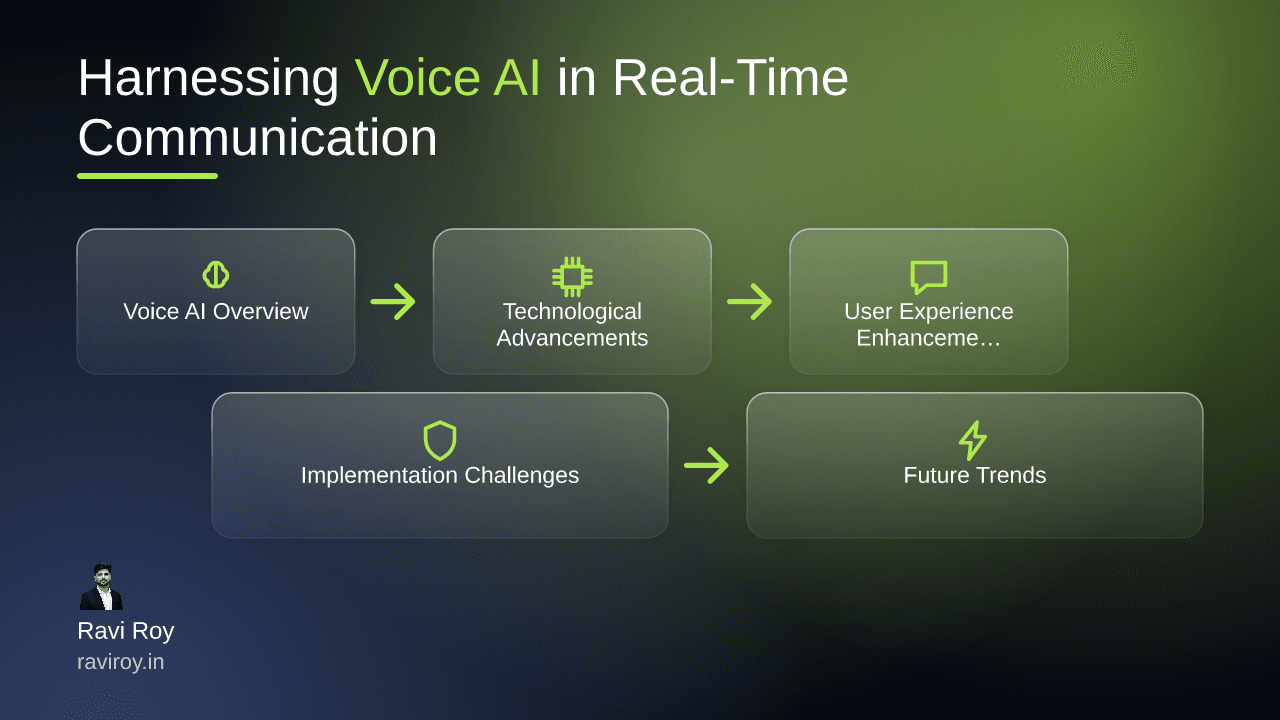
The Rise of Voice AI in Communication
Voice AI is revolutionizing the way we interact, bridging gaps between technology and human communication. In a world where efficiency is key, the integration of voice technology into communication systems has become unstoppable.
Understanding Voice AI
Voice AI, or voice artificial intelligence, refers to the technology designed to interpret and respond to human voice commands. At its core, it utilizes Natural Language Processing (NLP) to understand the nuances and contexts of spoken language. This allows for functionalities such as speech recognition, voice synthesis, and adaptive learning capabilities.
By 2023, statistics reveal that about 60% of consumers are engaging with voice technology in some capacity, whether through smart speakers, virtual assistants, or customer service bots. This significant uptick underscores a growing reliance on these tools in everyday life, making it vital for businesses to adapt.
Current Applications in Real-Time Communication
Real-time communication has seen remarkable advancements thanks to Voice AI. Notable applications include:
Virtual Assistants: Tools like Amazon's Alexa and Google Assistant facilitate seamless interactions through voice commands.
Customer Service Bots: Companies are deploying voice bots for handling customer inquiries, reducing wait times and enhancing service quality.
Smart Home Devices: Systems like smart thermostats and lights respond to voice instructions, integrating convenience with technology.
These applications are just a glimpse into the ever-expanding landscape of voice AI.
Technological Advancements Driving Voice AI Integration
As voice AI expands, several technological advancements are paving the way for its deeper integration into communication systems.
Natural Language Processing (NLP)
NLP is the backbone of voice recognition accuracy. By analyzing the context and sentiment of spoken language, NLP enables systems to understand diverse accents, slang, and even emotional cues. Advanced NLP algorithms have made it possible for voice technology to reach near-human understanding levels, greatly enhancing user satisfaction.
Machine Learning Developments
Machine learning plays a crucial role in personalizing voice interactions. By analyzing user data, voice systems can adapt responses based on individual preferences and behaviors. Recent breakthroughs in voice synthesis have enhanced the naturalness of AI-generated speech, making dialogues with machines ever more fluid and human-like.
For instance, virtual assistants can now remember previous interactions, allowing for a more engaging and context-aware exchange. This adaptability not only meets user needs but also anticipates them.
Enhancing User Experience through Voice AI
With the rise of Voice AI, user experiences are being transformed for the better.
Personalization and Contextual Understanding
Real-time data processing significantly enhances interaction quality. Voice AI can continuously learn from user inputs, improving personalization. Brands like Apple and Microsoft are leading the charge, employing machine learning algorithms that refine responses based on historical context and recent interactions.
Consider a user who regularly orders food via voice command; the system learns their favorite dishes and can suggest meals proactively, leading to a seamless ordering experience.
Real-Time Feedback Mechanisms
Real-time feedback is another game-changer. Voice AI can provide instant responses to user inquiries, making interactions smoother. For instance, in customer service scenarios, voice bots can analyze the urgency of a request and prioritize responses accordingly, enhancing overall efficiency and satisfaction.
Challenges and Considerations in Voice AI Implementation
Despite its benefits, implementing Voice AI doesn't come without challenges.
Privacy and Security Concerns
Data privacy remains a pressing issue. With voice systems continuously listening for wake words, concerns about unauthorized data capture are prevalent. Regulations such as GDPR and CCPA govern data collection and usage, necessitating businesses to develop transparent policies that protect user data.
Integration Complexities
Integrating Voice AI with existing communication systems can be complex. Many businesses face hurdles in adapting current infrastructure to accommodate voice technologies. Solutions to common integration issues include adopting standardized API protocols, enabling smoother data flow between systems, and investing in thorough training for staff to maximize the tools' potential.
Future Trends in Voice AI and Communication Systems
The future of voice AI looks bright, with several predicted growth areas on the horizon.
Predicted Growth Areas
Voice AI is expected to flourish in sectors like healthcare and education. For instance, voice technology can streamline patient interactions in healthcare settings, while in education, it could facilitate personalized learning experiences.
Innovative Use Cases
Emerging applications will likely include virtual therapy chats, voice-driven digital classrooms, and even AI tutors that adapt learning styles to individual students. As voice AI continues to evolve, advancements in AI could lead to even more innovative communication methods, transforming traditional interactions.
Conclusion: The Future is Voice-Driven
The impact of Voice AI on communication systems is profound, enabling easier, more efficient interactions while presenting new challenges. As businesses explore Voice AI's capabilities, they open doors to enhanced customer experiences and innovative communication strategies.
How have you integrated Voice AI into your own communication systems, and what challenges or benefits have you encountered?
💬 Join the conversation — share your take in the comments and tell us what you’d add.