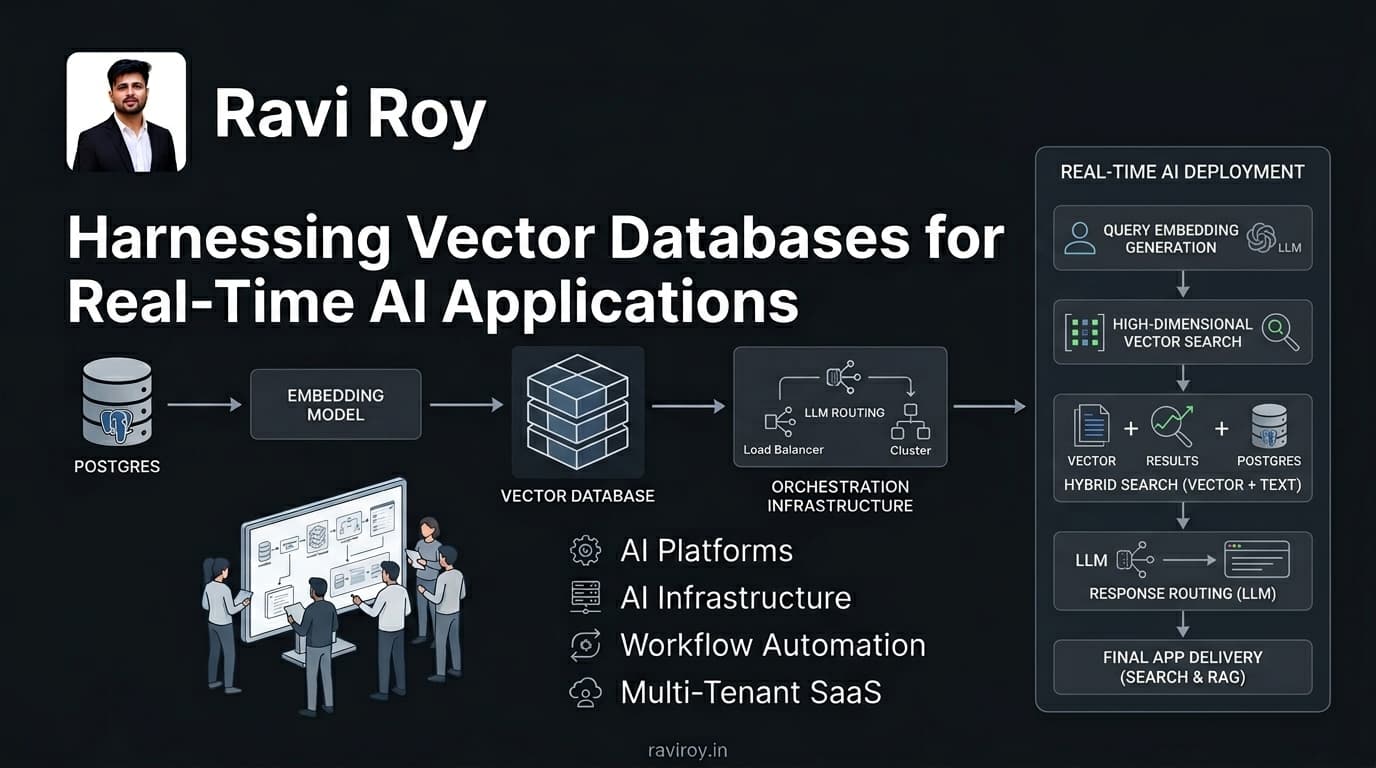
Harnessing Vector Databases for Real-Time AI Applications
In the evolving landscape of artificial intelligence, the ability to process and retrieve data in real-time has become a game-changer. Enter vector databases, the under-the-radar technology that supercharges AI applications, enabling swift and accurate data retrieval for superior decision-making.
Understanding Vector Databases
What are Vector Databases?
Vector databases are specialized systems designed to store, retrieve, and manage data in the form of vectors—numerical representations of information. Unlike traditional databases that leverage structured formats, vector databases excel at handling unstructured and spatial data, making them essential for AI applications that rely on machine learning. They operate by converting inputs into high-dimensional vector embeddings, which represent the semantic meaning of the data. This capability enables efficient and accurate similarity searches, paving the way for advanced AI-driven analytics.
How Do Vector Databases Work?
At the heart of vector databases are vector embeddings, mathematical representations created through algorithms like word2vec or embeddings from large language models (LLMs). When data is converted into these vectors, it allows for a similarity search that retrieves items that are close in vector space. For instance, if you're searching for similar customer support queries or product recommendations, a vector database can locate semantically similar data points swiftly, often in milliseconds. This dramatically contrasts with traditional data retrieval methods, enabling AI applications to react in real-time based on context.
The Importance of Vector Databases in AI
Real-Time Retrieval for AI Applications
The primary advantage of vector databases lies in their capacity for real-time data retrieval. This feature is crucial for AI applications that require instantaneous responses, such as voice recognition systems or recommendation engines. By providing rapid access to relevant data points, vector databases enhance user experiences and improve engagement through contextual accuracy. Businesses leveraging real-time retrieval can stay ahead in an increasingly competitive market, keeping customers satisfied and informed.
Integration with AI Pipelines
Seamless integration of vector databases within AI pipelines is another pivotal benefit. These databases can be easily incorporated into machine learning workflows, allowing AI systems to enhance their performance through context-aware processing. When vector databases are knitted into the fabric of an AI application, the result is a highly intelligent system capable of understanding and responding to user needs with unprecedented accuracy. This integration not only boosts operational efficiency but also allows for continuous learning and improvement in AI models.
Comparing Vector Databases to Traditional Databases
Key Differences Between Vector and Traditional Databases
Vector databases and traditional databases serve different purposes and operate on fundamentally different principles. Traditional databases rely on structured data models, utilizing SQL queries for data retrieval. In contrast, vector databases are optimized for unstructured data, employing similarity search algorithms to return results based on the relative position of vectors in high-dimensional space. This basic difference underpins their distinct use cases and effectiveness in processing AI workloads.
Challenges with Traditional Databases
Traditional databases are inherently limited when it comes to handling vector data. They often struggle with large volumes of unstructured data, resulting in slow response times and inefficient queries. As AI applications evolve, the demand for rapid, context-driven responses makes traditional databases less capable of meeting the needs of modern applications. The increasing focus on AI and machine learning necessitates a shift towards technologies like vector databases, which can cater to these new requirements efficiently.
Typical Use Cases for Vector Databases in AI
Use Cases for LLMs and RAG
Large language models (LLMs) and Retrieval-Augmented Generation (RAG) applications are among the most notable beneficiaries of vector databases. By allowing for rapid similarity searches, vector databases enable LLMs to pull information quickly, thereby enhancing the quality and relevance of generated responses. Whether it’s for chatbots or advanced content generation, the capabilities of vector databases are indispensable.
Innovative AI Applications Using Vector Databases
The potential applications of vector databases are vast. Industries ranging from e-commerce to healthcare are utilizing these technologies for personalized customer experiences, predictive analytics, and even drug discovery. For example, an e-commerce platform can harness vector databases to recommend products that align closely with a user's search history and preferences, significantly boosting conversion rates. Innovative companies are leading the charge in exploring how vector databases can provide unique solutions to complex industry challenges.
Designing a Hybrid Architecture with Vector Databases
Combining Vector and Traditional Databases
As organizations seek to leverage the strengths of both types of databases, hybrid architectures are becoming increasingly popular. These models combine the structured data handling of traditional databases with the advanced capabilities of vector databases, offering flexibility and performance. By integrating both systems, businesses can optimize their data management strategies to extract valuable insights while retaining the ability to query traditional datasets.
Cloud-Native Scalability
The rise of cloud-native solutions adds another dimension to the management of vector databases. With cloud providers offering scalable resources, organizations can deploy vector databases without the burdens of maintaining complex on-premises infrastructures. This scalability allows for instant adjustments in capacity according to workload demands, maintaining efficiency and cost-effectiveness. Cloud-native solutions also simplify integration with other AI tools, creating a seamless ecosystem for data handling and processing.
Challenges and Trade-offs of Using Vector Databases
Main Challenges with Vector Databases
While vector databases offer numerous advantages, they are not without challenges. Issues such as maintaining data quality, ensuring security, and managing the computational demands of high-dimensional data can arise during deployment. Additionally, organizations may face difficulties with onboarding or training staff to handle these specialized database systems, which can hinder initial implementation efforts.
Evaluating Trade-offs for Different Use Cases
It’s crucial to weigh the benefits against the limitations when considering the use of vector databases. For specific applications, particularly those that rely heavily on structured data and require complex queries, traditional databases might still be preferable. Organizations must evaluate their unique needs and workloads to assess whether vector databases are the optimal choice for their use case, ensuring they align with their long-term data strategy.
Ready to unlock the full potential of real-time AI with vector databases? Discover how your business can leverage vector databases for superior AI performance today!