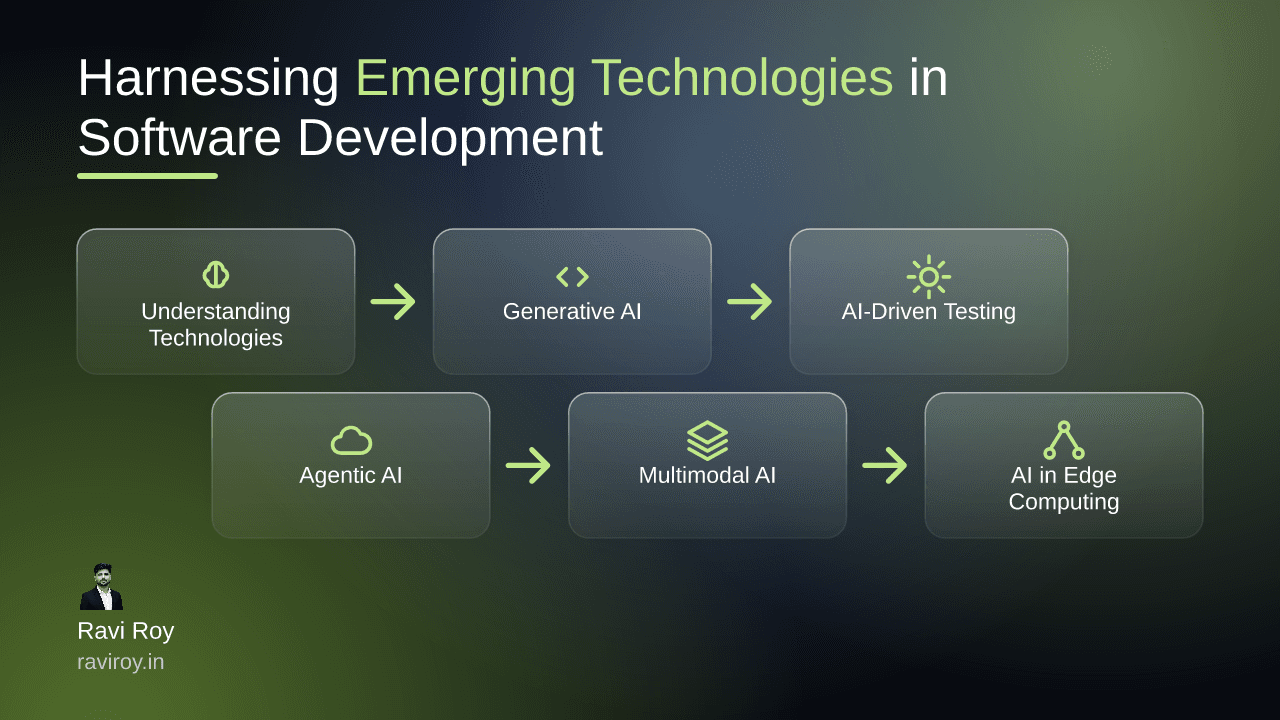
Understanding Emerging Technologies in Software Development
Emerging technologies are revolutionizing software development workflows, making processes more efficient and innovative. Among these technologies, artificial intelligence (AI) stands out as a game changer, offering unparalleled support to software engineers and developers.
What is AI in Software Development?
Artificial intelligence in software development primarily refers to the application of algorithms and machine learning models to automate tasks and enhance decision-making. AI technologies cover a broad spectrum, including natural language processing, machine learning, and deep learning. These technologies can assist in various aspects of software life cycles, such as coding, testing, debugging, and deployment.
The impact of AI on traditional software development processes cannot be overstated. For instance, with AI, repetitive coding tasks can be automated, allowing developers to focus on complex problem-solving and creativity. By reducing manual errors and accelerating development timelines, AI is not just improving efficiency but also enhancing the overall quality of software products.
How Emerging Technologies Transform Workflows
Emerging technologies like AI are reshaping how software teams approach their projects. Agile methodologies are increasingly complemented by machine learning models that provide real-time data insights and predictive analytics. The result is a more responsive and iterative development process, with teams able to pivot quickly based on market feedback or technical challenges.
Generative AI for Code Automation
As software complexity grows, the need for innovative coding solutions becomes more critical. Here, generative AI shines brightly, automating various coding tasks that previously required manual effort.
How Generative AI Enhances Coding
Generative AI refers to AI systems designed to produce content based on learned patterns from existing codebases. Tools like OpenAI’s Codex and GitHub Copilot exemplify this technology's potential, allowing developers to generate code snippets by simply describing the desired functionality in natural language.
For example, a developer might type “create a function to sort an array” and receive a fully functional sorting algorithm in return. This functionality dramatically reduces development time and fosters a collaborative environment where professionals can fine-tune generated code according to their specific needs.
Real-World Applications of Code Automation
Various organizations have embraced generative AI in their coding workflows. A notable example is Microsoft, which has started integrating Codex into Visual Studio. By using generative AI tools, teams report being able to write code up to 20% faster and with fewer errors, significantly enhancing productivity.
Another example involves a fintech startup that implemented an AI-driven code automation tool for their application development. The immediate result was a 30% increase in development speed, enabling them to launch features quicker and respond to customer needs with dexterity.
AI-Driven Testing and Debugging
As the complexities of software systems grow, so does the necessity for robust testing frameworks. AI is stepping in to transform traditional testing methodologies into more adaptive, efficient practices.
Benefits of AI in Software Testing
AI can predict potential bugs and vulnerabilities before they enter production. By analyzing code changes and user interactions, AI tools can simulate various conditions and highlight failure points. This ability to foresee issues leads to fewer post-deployment bugs and results in a smoother user experience.
Additionally, AI-driven testing tools can run multiple scenarios simultaneously, significantly compressing testing timelines and allowing for more comprehensive coverage of the software.
Integrating AI Tools in Testing Frameworks
To integrate AI into existing testing frameworks, teams can start by identifying repetitive manual testing tasks that can be automated. Many organizations use AI-driven platforms like Selenium or Test.ai that facilitate easy integration.
A step-by-step approach might include:
Identifying high-level test cases that require automation.
Selecting an AI testing tool compatible with your tech stack.
Training the AI model on past bugs and user interactions.
Monitoring the tool’s performance and iterating on its training as needed.
This systematic approach can lead to vastly improved testing efficiency and effectiveness.
Agentic AI in Production Systems
Emerging trends point towards a new subset of AI known as agentic AI, which directly interacts in production environments to facilitate decision-making processes.
What is Agentic AI?
Agentic AI refers to AI systems that can autonomously manage workflows and processes within software production systems. While traditional AI models assist in performing specific tasks, agentic AI takes autonomy much further, acting as an intelligent agent that learns from environments and adapts to changing conditions.
Use Cases of Agentic AI in Software Development
Consider a software application that interacts with multiple users and includes real-time analytics. Agentic AI can monitor user behavior and tweak features in response to user engagement, potentially retaining more users and enhancing customer satisfaction.
Another instance is in DevOps, where agentic AI assists in deployment scheduling by analyzing system loads and predicting traffic patterns. By automating such critical operations, organizations can optimize resource allocation and enhance uptime.
Multimodal AI Models in Development
Developers are increasingly leveraging multimodal AI models to fuse different types of data and improve software design.
Understanding Multimodal AI
Multimodal AI refers to models that can process and generate information from multiple sources, such as text, audio, and visual inputs. This holistic approach allows for more nuanced understanding and capabilities, which traditional models often lack.
Applications of Multimodal AI in Software Engineering
Applications of multimodal AI are diverse. For example, in user interface design, AI can analyze user feedback, behavioral data, and design aesthetics to suggest optimal layouts and features. Similarly, in debugging, multimodal systems can assess code alongside verbal documentation to produce more accurate error reports.
AI in Edge Computing for Software Development
The rise of edge computing necessitates that developers adopt AI technologies to enhance operations across distributed systems.
The Role of AI in Edge Computing
AI can analyze data at the edge, closer to the source, allowing for quicker insights and decisions without relying on cloud infrastructure. This is particularly useful for IoT devices that generate vast amounts of data, requiring instant processing to optimize performance and functionality.
Challenges and Solutions in Edge AI Implementation
Implementing AI at the edge comes with its own set of challenges, like data privacy, latency, and scalability. Developers must tackle these hurdles through careful architecture design and sophisticated algorithms that minimize the need for data transmission while ensuring compliance with regulations.
One solution includes designing edge AI models that learn from data locally and only send necessary information back to the cloud, thereby preserving resources and safeguarding user data.
AI-Enhanced Cybersecurity in Software Development
With the advent of smarter computing solutions, cybersecurity has entered a new era, driven by AI technologies.
Cybersecurity Threats and AI Solutions
AI is actively combating evolving cybersecurity threats by monitoring user behavior and system vulnerabilities in real-time. Machine learning algorithms can identify anomalies that may signify security breaches, providing organizations with early warnings and adaptive responses to potential risks.
Integrating AI for Better Security Practices
Best practices for integrating AI into cybersecurity frameworks include:
Continuous monitoring of network activities using AI algorithms.
Developing incident response protocols that utilize AI insights.
Regularly updating AI models with new security threat data to enhance skill.
By embedding AI into cybersecurity measures, teams can not only react to threats but proactively guard against them before breaches occur.
Future of Emerging Technologies in Software Development
As AI continues to evolve, so too does the landscape of software development. Emerging technologies hold the promise of considerably reshaping how we build and interact with software.
Ethical Guidelines for AI in Development
As software engineers increasingly leverage AI, establishing ethical guidelines becomes paramount. Developers must remain vigilant regarding bias in AI algorithms and ensure transparency in AI decision-making processes to maintain user trust and regulatory compliance.
Skills Needed for Software Engineers in an AI Age
To thrive in this evolving landscape, software engineers must cultivate new skill sets. Proficiency in machine learning algorithms, data analysis, and understanding ethical implications will be crucial. Additionally, collaborative skills will be vital, as teams learn to work alongside intelligent systems to deliver better software.
Harnessing these emerging technologies in software development offers immense potential for improvement in efficiency, creativity, and delivery. What practical experiences have you had with integrating AI technologies into your software development workflows?
💬 Join the conversation — share your take in the comments and tell us what you’d add.