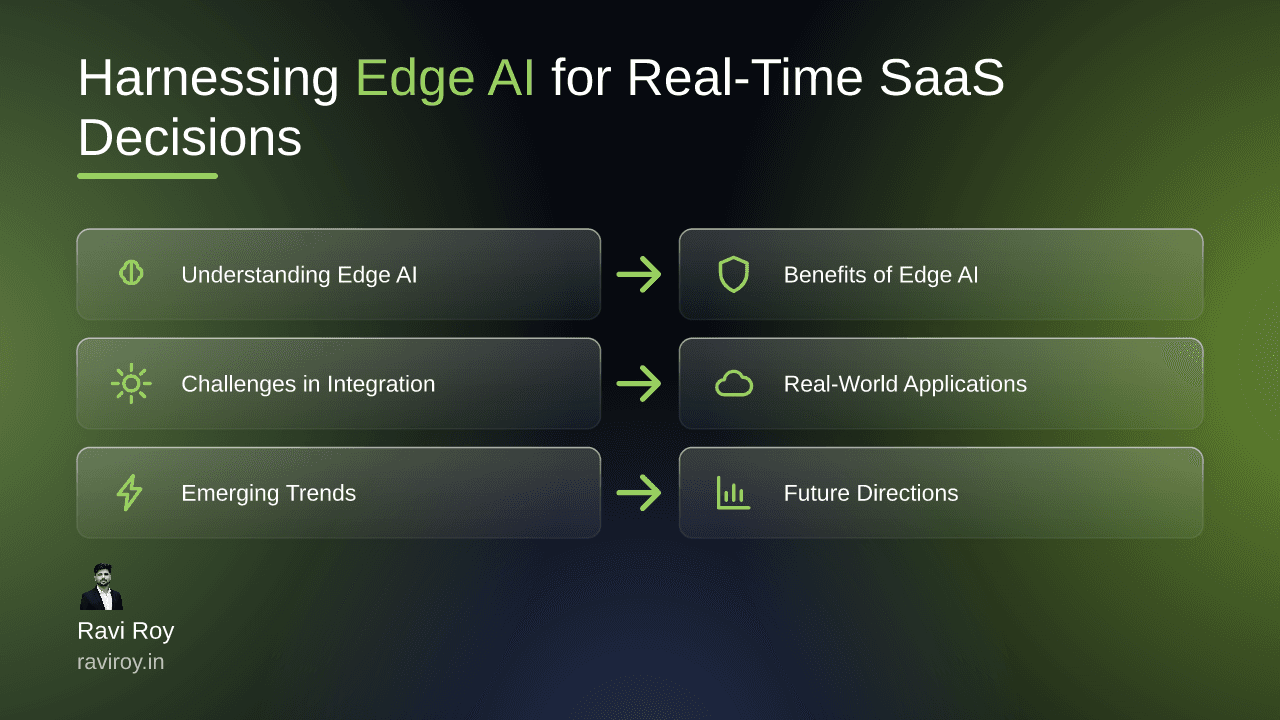
Harnessing Emerging Technologies: Edge AI for Real-Time Decision Making in SaaS
Understanding Edge AI and Its Impact on SaaS
What is Edge AI?
Edge AI combines artificial intelligence with edge computing to enable real-time data processing at the source of generation. Unlike traditional cloud computing that relies on centralized data centers, Edge AI processes data locally on devices or nearby edge servers. This decentralization enhances responsiveness and efficiency, as decisions can be made almost instantaneously, reducing the need for data transfer to distant locations. Core components include machine learning algorithms, local processing hardware, and IoT devices, all working in tandem to deliver insights rapidly.
The Importance of Real-Time Decisions in SaaS
In the realm of Software as a Service (SaaS), the ability to make real-time decisions is pivotal. Whether it’s streamlining customer support, enhancing service delivery, or analyzing user interactions, timely insights lead to better outcomes. Implementing Edge AI allows for a higher degree of agility, as businesses can react quickly to user needs and market changes. When data is processed near its origin, the reduced latency contributes significantly to improved operational efficiency and service quality, ultimately resulting in a more satisfied clientele.
Benefits of Leveraging Edge AI in SaaS Applications
Improved Speed and Reduced Latency
Edge AI’s local data processing minimizes latency significantly. Traditional cloud solutions often require data to travel through various networks, leading to delays in decision making. For instance, think of a smart manufacturing system that leverages Edge AI. By processing sensor data on-site, decisions regarding machinery efficiency can be made instantly, thereby optimizing production schedules and reducing downtime.
Enhanced Security Features
Security is a growing concern in today’s digital age. Edge AI enhances security by processing data locally, minimizing the risk of data breaches that can occur during data transmission to the cloud. Data remains closer to its source, allowing for real-time monitoring and response to anomalies. For instance, a smart surveillance system can analyze video feeds in real-time to detect threats without exposing sensitive information to the internet.
Cost Efficiency and Scalability
Integrating Edge AI leads to significant cost savings, particularly in bandwidth and cloud resource usage. By processing data locally, organizations can reduce their reliance on cloud storage and computing power. For example, logistical software that utilizes Edge AI can streamline real-time inventory management, ultimately lowering operational costs and allowing businesses to scale their solutions efficiently without the costly overhead of cloud services.
Challenges of Integrating Edge AI in SaaS Solutions
Technical and Infrastructure Barriers
While the benefits of Edge AI are compelling, several technical hurdles must be addressed for successful deployment. Issues such as hardware compatibility, infrastructure capability, and latency still pose challenges. Companies may find it difficult to implement Edge AI on legacy systems or may need to invest in new hardware to support real-time capabilities.
Data Management and Model Deployment
Managing models at the edge introduces complexity. Machines may need frequent updates, which can be cumbersome to deploy compared to a centralized model. Moreover, distributing workloads effectively across devices can lead to inconsistencies in performance if not managed properly. Implementing a robust framework for version control and deployment strategies is paramount to overcoming these challenges.
Regulatory Compliance Issues
Data regulations like GDPR and CCPA impose stringent requirements on data handling, including storage and processing locations. When implementing Edge AI, it’s essential to navigate these regulations carefully to avoid legal complications. This may require additional resources to ensure compliance while still harnessing the benefits of Edge AI.
Real-World Applications of Edge AI in Various Industries
Edge AI in Healthcare
One of the most promising applications of Edge AI is in healthcare. Real-time health monitoring systems can analyze biometric data as it’s collected. A case study on remote patient monitoring showcased how Edge AI could trigger alerts if a patient’s vital signs deviate from normal ranges, allowing for quick medical intervention. Such applications not only enhance patient safety but also lower healthcare costs by preventing complications.
Transformations in Retail
Retailers are increasingly adopting Edge AI for inventory management and personalized shopping experiences. By analyzing customer behavior in real-time, stores can optimize stock levels and tailor marketing strategies. For example, a retail chain can use Edge AI to analyze foot traffic in their stores and dynamically adjust promotions based on customer activity.
Applications in Manufacturing
Manufacturing operations benefit significantly from predictive maintenance powered by Edge AI. Sensors equipped with Edge AI analyze machine performance and predict failures before they happen, which minimizes unscheduled downtime. A well-documented case involved an automotive manufacturer that implemented Edge AI solutions, leading to a 20% reduction in maintenance costs and a dramatic increase in production efficiency.
Emerging Trends in Edge AI for SaaS Platforms
AI-Native SaaS Architectures
The evolution of AI-native architectures in SaaS applications represents a major shift in how businesses develop software solutions. These architectures foster seamless integration of AI capabilities directly into applications. Organizations can rapidly develop and deploy intelligent features tailored to user demands, enhancing both functionality and user satisfaction.
Low-Code and No-Code Solutions
The rise of low-code and no-code platforms is democratizing Edge AI development, enabling non-technical users to harness artificial intelligence. SaaS platforms that adopt these solutions empower businesses to implement Edge AI applications quickly without deep technical expertise. This encourages innovation and accelerates the adoption of Edge technologies across varied industries.
Generative and Conversational AI
Generative and conversational AI is gaining traction in enhancing user interactions on SaaS platforms. Edge AI can facilitate real-time, context-aware conversations with users. For example, customer service chatbots powered by Edge AI can offer tailored solutions based on immediate data analysis, elevating the customer experience to new heights.
Future Directions for Edge AI in SaaS
Scaling Edge AI Solutions
To truly capitalize on the benefits of Edge AI, scaling solutions across different SaaS platforms will be essential. Companies must invest in strategies that promote flexible architecture and cross-platform compatibility to enable seamless integration of Edge AI capabilities.
Understanding Economic Implications
Transitioning to Edge AI solutions comes with economic considerations, such as the cost of new infrastructure and potential savings in operational expenses. Businesses must weigh these factors carefully while anticipating the return on investment, given the enhanced capabilities of real-time data processing.
Preparing for Industry 4.0
As industries gear up for the next phase of digital transformation dubbed Industry 4.0, readiness to adopt Edge AI technologies will play a crucial role. Organizations must develop a forward-thinking approach, aligning their strategies with advancements in automation, IoT, and AI capabilities to stay competitive.
Have you implemented Edge AI in your SaaS applications? What challenges or successes have you experienced?
💬 Join the conversation — share your take in the comments and tell us what you’d add.