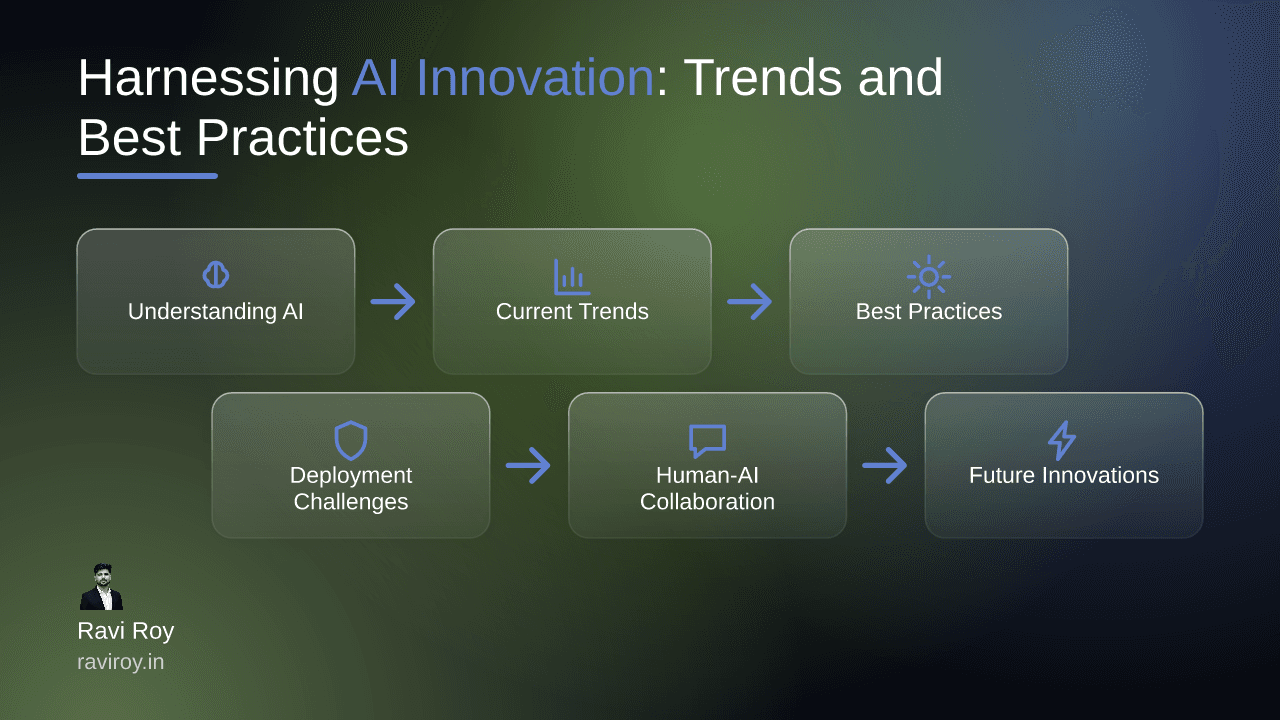
Harnessing AI Innovation: Trends and Best Practices for Scalable Applications
Understanding AI Innovation
What is AI Innovation?
AI Innovation refers to the integration of artificial intelligence technologies to create advanced solutions that enhance efficiency, adaptability, and decision-making capabilities in modern applications. Unlike traditional technologies, which predominantly follow linear processing paths and fixed rules, AI Innovation thrives on machine learning, allowing systems to evolve based on data inputs and user interactions. This transformative approach not only streamlines processes but also enables organizations to leverage data in real time.
Key Features of AI Innovation
Key features that define AI Innovation include:
Adaptability: AI systems can adjust their functions based on changing data and operational needs, fostering a dynamic atmosphere for businesses.
Efficiency: By automating repetitive tasks and reducing errors in data processing, AI frees human resources to focus on more strategic functions.
Intuitive Learning: Machine learning algorithms learn from feedback and environmental interactions, providing deep insights that drive better decision-making.
Current Trends in AI Innovation for Scalable Applications
Agentic AI and Autonomous Agents
The rise of agentic AI is reshaping how businesses operate. These autonomous agents can manage tasks independently, from customer service interactions to data analytics. By utilizing natural language processing and machine learning, these agents make informed decisions, enhancing operational efficiency. For instance, chatbots in e-commerce use agentic AI to handle customer inquiries without human intervention, demonstrating the capability to provide 24/7 support and personalized experiences.
Generative AI for Decision-Making
Generative AI is influencing decision-making across industries. By analyzing vast amounts of data, generative models can propose solutions, predict outcomes, and optimize processes. A notable application is in marketing, where AI algorithms generate personalized content for campaigns based on consumer behavior patterns. This bespoke approach has been shown to yield higher engagement rates, making generative AI a key asset for businesses aiming to refine their strategies.
Embedded AI as Invisible Infrastructure
Embedded AI operates seamlessly in the background of applications, improving functionality without direct user engagement. This 'invisible' aspect allows users to benefit from smarter applications without realizing the complexity involved. For example, recommendation systems on streaming platforms like Netflix use embedded AI to tailor suggestions for users, enhancing user experience and increasing retention rates.
Best Practices for Implementing Scalable AI Applications
Establishing a Governance Framework
A strong governance framework is crucial for responsible AI deployment. It ensures compliance with ethical guidelines, data privacy, and safety standards. Organizations should establish a policy that outlines roles and responsibilities, risk assessments, and regular audits. This framework not only mitigates risks but also builds trust among users and stakeholders, which is essential for long-term success.
Emphasizing AI Fluency Across Teams
Training teams in AI fluency is critical to maximizing the benefits of AI innovations. By developing a foundational understanding of AI concepts, employees can better engage with AI tools and leverage their capabilities effectively. Workshops, online courses, and cross-functional collaborations can foster this fluency, promoting a culture of innovation within the organization.
Utilizing Domain-Specific Models
Domain-specific models offer tailored solutions that enhance relevance and performance in specific industries. For instance, in healthcare, models trained on medical data can yield more accurate predictions and recommendations than general models. Customizing AI applications to fit unique industry needs ensures higher accuracy and efficiency, aligning with business objectives and enhancing user satisfaction.
Challenges in Deploying AI at Scale
Security and Trust
As AI becomes more integrated into systems, security and trust issues come to the forefront. Organizations must prioritize implementing robust security measures to protect sensitive data from breaches and ensure the ethical use of AI. Trusted AI solutions involve transparent algorithms that optimize decision-making while safeguarding user privacy.
Integration with Existing Systems
Integrating AI with legacy systems can present significant hurdles. Businesses must evaluate their existing infrastructure and determine how AI can enhance operations without creating interoperability issues. The adoption of APIs and middleware can facilitate smoother integration, allowing legacy systems to communicate effectively with new AI technologies.
Continuous Learning Systems
AI applications require ongoing learning to remain relevant and effective. Continuous learning systems equip AI models to adapt to new data and changing environments. This adaptability is vital to address evolving market demands and improve user experiences over time. Establishing feedback loops and regular updates ensures that AI capabilities remain sharp and responsive.
The Role of Human-AI-Robot Collaboration
Enhancing Productivity
Industries worldwide are witnessing successful collaborations between humans, AI, and robotic systems. In manufacturing, AI-driven robots work alongside humans to optimize production lines, significantly enhancing throughput. For example, automotive manufacturers employ robotic arms to perform repetitive tasks, allowing human workers to focus on quality control and complex assembly processes, resulting in higher productivity.
Creating Synergistic Work Environments
The integration of AI into workplaces fosters synergistic environments where human creativity meets computational power. This collaboration promotes innovative problem-solving and strategic thinking, as AI systems can analyze data and provide actionable insights that humans might overlook. As a result, organizations can achieve higher efficiency, reduced operational costs, and improved employee satisfaction.
Real-World Applications of AI Innovation
Case Studies in Various Industries
Numerous industries are leveraging AI innovation to drive success. In retail, AI models analyze consumer preferences to optimize inventory management, leading to reduced waste. Healthcare providers use AI to predict patient outcomes and streamline treatment plans, resulting in improved patient care. From finance to agriculture, the applications of AI are diversifying, showcasing its potential to transform business operations.
AI-Powered Cybersecurity Measures
AI plays a pivotal role in enhancing cybersecurity. AI-powered solutions can identify anomalies in network traffic, detect potential threats, and respond to breaches in real-time. Techniques such as machine learning algorithms analyze historical data and user behavior patterns to fortify security measures, significantly reducing risks and improving overall resilience against cyber threats.
The Future of AI Innovation in Scalable Applications
Emerging Technologies
Emerging technologies are poised to further enhance AI innovation. Quantum computing, for instance, could revolutionize AI capabilities, enabling complex calculations at unprecedented speeds. Additionally, advancements in natural language processing will continue to refine human-AI interactions, making AI more accessible and intuitive.
Potential Market Shifts
AI innovation is likely to drive significant market shifts in various sectors. As businesses adopt AI solutions for greater efficiency, entire industries may reshape around intelligent systems. Companies that invest in scalable AI applications today will set new standards for tomorrow, gaining a competitive edge as the market evolves.
Are you currently implementing AI innovation in your applications? Share your experiences and thoughts on how AI is shaping your industry!
💬 Join the conversation — share your take in the comments and tell us what you’d add.