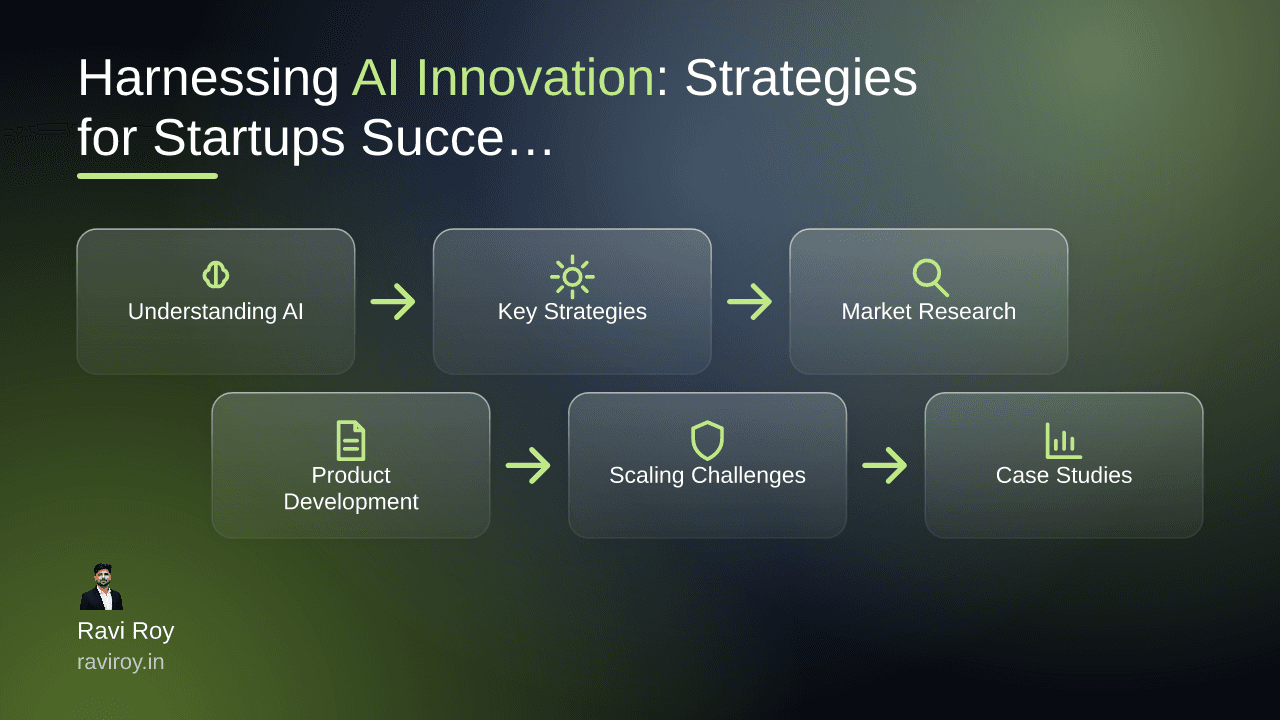
Harnessing AI Innovation: Strategies for Startups Success
Startups today are poised at the intersection of technology and entrepreneurship, and the potential of AI innovation is transforming how they operate. By harnessing AI, startups can not only streamline their processes but also create personalized experiences that resonate with customers. But what exactly does AI innovation mean, and how can your startup tap into this tremendous potential?
Understanding AI Innovation for Startups
Defining AI Innovation
AI innovation refers to the integration of artificial intelligence technologies to enhance operational efficiency, improve decision-making, and deliver personalized experiences. For startups, AI can mean the difference between simply existing in a competitive market and thriving within it. By leveraging advancements in machine learning, natural language processing, and data analytics, startups can create solutions that scale and adapt as their business grows.
Benefits of AI Innovation for Startups
The benefits of incorporating AI technologies into your startup are multifaceted. Whether it’s enhancing customer interactions or optimizing internal processes, AI drives efficiency and personalization. For instance, AI-powered chatbots provide immediate support to customers, while predictive analytics can identify trends before they arise, giving startups a competitive edge. By implementing AI, startups can reduce operational costs and enhance the user experience simultaneously.
Key Strategies for Implementing AI in Startups
Identifying the Right AI Tools
Choosing the right AI tools is critical for startup success. Here are some popular tools tailored for startups:
ChatGPT: Ideal for customer service automation.
Google Cloud AI: A robust platform offering machine learning APIs tailored for developers.
DataRobot: Automates the machine learning process, enabling businesses to deploy models quickly.
Tableau: This visualization tool integrates AI to offer insights from complex data sets.
Before making a selection, it’s essential to assess what tools align with your specific goals and resources.
Integrating AI into Business Operations
The process of integrating AI into your operations can be broken down into manageable steps:
Assess Your Needs: Identify pain points within your business that could benefit from AI, such as customer engagement or inventory management.
Pilot Testing: Start small with pilot projects to assess effectiveness before a full implementation.
Train Your Team: Ensure that employees are familiar with the new AI tools through training and resources.
Measure Outcomes: Collect data on performance to determine if the AI solution is delivering the intended benefits.
By following these steps, you can create a more seamless transition into AI technologies.
Evaluating Cost-Benefit for AI Adoption
Another crucial aspect of AI adoption is understanding the financial implications. Consider the following framework to evaluate cost-benefit:
Upfront Costs: This includes purchasing tools, hiring expertise, and training staff.
Ongoing Costs: Regular maintenance, updates, or scaling as your startup grows.
Expected Returns: Analyze how AI will save time and resources, drive revenue growth, and enhance customer satisfaction.
Weighing these factors will help clarify whether AI adoption makes sense for your startup’s financial health.
Leveraging AI for Market Research
AI is revolutionizing market research methodologies, making it easier for startups to mine vast amounts of data. By utilizing AI algorithms, startups can turn customer feedback, social media sentiments, and competitive analysis into actionable insights. For example, a startup focusing on consumer goods could analyze consumer preferences through platforms like Crayon or SimilarWeb.
Case Study: Mozano Mozano, a fresh entrant in the fashion industry, used AI to analyze social media trends and customer behavior, which not only helped refine their product lineup but also optimized their marketing strategies effectively.
The Role of AI in Product Development
AI for Customer Feedback Analysis
AI tools can efficiently gather and analyze customer feedback, enabling startups to understand product reception in real-time. Tools like Qualtrics and SurveyMonkey utilize AI-driven analytics to categorize responses and highlight significant patterns in customer sentiments. This proactive feedback loop allows for timely adjustments in products or services, ensuring they meet market demands.
Predictive Analytics in Product Design
Utilizing predictive analytics can significantly shape product features. By analyzing past customer interactions, startups can forecast what features might be in demand. For instance, companies like Spotify employ predictive analytics to tailor playlists based on user preferences, showcasing how data-driven decisions can lead to improved user engagement.
Challenges of Scaling AI Technology
Technical Roadblocks
While the advantages of AI are clear, startups often face technical challenges during implementation. Common roadblocks include:
Data Quality: Inconsistent or incomplete datasets can lead to faulty AI outputs.
Integration Issues: Existing systems might be incompatible with new AI tools, requiring additional resources to integrate.
Navigating these challenges requires a commitment to continual learning and adaptation.
Ethical Considerations
As AI innovations proliferate, so do ethical considerations. Startups must be vigilant about transparency, data privacy, and algorithmic bias. Implementing an ethical AI framework ensures that AI applications serve everyone fairly and responsibly, thereby building trust with customers.
Real-Life Case Studies of Successful AI Startups
Several startups have successfully integrated AI innovations, demonstrating how powerful these technologies can be. For instance:
Zest AI: This fintech startup utilizes machine learning algorithms to enhance the accuracy of credit scoring, allowing more individuals access to loans.
Sana Labs: They use AI to personalize educational materials for learners, significantly improving comprehension and engagement.
These examples illustrate that strategic implementation of AI can lead to runaway success.
Your Turn: Experience Sharing and Discussion
As you've explored the impact of AI innovation on startups, we want to hear from you. What AI strategies have you found most effective in your startup journey? Share your experiences and insights on the successes or challenges you've faced in implementing AI solutions. Your contributions can help others navigate their path in this exciting landscape.
💬 Join the conversation — share your take in the comments and tell us what you’d add.