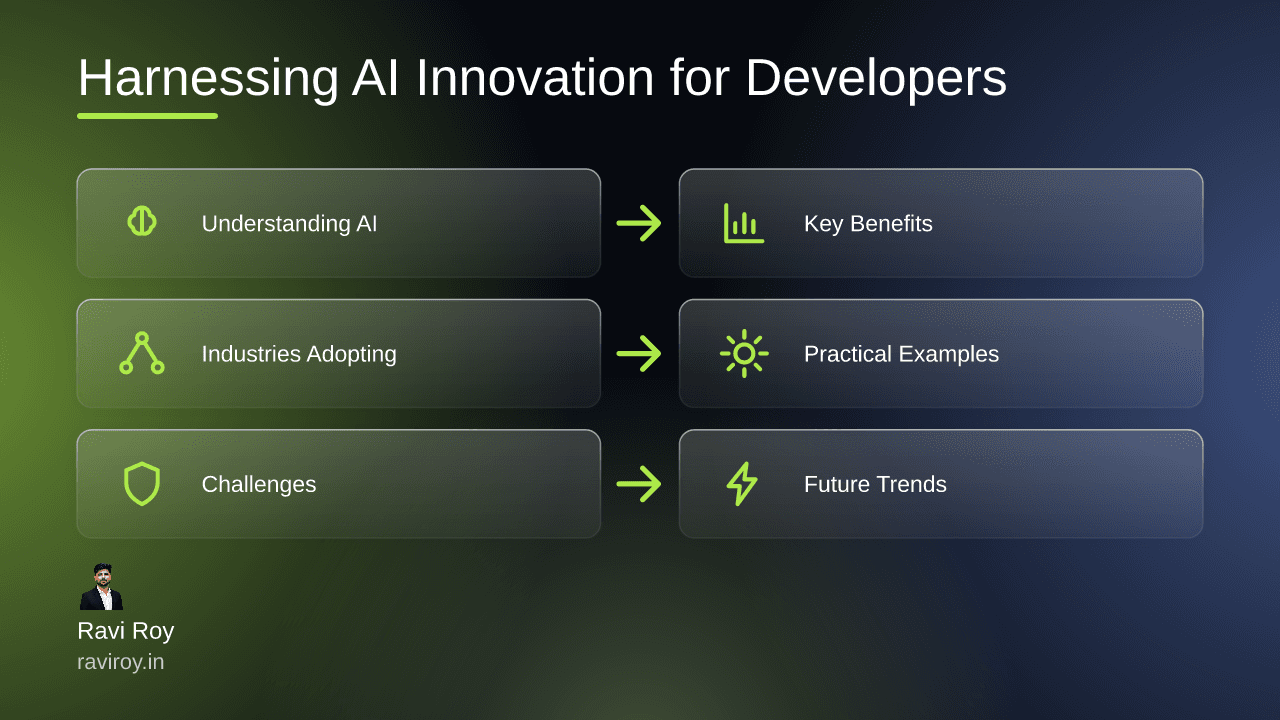
Harnessing AI Innovation: Real-World Applications of Multimodal AI for Developers
Imagine an AI that not only understands words but also interprets images and sounds, all while streamlining processes for developers. This is the promise of multimodal AI, a fusion of different data types that revolutionizes the way applications are built and operated.
Understanding AI Innovation through Multimodal AI
What is Multimodal AI?
Multimodal AI refers to artificial intelligence that integrates and processes data from various modalities—text, audio, visual, and more—to generate insights or perform tasks. This innovative approach is pivotal in the realm of AI innovation as it allows for greater contextual understanding and improved accuracy in applications. For instance, unified models like GPT-4V and Gemini showcase how multimodal systems can synthesize diverse information sources to tackle complex challenges effectively.
How Does It Enhance Real-World Applications?
The beauty of multimodal AI lies in its ability to absorb and analyze different types of input simultaneously. This capability enhances accuracy significantly. In the healthcare sector, for example, algorithms can assess patient information (text), medical imaging (visual), and even vocal tone (audio), leading to more informed diagnostic results. In areas like autonomous vehicles, multimodal systems coordinate data from cameras, radar, and LIDAR to navigate complex environments more safely than single-modality systems ever could.
Key Benefits of Multimodal AI for Developers
Improved Accuracy and Robustness
By utilizing multimodal AI, developers see a substantial increase in the accuracy of their applications. Real-time processing in critical sectors such as healthcare and autonomous driving depends on prompt and precise data interpretation. For instance, a multimodal AI-based diagnostic tool can quickly analyze clinical notes along with imaging data to recommend treatments, reducing human error and timescales.
Faster Development Cycles
Developers benefit from efficiencies in their workflow, thanks to integration capabilities that work seamlessly with existing AI-native development tools. By deploying multimodal frameworks, coding merges multiple data types into a coherent structure, resulting in faster iterations and less debugging time. This leads to overall enhancements in the development cycle, allowing for rapid deployment of applications across various sectors.
Industries Rapidly Adopting Multimodal AI
Healthcare
Case studies in healthcare diagnostics have illustrated the transformative effects of multimodal AI. For instance, a pilot study conducted in a major hospital used multimodal datasets combining electronic health records and imaging results, significantly improving diagnostic accuracy and patient outcomes.
Automotive
The automotive industry is racing toward the adoption of multimodal AI, particularly in the realm of autonomous vehicles. Innovations have surfaced whereby vehicles utilize a combination of visual, auditory, and navigational data to make split-second decisions, enhancing driver and occupant safety.
Finance
In the finance sector, multimodal AI applications are changing the landscape of predictive modeling. An automated system that evaluates customer communications (text), transaction histories (numerical), and customer service interactions (audio) can effectively predict market trends and consumer behavior, leading to better financial strategies.
Integrating Multimodal AI: Practical Examples
Application in Healthcare Diagnostics
Imagine a healthcare application that integrates multimodal AI for diagnosing skin conditions. Here's a step-by-step guide to understand this integration:
Data Acquisition: Collect images of skin conditions along with patient history (text) and voice descriptions of symptoms (audio).
Preprocessing: Use algorithms to clean and standardize data across modalities.
Model Training: Develop a unified AI model that leverages convolutional neural networks (CNNs) for image analysis and natural language processing (NLP) for text data interpretation.
Diagnostic Output: Upon receiving new patient data, the model analyzes the imagery while referencing the patient’s history and symptom descriptions to suggest possible diagnoses.
Enhancing User Experiences in Automotive Tech
Automotive developers can significantly elevate user experiences by employing multimodal feedback. Here’s how this can be done:
Data Fusion: Integrate data from the vehicle’s sensors (proximity, acceleration, braking) along with user input (voice commands and use patterns).
Real-time Analysis: Deploy AI that interprets this data in real-time to enhance navigation and safety features.
User Interface Enhancement: Create feedback systems that adjust, for example, the car’s audio settings based on voice command clarity or the driver’s mood.
Challenges and Ethical Considerations in Multimodal AI
Privacy Concerns
Processing sensitive data raises questions about privacy. For instance, healthcare applications that integrate personal medical histories and imagery must take care to comply with data protection regulations, ensuring that sensitive information is anonymized and secured.
Failure Scenarios
Limited case studies documenting failure scenarios in multimodal AI reveal significant implications. For instance, a malfunction in interpreting data from one modality could mislead the AI, resulting in dangerous outcomes. Studying these scenarios is essential for developing robust fail-safes.
The Future of Multimodal AI and AI Innovation
Trends to Watch
The future of multimodal AI is characterized by trends such as enhanced cross-modal interactions. As developers continue to innovate, we expect to see systems that can seamlessly transition between modalities, offering a fluid user experience.
Potential Developments for Developers
Looking ahead, AI-native integrated development environments will further enhance the coding process for multimodal applications. These environments will provide developers with tools and frameworks that simplify the creation of applications utilizing multimodal data, making development more intuitive and collaborative.
As the possibilities of multimodal AI unfold, developers find themselves in an exciting era of innovation. What has been your experience with implementing multimodal AI solutions in your projects?
💬 Join the conversation — share your take in the comments and tell us what you’d add.