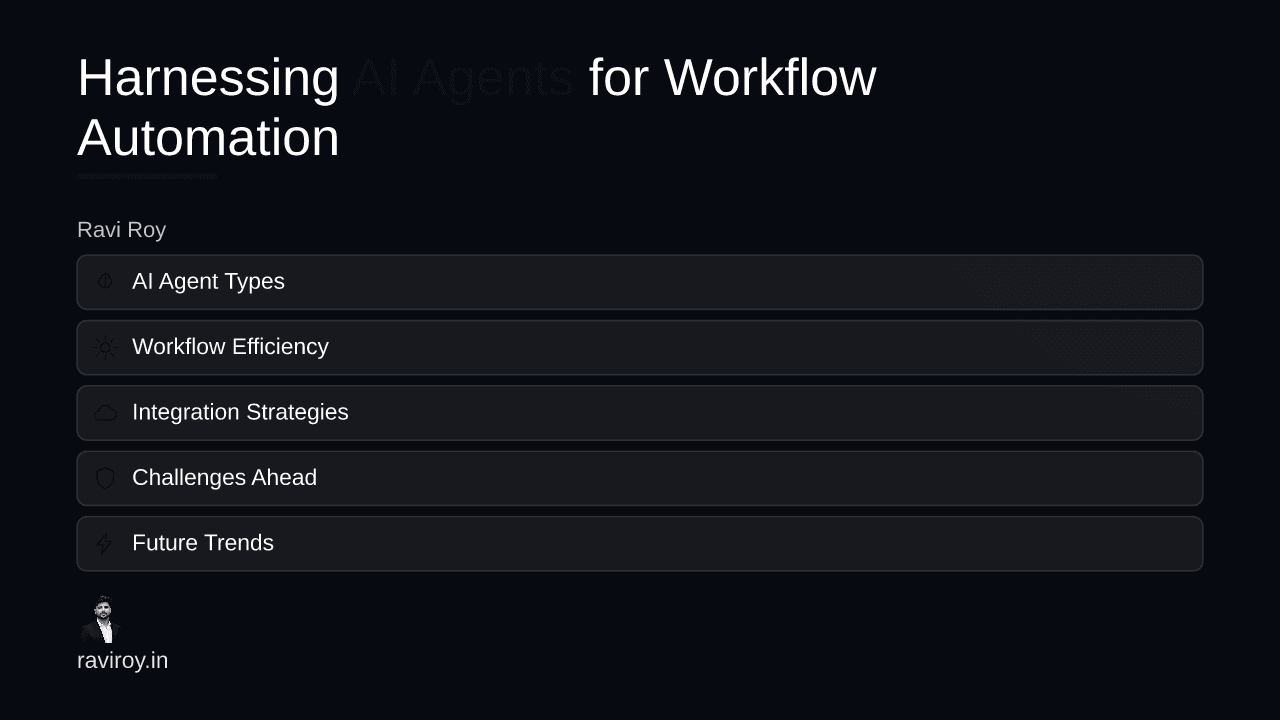
Harnessing AI Agents for Enhanced Workflow Automation Success
Automating workflows often feels like an elusive dream, yet AI agents are transforming that vision into reality. These intelligent systems are designed to streamline operations, improve efficiency, and free up precious time for employees to focus on what truly matters. By the end of this post, you'll grasp how to harness AI agents effectively for your workflow automation needs.
Understanding AI Agents
What are AI Agents?
AI agents are software entities capable of perceiving their environment and acting on those perceptions to achieve specific goals. They operate on core functionalities including learning, reasoning, and problem-solving. Unlike traditional automation tools that require predefined rules, AI agents utilize machine learning algorithms to adapt and improve their performance over time.
Different Types of AI Agents
There are numerous types of AI agents tailored for specific functions, each offering unique benefits:
Chatbots: These agents interact with users in natural language, answering questions and performing tasks.
Virtual Assistants: Think Siri or Google Assistant—these AI agents help manage schedules, send reminders, and control smart devices.
Recommendation Engines: Found in e-commerce platforms, these agents analyze user behavior to suggest products or services tailored to individual preferences.
By understanding these distinctions, businesses can better select the appropriate AI agents that meet their specific needs.
How AI Agents Enhance Workflow Automation
Real-World Applications
Numerous businesses have turned to AI agents, paving the way for more seamless operational workflows. For instance, a leading customer service company deployed chatbots to handle simple queries, resulting in a significant reduction in response times—by up to 70%. This allowed human agents to focus on complex inquiries, enhancing overall customer satisfaction.
Advantages over Traditional Automation Methods
The productivity metrics of organizations leveraging AI agents often tell a compelling story. Before implementing AI chatbots, one major tech company reported an average ticket resolution time of 24 hours. Post-implementation saw that number drop to less than two hours, demonstrating an incredible leap in efficiency. Moreover, AI-powered insights allow for improved decision-making, allowing teams to anticipate customer needs and adjust strategies dynamically.
Integrating AI Agents into Work Processes
Step-by-Step Integration Guide
Integrating AI agents into existing workflows is a strategic process that involves several steps:
Assessment: Identify repetitive tasks that could benefit from automation.
Pilot Testing: Start with a small-scale implementation to evaluate performance.
Full-Scale Deployment: Adjust based on pilot feedback before rolling out company-wide.
Continuous Monitoring: Use analytics to track performance and make improvements as necessary.
Key Tools and Platforms
Several popular tools can facilitate the integration of AI agents into workflows:
Zapier: Connects various apps and automates tasks between them.
Microsoft Power Automate: Allows for building complex workflows integrating AI capabilities.
Additionally, to ensure a smooth transition, employee training sessions are essential. Equip teams with the knowledge to leverage AI tools effectively.
Challenges and Considerations
Common Pitfalls
Introducing AI agents isn’t without its challenges. Common pitfalls include over-relying on technology without ensuring proper human oversight and failing to address employee resistance to change. These issues can hinder successful implementation.
Ethical Considerations
As businesses adopt AI agents, ethical considerations must also take center stage. Concerns over data privacy and transparency are paramount. Companies must not only comply with regulations but foster an environment of trust. Strategies such as maintaining data anonymization, and providing clear usage policies can mitigate risks associated with AI deployment.
Future Trends in AI Agents and Workflow Automation
Emerging Technologies
Technological advancements continue to influence the capabilities of AI agents. Machine learning is a game changer; algorithms can enhance the accuracy and efficiency of AI functionalities, making future agents more adaptable and intelligent.
Predictions for 5-10 Years
Looking ahead, it's plausible that AI agents will become integral to nearly every industry, from healthcare to finance, revolutionizing operational frameworks. As AI evolves, anticipate broader applications such as predictive analytics and enhanced user personalization, driving even greater efficiencies.
Real User Experiences with AI Agents
Case Studies
Consider the case study of a retail company that implemented a recommendation engine, leading to a 30% increase in sales conversion rates. Such real-world examples highlight the tangible benefits of integrating AI agents into workflows.
User Testimonials
Users are increasingly touting the efficiency gained through AI agents. For instance, one marketing manager shared how utilizing a virtual assistant significantly reduced her workload, allowing her team to launch campaigns faster while also improving creative output.
As you reflect on your own operations, consider how AI agents could enhance your workflows.
What specific tasks would you automate using AI agents in your workflow, and why?
💬 Join the conversation — share your take in the comments and tell us what you’d add.