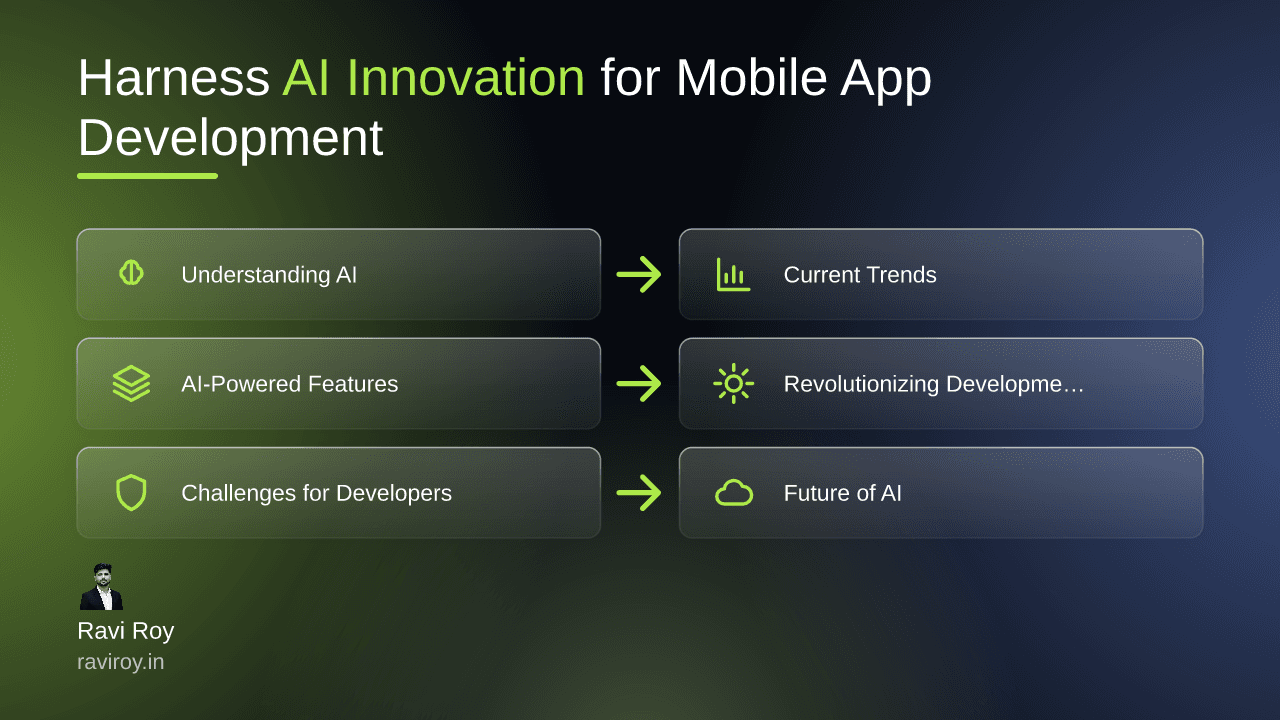
Harness AI Innovation for Next-Gen Mobile App Development Success
Mobile app development is experiencing a seismic shift with the integration of AI innovation, transforming how we create and interact with applications. By leveraging the capabilities of AI, developers can streamline processes and deliver exceptional experiences, making it essential for modern businesses to adopt these technologies.
Understanding AI Innovation in Mobile App Development
What is AI Innovation?
AI innovation refers to the application of artificial intelligence technologies to improve existing systems or create new solutions in various sectors, including mobile app development. As the tech landscape evolves, understanding AI innovation ensures that developers stay competitive and align their applications with user expectations.
How Does AI Enhance Mobile App Development?
AI optimizes the development process by automating tasks that traditionally require human intervention. This leads to accelerated development cycles and enhanced testing capabilities. For instance, AI can analyze code and detect bugs faster than a human developer, ensuring higher accuracy in the testing phase. Moreover, predictive modeling can anticipate potential issues in app performance, enabling developers to address them proactively.
Current Trends in AI for Mobile Apps
AI as Core App Architecture
Integrating AI into app architecture is becoming increasingly common. By having AI at the core, developers can create applications that learn and adapt to user behavior. For example, incorporating machine learning algorithms allows apps to recommend content based on users' previous interactions.
On-Device AI Processing
With the rise of privacy concerns, on-device AI processing is gaining traction. This approach allows data to be processed locally on the user's device rather than in the cloud. Benefits include reduced latency, improved performance, and enhanced user privacy, as sensitive data doesn’t leave the device. Apps like Apple’s Siri and Google Assistant utilize on-device processing to streamline responses while maintaining user confidentiality.
Predictive Analytics in Apps
Predictive analytics leverages AI to anticipate user behaviors, enabling a more customized experience. For instance, e-commerce apps can analyze purchase history and suggest products users are likely to buy, thus increasing sales conversions. By understanding patterns in user behavior, businesses can optimize their marketing strategies and improve customer retention rates.
AI-Powered Features that Enhance User Experience
Personalized Recommendations Using AI
Personalization is the cornerstone of user engagement. AI algorithms can sift through vast amounts of data to deliver tailored content and app experiences. Streaming services like Netflix use AI to recommend shows based on viewing history, significantly enhancing user satisfaction and retention.
AI-Powered Chatbots
Chatbots powered by AI can handle customer queries instantaneously, providing users with 24/7 assistance. These bots analyze user input to deliver relevant responses, improving the overall customer experience. Businesses using AI chatbots report higher customer engagement and reduced operational costs due to their ability to handle multiple queries simultaneously.
Voice Search Integration
The integration of voice search is revolutionizing how users interact with mobile apps. As smart speakers and voice assistants become commonplace, applications need to incorporate voice recognition capabilities. This provides users a convenient alternative to traditional navigation, creating a more inclusive experience for those who might find touch navigation challenging.
AI Technologies Revolutionizing App Development
AI for Image Recognition
AI enhances image recognition features, allowing apps to identify and categorize images accurately. For example, apps like Google Photos utilize AI to automatically sort and tag pictures. This can be beneficial for e-commerce platforms that rely on visual content to captivate users.
AI in Fraud Detection
In an era where online fraud is increasingly sophisticated, AI plays a crucial role in identifying and preventing fraudulent activities. Machine learning algorithms can analyze transactions in real time, flagging suspicious behavior and minimizing risk. Financial apps leverage these technologies to provide users with a secure environment.
Automated Content Generation
AI can also generate content for apps, significantly reducing the time creators spend on this task. Tools like OpenAI’s GPT-3 can draft articles, create product descriptions, or even generate chatbot dialogues, allowing developers to focus on enhancing user experience rather than content creation.
Challenges Faced by Developers Integrating AI
Technical Complexity
Integrating AI into mobile apps can be technically complex. Developers often face hurdles related to machine learning model training, data management, and algorithm fine-tuning. These complexities can delay launch timelines and increase costs if not managed properly.
User Privacy Concerns
As apps become more reliant on user data to function effectively, privacy concerns continue to grow. Developers must navigate stricter regulations surrounding data usage, such as GDPR and CCPA, to ensure compliance while still offering personalized experiences.
Cost and Resources
Implementing AI solutions can be resource-intensive, requiring skilled personnel and infrastructure investments. The costs associated with AI technologies can be a barrier for some startups. However, as solutions become more accessible, the landscape is gradually changing, allowing more companies to embrace AI innovation.
The Future of AI Innovation in Mobile App Development
Long-Term User Engagement with AI
The role of AI in long-term user engagement is anticipated to expand significantly. AI-driven insights will empower developers to create more compelling user journeys, ultimately enhancing retention strategies. Businesses that embrace these innovations can maintain a competitive edge in a saturated market.
Future Trends in AI-Native Mobile Apps
Emerging trends suggest a shift towards AI-native applications, where intelligence is embedded in every aspect of app functionality. Advancements in natural language processing, computer vision, and sensor technologies will redefine interactions, enabling an intuitive user experience. As AI technologies continue to evolve, developers will increasingly leverage them to create more sophisticated applications.
AI innovation is reshaping the landscape of mobile app development, offering efficiencies and user experiences that were previously unimaginable. As you adapt to these changes, consider how you can integrate AI into your applications to enhance engagement.
What AI features have you incorporated into your mobile apps, and how have they impacted user engagement?
💬 Join the conversation — share your take in the comments and tell us what you’d add.