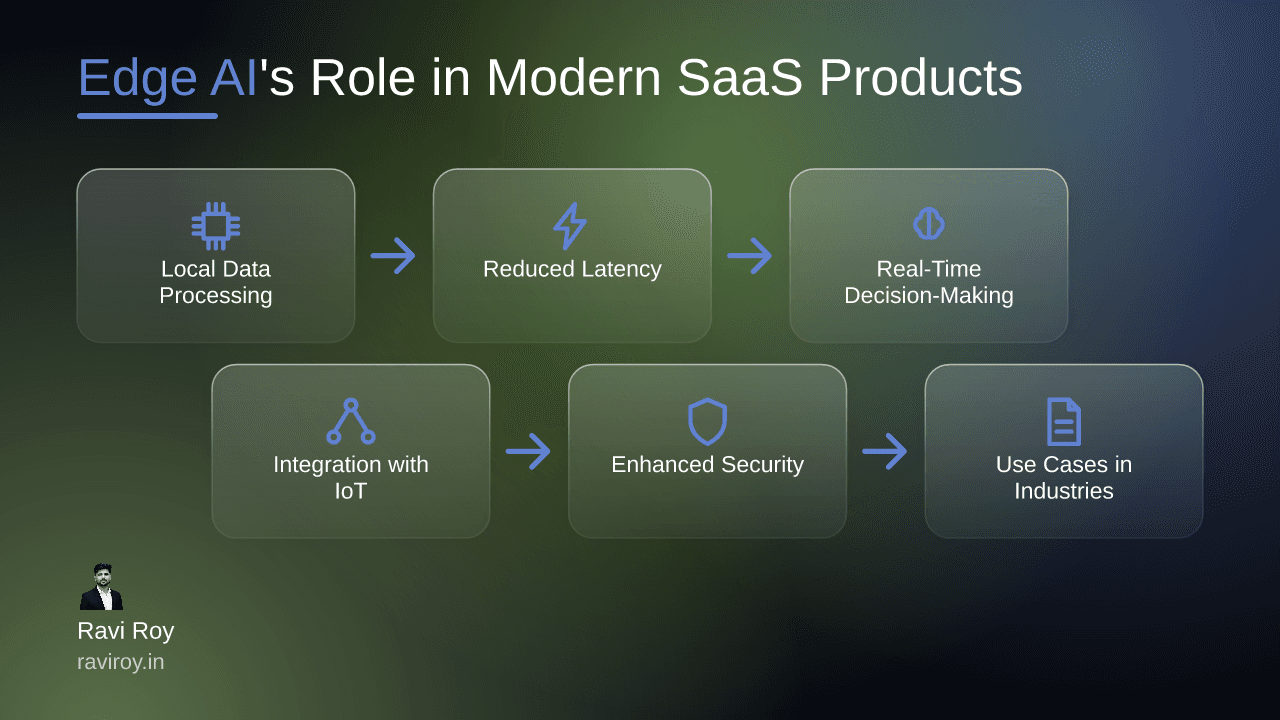
Exploring the Role of Edge AI in Modern SaaS Products and Emerging Technologies
As the digital landscape evolves, SaaS products are becoming increasingly sophisticated, thanks in part to the rise of Edge AI. This innovative technology is transforming how applications process data, paving the way for unprecedented efficiencies and real-time decision-making capabilities.
Understanding Edge AI and Its Distinction from Cloud-Based AI
Edge AI, by definition, refers to the deployment of artificial intelligence at the edge of the network, closer to where data is generated. This contrasts with traditional cloud-based AI, where data must travel to centralized servers for processing. By analyzing data on-site, Edge AI minimizes latency and bandwidth demands, resulting in faster and more efficient outcomes for SaaS applications.
Key Features of Edge AI:
Local Data Processing: Edge AI enables immediate data processing, which is critical for applications that rely on real-time analytics.
Reduced Latency: Unlike cloud AI, which can suffer from delays due to network speed, Edge AI minimizes these delays, allowing for prompt responses.
Real-time processing advantages of Edge AI are particularly useful in industries such as healthcare, manufacturing, and finance, where every second counts.
The Impact of Edge AI on Real-Time Decision-Making in SaaS
Faster data processing with Edge AI plays a crucial role in improving decision-making within SaaS environments. By analyzing data locally, businesses can leverage insights instantaneously, resulting in more informed decisions.
Examples in Enterprise SaaS Solutions:
Retail Analytics: Retailers can adjust promotions in real-time based on customer behavior tracked via in-store sensors, optimizing inventory and increasing sales.
Fleet Management: Companies can monitor vehicle conditions and make immediate adjustments to maintenance schedules based on Edge AI insights.
Industries reliant on immediate analytics—like logistics, healthcare, and finance—are finding that Edge AI's real-time capabilities are not just advantages; they're essential.
Integration of Edge AI with IoT and 5G Technologies
The marriage of Edge AI with IoT devices enhances the functionality and responsiveness of SaaS applications. IoT devices gather massive amounts of data, but without edge processing, delays can negate their value. Edge AI filters, processes, and acts on this data directly at the source.
The Role of 5G:
5G technology accelerates the potential of Edge AI by offering low-latency connections and increased bandwidth. This synergy enables:
Improved Device Communication: Devices communicate faster and more reliably.
Expanded Use Cases: New applications in autonomous driving, smart cities, and health diagnostics become viable.
Potential use cases spawned from this integration include smart manufacturing plants where machinery communicates real-time data for predictive maintenance, thereby avoiding downtime and enhancing overall efficiency.
Hardware and Operating Systems Supporting Edge AI Runtime
Successful implementation of Edge AI requires the right hardware and operating systems.
Typical Hardware:
Edge Gateways: Devices that act as intermediaries between IoT devices and the cloud, processing data locally.
Microcontrollers and Sensors: Integrated smart sensors capable of running AI algorithms.
Compatible Operating Systems:
Linux-based Systems: Commonly used due to their flexibility and support for various AI frameworks.
Real-Time Operating Systems (RTOS): Essential for applications needing immediate processing.
When choosing hardware, scalability should be a primary consideration, ensuring that as your SaaS application grows, your edge infrastructure can adapt accordingly.
Strengthening Data Security and Privacy with Edge AI
Edge AI enhances data security in SaaS applications in multiple ways. By processing data closer to its source, sensitive information is less likely to be transmitted over networks where it could be intercepted.
Key Security Benefits:
Localized Data Storage: Reduces the risk of breaches associated with centralized data centers.
Enhanced Privacy Protocols: With Edge AI, sensitive data can remain on-site, adhering to stringent compliance regulations.
Statistics show that organizations employing Edge AI can expect a 30% reduction in the risk of data breaches compared to traditional cloud setups (source). Case studies in finance and healthcare highlight how companies using Edge AI have improved their security outcomes significantly.
Real-World Use Cases of Edge AI in SaaS
Several industries are leveraging Edge AI to transform their operations.
Case Studies:
Healthcare: Hospitals using Edge AI to analyze patient data in real time, enabling quicker diagnoses and personalized treatment plans.
Manufacturing: Factories with sensors that monitor equipment performance continuously, leading to fewer downtimes and increased productivity.
The outcomes of these real-world implementations reveal substantial benefits, including cost savings, enhanced operational efficiency, and improved customer satisfaction.
Future Outlook: Centralized SaaS AI vs. Decentralized Edge AI
Emerging trends indicate a shift toward decentralized architectures as organizations increasingly adopt Edge AI.
Implications:
Flexibility: Decentralized models allow more tailored solutions to specific geographical or operational needs.
Responsiveness: The capability of Edge AI to reduce latency and provide immediate insights sets it apart from traditional centralized approaches.
As we look to the future, Edge AI is poised to play a significant role in the development of SaaS products, with predictions suggesting that organizations incorporating this technology could see a competitive advantage in their respective markets.
Conclusion
The intersection of Edge AI and SaaS is nothing short of revolutionary. By enabling real-time processing, enhancing data security, and supporting dynamic integration with IoT and 5G, we're only scratching the surface of what's possible.
What specific challenges have you faced in implementing Edge AI within your SaaS products, and how did you address them?
💬 Join the conversation — share your take in the comments and tell us what you’d add.