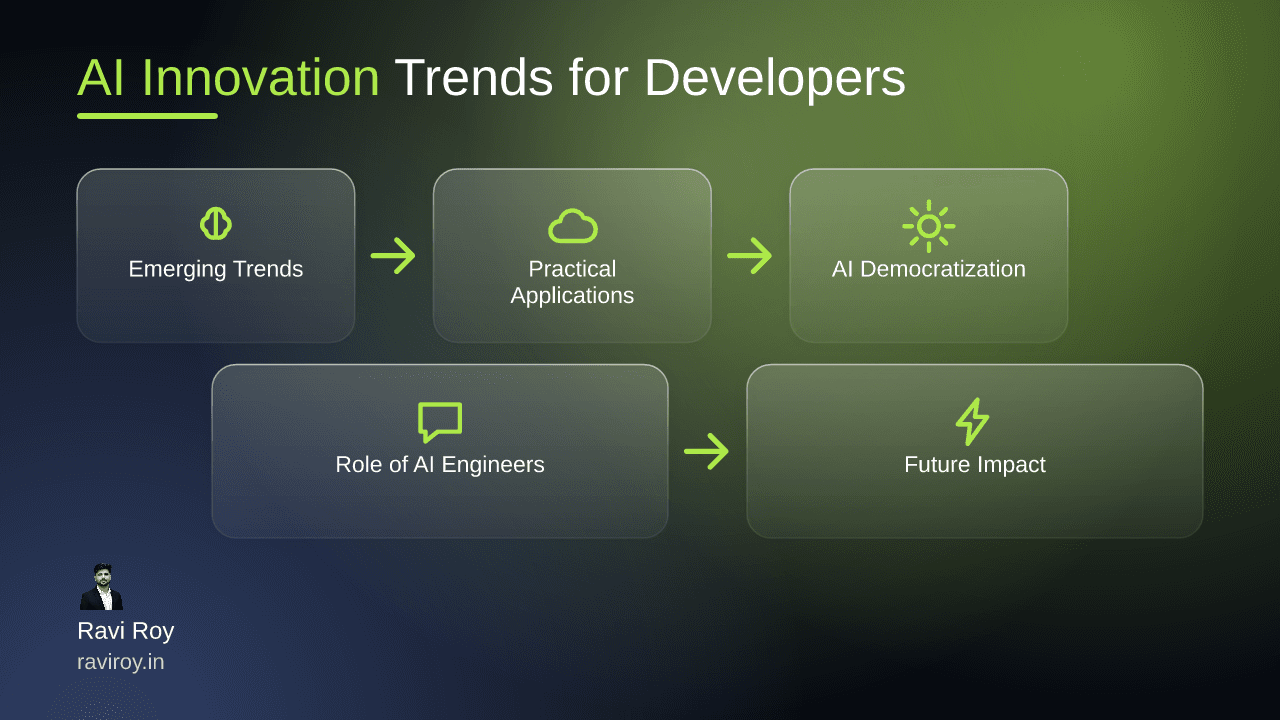
Emerging Trends in AI Innovation
Understanding Large Language Models and Generative AI
Large Language Models (LLMs) are at the forefront of AI evolution. They have transformed how machines understand and generate human language. Pioneered by massive datasets and powerful architectures like GPT-3 and beyond, LLMs function by predicting the next word in a sentence, leading to remarkably fluid conversations. This capability has paved the way for various applications across industries—from creating chatbots that improve customer service to automating content generation for marketing teams.
Generative AI extends beyond mere conversation; it encompasses creating images, music, and even code. Industries such as healthcare now leverage these models to predict patient outcomes or analyze vast datasets for research purposes. For example, generative models are being used to synthesize medical reports, offering insights that humans might overlook. The remarkable adaptability of these models indicates that developers have an array of creative avenues to explore.
The Rise of No-code and Low-code AI Tools
With the increasing complexity of AI, the rise of no-code and low-code tools has democratized access to this technology. No-code platforms allow users to build applications without a deep understanding of programming languages, while low-code platforms enable developers to create software with minimal hand-coding. This shift empowers developers to focus on innovation rather than spending excessive time on rudimentary tasks.
Benefits of these tools go beyond accessibility. They drastically reduce development time, enhance collaboration between technical and non-technical teams, and enable rapid prototyping. Tools like Microsoft PowerApps and Bubble offer capabilities that let developers integrate AI features like natural language processing or data analytics into their projects without needing to write every single line of code.
Practical Applications of AI for Developers
AI-powered Coding Assistants
AI-powered assistants like GitHub Copilot are transforming coding practices. These tools analyze your coding patterns and suggest lines of code or entire functions in real time, significantly reducing the time developers spend writing boilerplate code. A recent case study demonstrated that teams using Copilot were able to complete their projects 20% faster than those who relied solely on manual coding. By automating mundane coding tasks, developers can channel their efforts into more complex problem-solving.
Moreover, many organizations have reported improvements in code quality thanks to AI-assisted tools that optimize code review processes. For instance, AI can identify common pitfalls or vulnerabilities, alerting developers before these issues escalate into larger problems.
Synthetic Data Generation in Development
Synthetic data generation is another cutting-edge technology impacting the development landscape. It involves creating artificial datasets that mimic real-world data while preserving privacy. This is particularly important for training AI models, especially in sectors like finance and healthcare where sensitive information is prevalent.
Use cases abound. For example, developers can utilize synthetic data for testing machine learning models that require vast amounts of input data, yet creating this data manually can be time-consuming. By employing synthetic data generation techniques, developers can create diverse datasets that enhance their models’ robustness and generalizability without compromising privacy or regulatory standards.
AI Democratization and Open-source Models
Impact of Open-source on AI Development
Open-source models have significantly reshaped the AI landscape. They foster innovation by making powerful algorithms accessible to anyone willing to learn and experiment. This has catalyzed creativity, allowing developers to customize and optimize existing AI frameworks rather than building models from scratch.
For instance, projects like TensorFlow and PyTorch have gained traction not only for their ease of use but also for their extensive communities that actively develop and refine the tools. The collaborative nature of open-source projects accelerates the pace of innovation, giving developers the flexibility to tweak models for specialized applications.
Community-driven AI Projects
Community-driven initiatives are blossoming within the AI ecosystem, spurring impactful innovations. These projects often reflect the needs and challenges faced by developers. The Hugging Face community, for instance, has created a suite of models that enable natural language understanding and generation, allowing developers to deploy AI in their applications more readily.
Open-source contributions are also critical for AI democratization. By sharing code and resources, developers help eliminate barriers, allowing smaller companies and individual developers to compete with larger corporations. This inclusivity is a hallmark of the current AI trajectory, underscoring the collective potential of the programming community.
The Role of AI Engineers in Today's Tech Landscape
AI engineers play a pivotal role in bringing these innovations to life. They blend software engineering with data science, making them highly sought-after in the tech job market. An AI engineer’s responsibilities often include designing algorithms, managing data pipelines, and integrating AI models into larger systems.
Essential skills for AI engineers encompass a mixture of programming (Python is a must), knowledge in complex algorithms, and an understanding of machine learning frameworks. Current job market trends indicate a surge in demand for these roles, with salaries reflecting the expertise required to navigate this multifaceted field.
The Future Impact of AI Tools on Software Development
Integration of AI into Development Processes
The integration of AI into development processes is more than just a trend; it is becoming a necessity. AI tools like GitHub’s Copilot are influencing workflows by enabling continuous integration and continuous deployment (CI/CD) practices that integrate automated tests and quality checks. This change allows developers to focus on building features rather than troubleshooting issues.
Challenges and Considerations for Developers
As with any technological integration, challenges accompany the incorporation of AI in development processes. Developers must remain cautious regarding data privacy and ethical implications, particularly in industries where sensitive data is involved. Ensuring that AI systems are free from biases and inaccuracies is crucial in maintaining trust and compliance.
Moreover, navigating the learning curve associated with sophisticated AI tools can be daunting for some developers. Continuous education is essential for staying relevant in this rapidly evolving landscape.
Conclusion: Shaping the Future with AI Innovation
AI innovation is reshaping the landscape of software development, as highlighted by the emergence of large language models, no-code/low-code tools, and community-driven projects. The role of AI engineers is becoming increasingly vital, reflecting the growing demand for expertise in this domain. Staying updated with these trends is crucial for developers looking to harness the full potential of AI technology to enhance their projects.
What tools or techniques have you found most effective in integrating AI into your development workflow?
💬 Join the conversation — share your take in the comments and tell us what you’d add.