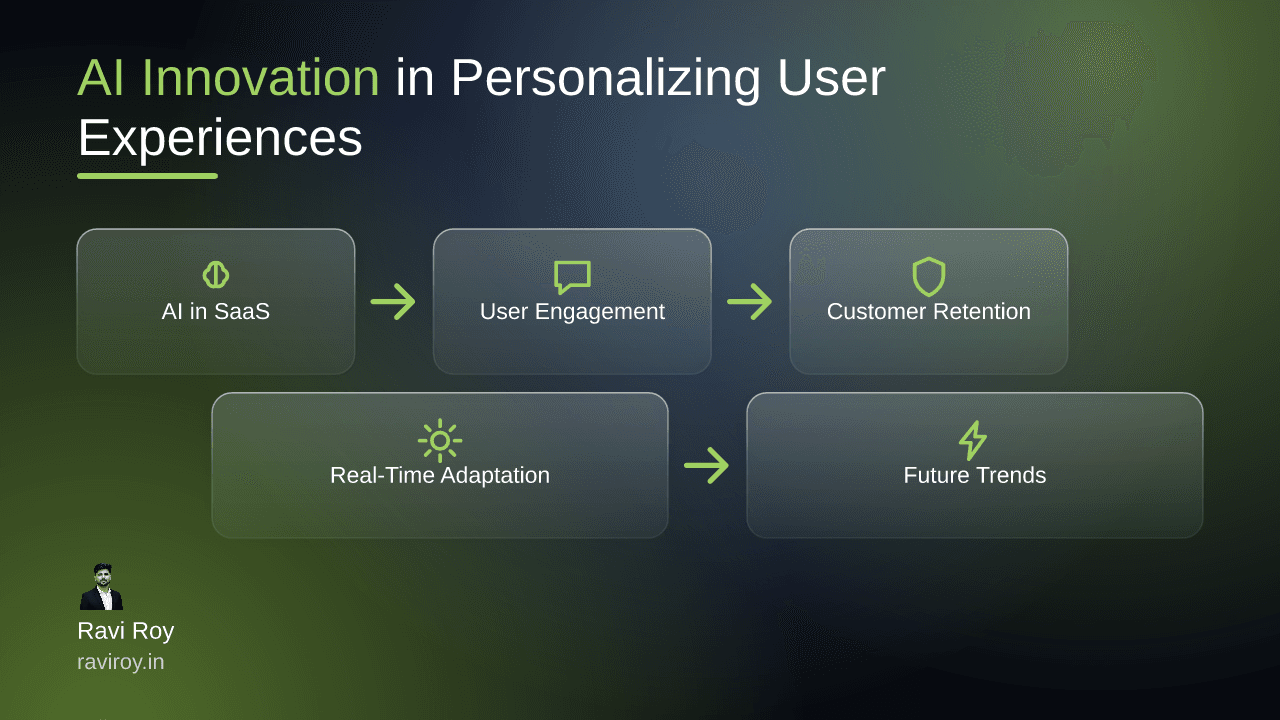
The Role of AI Innovation in SaaS Personalization
The digital age demands an unprecedented level of personalization, especially within Software as a Service (SaaS) platforms. Customers are no longer looking for one-size-fits-all solutions; they crave hyper-personalized experiences tailored specifically to their needs. This is where AI innovation steps in, transforming the way SaaS companies engage with their users.
Understanding Hyper-Personalization
Hyper-personalization is more than just customizing user experiences. It involves leveraging advanced data analytics and AI technologies to create uniquely tailored interactions. In the SaaS sector, this means using personal data to enhance every touchpoint, from onboarding to customer support. The significance of hyper-personalization is evident in its potential to drive user engagement, increase customer satisfaction, and ultimately boost retention rates.
Key AI Technologies in Use
AI technologies play a pivotal role in achieving hyper-personalization. Notably, machine learning algorithms analyze user preferences, actions, and content interactions. For instance, recommendation engines suggest features or products based on past user behavior. Real-time data is equally vital; it allows SaaS applications to adapt quickly to changes in user preference. A study shows that 80% of consumers are more likely to make a purchase when brands offer personalized experiences (link text).
Enhancing User Experience Through AI-Driven Personalization
The user experience is at the core of SaaS success. By implementing AI-driven personalization, companies can create interfaces that adapt dynamically to user needs.
Real-Time Adaptive Interfaces
Real-time adaptive interfaces change in response to individual user interactions. For example, platforms like Slack utilize AI to modify features based on how team members communicate and collaborate. This adaptability enhances usability and increases overall engagement, making the user feel more in control of their experience.
Predictive Analytics for User Behavior
Predictive analytics can model user behavior to anticipate future actions. For instance, companies can analyze historical data to determine the likelihood of a user accessing certain features or content. A well-known SaaS product, Netflix, employs predictive analytics to suggest shows based on a user's viewing history. The results are staggering—personalized recommendations drive 75% of viewer activity, showcasing the impact of predictive personalization (link text). Case studies from other SaaS giants reveal similar benefits, emphasizing the importance of anticipating user needs in maintaining a competitive edge.
Machine Learning and Customer Retention in SaaS
Customer retention is critical for any SaaS business. Machine learning offers robust tools for predicting and reducing churn, helping companies keep customers engaged longer.
Churn Prediction Models
Machine learning techniques, such as logistic regression and neural networks, can be tailored to predict customer churn. By analyzing user data—like usage frequency, feature engagement, and customer support interactions—companies can flag at-risk customers early. This timely intervention can lead to personalized outreach strategies, converting potential churn into extended user engagement. A report indicates that proactive retention strategies can decrease churn rates by 25% or more (link text).
AI Interactive Onboarding Processes
AI-driven onboarding processes can significantly enhance user retention. By utilizing chatbots for initial interactions, SaaS platforms can provide personalized guidance to help new users get started. An interactive onboarding experience, tailored to individual user journeys, increases satisfaction and decreases dropout rates. Research shows that users who have a positive onboarding experience are 80% more likely to continue using the software after the first week (link text).
Challenges in Implementing AI for Personalization in SaaS
Despite the advantages, implementing AI in personalization strategies isn't without its hurdles.
Ethical Considerations
The ethical implications of using AI for personalization are a pressing issue. Concerns about data privacy and security can create barriers to user trust. SaaS companies must be transparent about data usage and comply with regulations to maintain consumer confidence.
Scalability Issues
Scalability is another challenge. As user bases grow, maintaining personalized experiences becomes increasingly complex. Companies must evaluate their AI infrastructure and ensure it can handle larger datasets and provide real-time insights without compromising service quality.
Future Trends in AI Innovation for SaaS Personalization
The landscape of AI innovation is ever-evolving, and several emerging technologies promise to redefine personalization in SaaS applications.
Emerging Technologies
Technologies such as natural language processing (NLP) and advanced machine learning models are on the rise, providing greater context to user interactions. Voice-activated AI assistants are also adapting, allowing users to execute commands and receive suggestions through natural dialogue.
The Future of User Engagement
Looking forward, AI innovation is poised to revolutionize user engagement even further. Enhanced algorithmic insights will enable SaaS companies to draw actionable conclusions from user data, paving the way for refined personalization strategies. Tools that automatically adapt to user behavior will help sustain engagement levels as market dynamics shift.
Conclusion
In summary, the integration of AI innovation in SaaS personalization is critical for enhancing user experiences. From real-time data analytics to machine learning-driven predictions, the potential for tailored interactions is enormous. As SaaS companies continue to embrace these technologies, the transformation of user personalization will reshape how they connect with their customers, leading to increased satisfaction and loyalty.
What specific examples of AI-driven personalization have you implemented in your SaaS products, and what results have you seen?
💬 Join the conversation — share your take in the comments and tell us what you’d add.