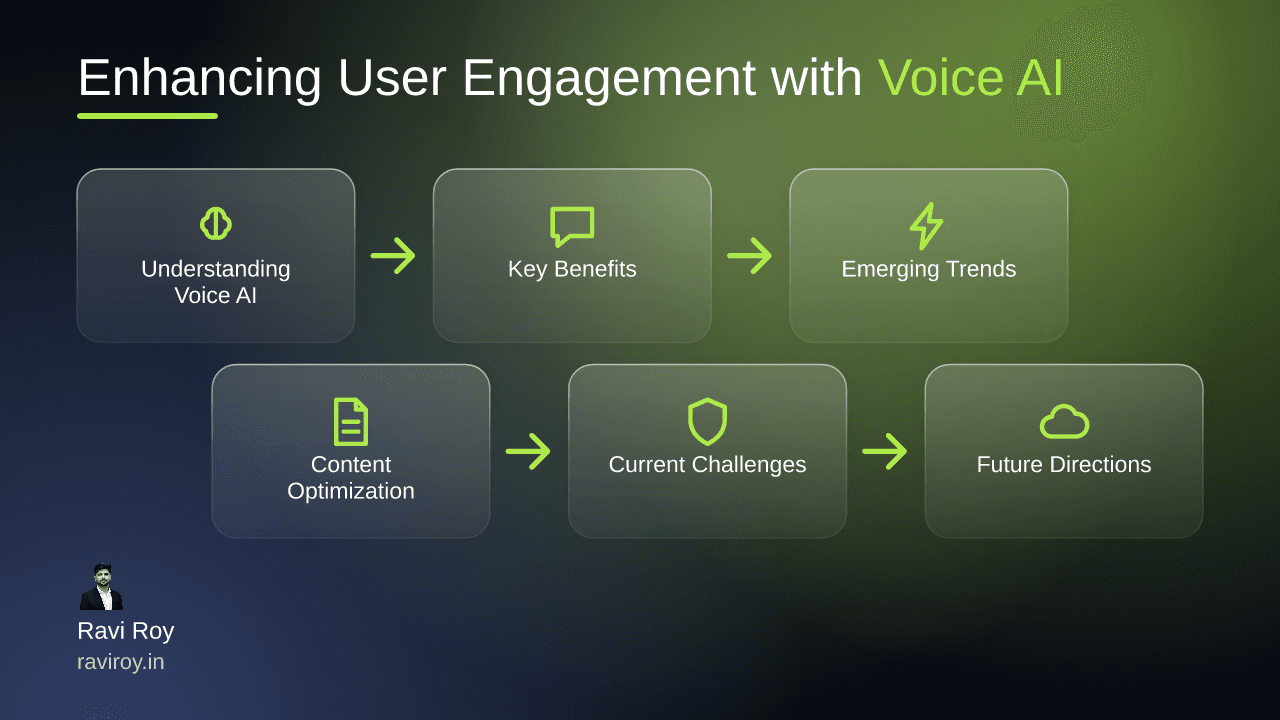
Understanding Voice AI and Its Impact on User Engagement
Voice AI has revolutionized the way we interact with technology, shifting the conversation from keyboards and screens to an intuitive auditory exchange. This innovation is more than just a novel way to control devices; it fundamentally transforms user engagement by offering seamless, hands-free interactions.
What is Voice AI?
Voice AI refers to artificial intelligence systems that are designed to understand, interpret, and respond to human speech. Over recent years, this technology has evolved dramatically, moving from simple command recognition to complex conversations that mimic human dialogue. Early models relied heavily on keyword recognition, but today’s iterations employ natural language processing (NLP) to deliver more personalized and contextual interactions. This transition marks a significant milestone in user experience, making technology more accessible and engaging.
The Role of Conversational Interfaces
Conversational interfaces serve as the bridge between users and technology, enabling a dialogue that feels as natural as speaking with another person. Unlike traditional graphical user interfaces (GUIs), which require users to navigate through buttons and menus, conversational interfaces allow for a more fluid interaction. This capability not only simplifies the process of obtaining information but also enriches the engagement by allowing users to ask questions and receive detailed answers. As a result, businesses are increasingly adopting voice-driven interactions to enhance user experience and satisfaction.
Key Benefits of Utilizing Voice AI for User Engagement
Using voice AI in your engagement strategy presents numerous advantages, making it an essential toolkit for modern businesses.
Accessibility for All Users
Voice AI plays a crucial role in improving accessibility for users with disabilities. Voice commands eliminate the need for a mouse or keyboard, making digital interactions easier for those with mobility challenges. A study found that 56% of people with disabilities prefer using voice assistants over traditional methods for accessing information. This shift not only enhances their experience but also expands the user base, ultimately driving higher engagement levels.
Facilitating Hands-Free Multitasking
Hands-free interaction through Voice AI enables users to multitask efficiently. Whether cooking in the kitchen or working out at the gym, users can seamlessly access information, adjust settings, or control devices without interrupting their physical activity. For instance, platforms like Amazon Alexa and Google Assistant allow you to set reminders or play music while your hands are tied up with other tasks. According to a survey, 72% of users reported that hands-free assistance improved their daily routines and interactions.
Emerging Trends in Voice AI Technology
The advancements in voice AI are not stopping; they are continually evolving with emerging trends that further enhance user engagement.
Hyper-Realistic Voice Generation
Recent developments in hyper-realistic voice generation are making interactions more lifelike. This technology enables voice AI to produce tones, accents, and inflections that mimic human speech patterns, providing a more engaging experience. Users are more likely to connect emotionally with an interface that sounds human, which bolsters trust and enhances communication effectiveness. Companies such as Descript and Resemble AI are leading the charge in this innovation, making voice interactions richer and more relatable.
Enhanced Emotional Intelligence
The inclusion of emotional intelligence in voice AI applications is another game changer. By understanding the emotional context behind spoken words, these systems can tailor responses that resonate on a personal level. For example, if a user sounds frustrated, a smart assistant could provide empathetic responses or suggest solutions, rather than a generic answer. This level of engagement can significantly improve customer satisfaction and loyalty in the long run.
Integration with IoT Devices
Voice AI's integration with Internet of Things (IoT) devices presents a powerful avenue for user engagement. Smart homes equipped with voice-activated technology enable users to interact with multiple devices through a single command. Imagine saying, "Good morning," and having your coffee maker start brewing while your thermostat adjusts the temperature. This cohesive experience enhances usability and keeps users engaged with the technology that surrounds them.
Content Optimization for Voice-First Delivery
To maximize the potential of voice AI, businesses must rethink their content strategies for voice-first delivery.
Types of Content for Voice AI
Content that resonates best with voice-first users typically includes concise answers, instructions, and engaging stories. For instance, short-form content like FAQs and bullet points are ideal as they allow users to receive information quickly. Reports suggest that up to 30% of all browsing is done without a screen, emphasizing the need for content designed specifically for voice interaction.
Best Practices for Voice Search Optimization
Optimizing your content for voice search involves several key practices:
Use Conversational Language: Match the natural speech patterns of users for better retrieval.
Focus on Local SEO: Voice searches often have local intent, so ensure your business is optimized for local queries.
Implement Structured Data: Using schema markup can help search engines understand your content better, aiding in voice search performance.
Brands like Domino's Pizza have effectively utilized voice AI in their content strategies, allowing customers to place orders hands-free through voice commands, providing a seamless experience.
Current Limitations and Challenges of Voice AI
While the advancements in voice AI are promising, several limitations and challenges remain.
Identifying Gaps in Voice AI Technology
Current limitations face voice AI technologies in aspects such as understanding nuanced language, regional accents, and maintaining context over longer conversations. Not all users have a robust understanding of conversational commands, and the technology can struggle to interpret niche vocabulary or slang accurately.
Handling Privacy Concerns
Privacy issues, particularly relating to personalization in voice interactions, pose another significant challenge. Users often worry about data breaches or unauthorized access to their personal information. OpenAI's GPT-3 and similar AI initiatives are working towards making these interactions secure, enhancing user trust over time. Transparency in how data is collected, stored, and used is essential to build that trust.
Future Directions: Voice AI in Non-Traditional Sectors
The future of Voice AI is bright, with innovative use cases emerging in various sectors.
Use Cases in Agriculture and Beyond
Voice AI has started to revolutionize fields like agriculture, where farmers can use voice-activated systems to record data, manage farm equipment, or receive weather updates directly. This advancement frees them to focus on essential tasks, dramatically improving efficiency.
Combining Voice AI with AR/VR
The merging of Voice AI with Augmented Reality (AR) and Virtual Reality (VR) offers possibilities for richer user experiences. For example, using voice commands in VR environments can greatly enhance interactivity, providing an immersive experience that keeps users engaged and entertained. Companies like Oculus are exploring these possibilities, paving the way for future innovations.
As voice AI continues to evolve and seep into various sectors, it's clear that the technology holds immense potential for enhancing user engagement across the board.
How has your experience with Voice AI shaped your interaction with technology in your day-to-day life?
💬 Join the conversation — share your take in the comments and tell us what you’d add.