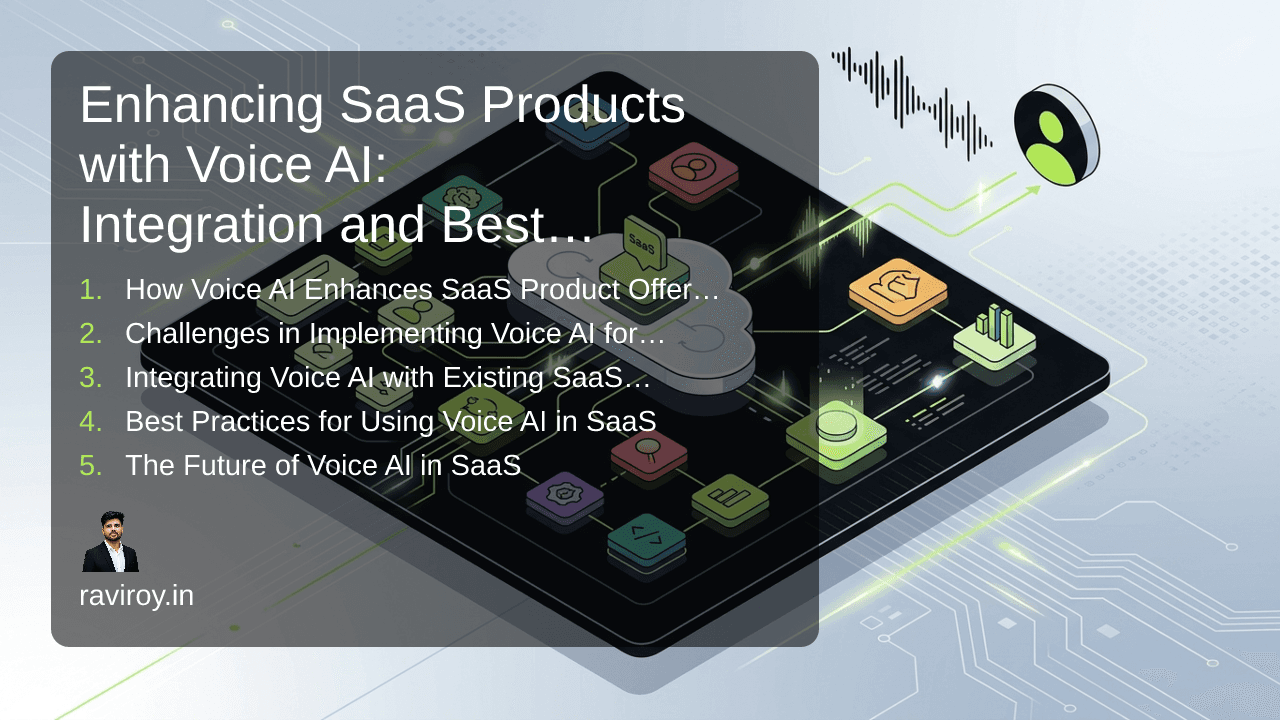
How Voice AI Enhances SaaS Product Offerings
Voice AI is transforming the landscape of software as a service (SaaS)—turning traditional user interactions into rich, human-like conversations. By integrating voice technology, businesses can enhance their product offerings, making them more engaging and accessible for users.
The Power of Human-like Interactions
Natural language processing (NLP) is at the heart of Voice AI integration. This technology allows users to engage with SaaS products in a conversational manner, breaking down the barriers of traditional interfaces. Imagine a customer querying a support platform: instead of sifting through FAQs or waiting for an email response, they can simply ask a question and receive answers in real time.
Notably, companies like Zendesk and Salesforce have already leveraged voice technology for smoother customer interactions, showcasing how intuitive voice-driven interfaces can redefine user experiences. This immediacy and ease lead to greater satisfaction and enhanced user engagement.
Hyper-personalization through Voice Technology
Voice AI takes personalization to the next level. By analyzing user speech patterns and preferences, SaaS platforms can tailor their responses in meaningful ways. For instance, an HR management tool that understands an employee's specific concerns can provide highly relevant information or even suggest actions based on past interactions.
Consider tools like Amazon Alexa for Business, which personalize experiences by learning about user preferences, scheduling meetings, or offering reminders. This hyper-personalized approach isn’t just about convenience—it significantly boosts customer retention rates, as users feel understood and valued.
Challenges in Implementing Voice AI for SaaS
Despite its many advantages, integrating Voice AI into SaaS platforms presents unique challenges that organizations need to navigate carefully.
Technical Hurdles
One of the most significant hurdles is the technical complexity of integrating Voice AI with existing systems. Businesses often find themselves needing robust APIs, SDKs, and possibly even new infrastructure to support intuitive voice interactions.
For instance, a project at Slack demonstrated that while Voice AI could enhance usability, integrating it with numerous existing functionalities and user data created multifaceted challenges that required dedicated resources and strategic planning.
Privacy and Security Concerns
Privacy and security cannot be overlooked when adopting Voice AI. With data being the backbone of personalized interactions, organizations must maintain high standards in data protection. Voice data, in particular, is sensitive; mishandling it can lead to significant repercussions, including loss of trust and regulatory issues.
Companies like Zoom have faced scrutiny over privacy concerns but have ramped up their security measures. It's crucial for SaaS providers to implement strong encryption protocols and ensure clear data usage policies, building a transparent relationship with users about how their voice data is handled.
Integrating Voice AI with Existing SaaS Platforms
To harness the benefits of Voice AI, seamless integration with existing platforms is key.
Best Practices for Seamless Integration
Utilize APIs and SDKs: This is essential for effective Voice AI integration. Existing SaaS platforms should utilize well-documented APIs to ensure compatibility with voice technology. For instance, Dialogflow can be integrated into many platforms to handle voice queries effortlessly.
Identify the Right Tools: Take the time to evaluate various voice recognition tools. Solutions like IBM Watson provide comprehensive options that can complement existing SaaS offerings.
Oversee Regular Testing: Regular quality assurance processes must be in place to assess and refine interactions between users and voice-based interfaces.
Tools and Technologies for Effective Use
There’s a variety of tools available for Voice AI integration that enhance functionality while maintaining the integrity of existing SaaS products.
Case Studies:
Intuit has successfully integrated voice features into TurboTax, allowing users to navigate tax questions through simple voice commands, making the software more accessible and intuitive.
HubSpot has also seen success by employing voice AI to streamline customer interactions, which helped to refine customer relationship management efforts and improve overall service delivery.
Best Practices for Using Voice AI in SaaS
Implementing Voice AI effectively requires strategic planning and ongoing evaluation.
Establishing Clear Use Cases
Before deploying Voice AI, define explicit objectives. What problems is the voice feature solving? Is it enhancing customer service, improving user onboarding, or streamlining processes? Clarity in purpose leads to better alignment across teams and enhances the chances of successful implementation.
Training and Continuously Improving AI Models
Building a strong foundation comes from investing in quality training data. Companies should regularly source user inputs to refine and improve their AI models. Implementing feedback loops allows organizations to correct misinterpretations and improve response accuracy over time.
For example, Google’s AI team continually adapts its voice recognition algorithms, utilizing user feedback to improve accuracy and relevance, ultimately enhancing user experiences across its SaaS offerings.
The Future of Voice AI in SaaS
As technology continues to evolve, so too does the role of Voice AI in SaaS.
Emerging Trends and Innovations
There is a shift toward developing more agentic AIs—systems that can autonomously perform tasks without human intervention. This evolution promises to further streamline workflows, allowing users to focus on high-value activities.
Impact on Customer Engagement
Integration with CRM systems marks a significant advancement for SaaS platforms. By embedding voice AI into these systems, real-time customer insights can be utilized to enhance interactions, ultimately leading to more engaged customers.
Predictions suggest that the future of Voice AI in SaaS will include capabilities like multilingual support and enhanced context awareness, allowing for even richer user interactions.
Harnessing the power of Voice AI can truly redefine the user experience within SaaS platforms, making interactions more meaningful and personalized. But as you venture into this transformation, what specific challenges have you faced when integrating Voice AI into your SaaS products?
💬 Join the conversation — share your take in the comments and tell us what you’d add.