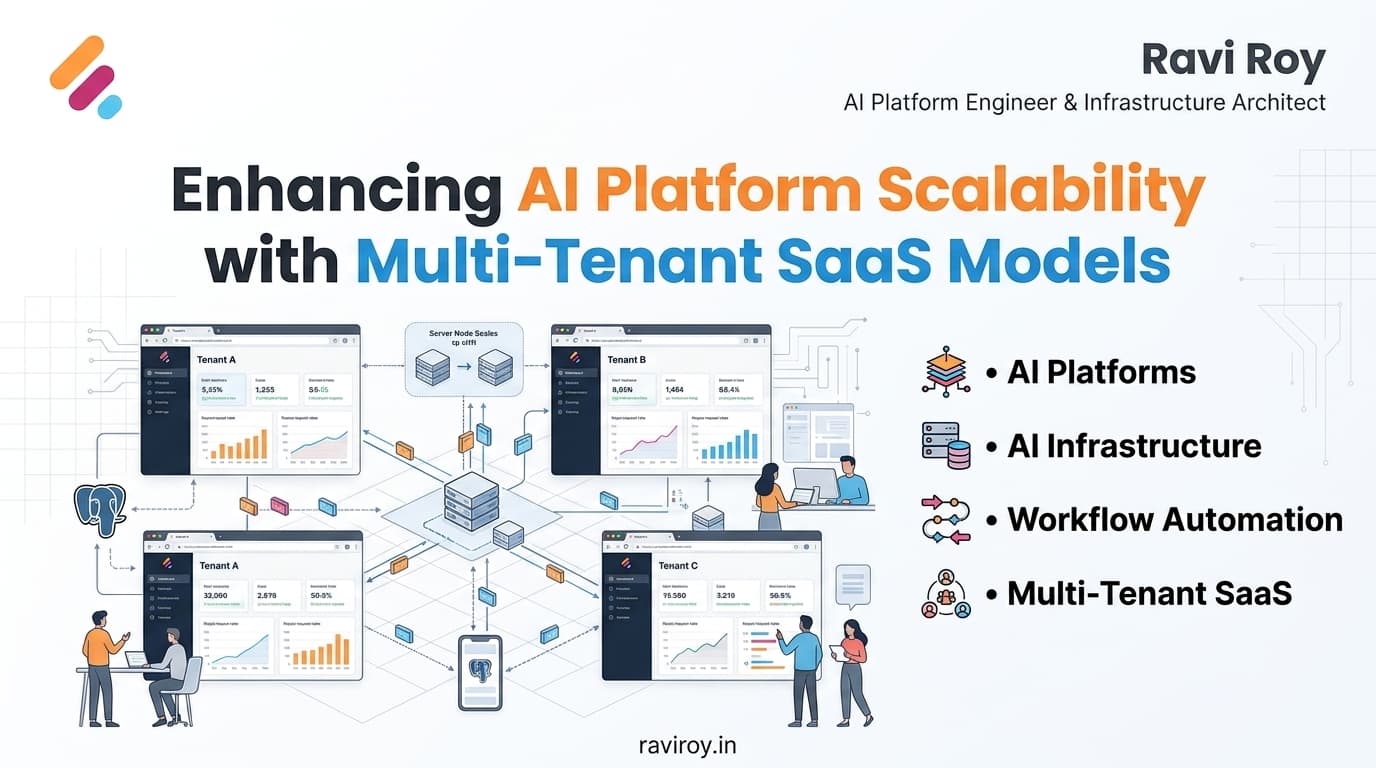
Enhancing AI Platform Scalability with Multi-Tenant SaaS Models
Imagine the efficiency of a finely-tuned machine, seamlessly adapting to its environment. This is the promise of multi-tenant SaaS models for AI platforms, where scalable architecture meets the growing demands of cloud computing. With enterprises increasingly pivoting towards artificial intelligence, understanding how multi-tenancy can enhance scalability is paramount.
Understanding Multi-Tenant SaaS Architecture
What is a Multi-Tenant SaaS Architecture?
Multi-tenant SaaS architecture enables multiple users (or tenants) to share a single software instance while maintaining privacy and data isolation. This framework is a cornerstone of cloud computing, allowing for efficient resource use and streamlined management. In stark contrast to single-tenant systems, where each client has their own software instance, multi-tenancy allows for a dramatic reduction in operational costs and increased scalability.
Key Components of Multi-Tenant SaaS
Key components of this architecture include:
Data Isolation: Ensuring that data from different tenants remains separate and secure is vital for trust and compliance.
Resource Sharing: Multiple tenants leverage common computing resources, leading to optimized costs and increased efficiencies.
Scalability: As demand grows, multi-tenant systems can more readily adapt, offering businesses the ability to scale seamlessly.
By implementing a robust multi-tenant architecture, organizations can significantly improve their operational efficiency, especially in an AI context.
Impact of Multi-Tenancy on AI Platform Scalability
Scalability Benefits Offered by Multi-Tenant SaaS
Multi-tenant architectures provide compelling scalability benefits over traditional single-tenant setups. Resources can be allocated dynamically based on current usage, enabling the system to handle traffic spikes more gracefully. This inherent flexibility is crucial for AI applications, which often require the ability to process vast amounts of data in real time.
For instance, companies utilizing AI for analytics can benefit from monthly or even hourly scaling of resources, ensuring that performance levels are maintained without over-provisioning.
How Does Multi-Tenancy Affect AI Efficiency?
The efficiency of AI applications is deeply intertwined with the ability to scale. Multi-tenancy enhances data processing speeds, enabling faster results from AI algorithms. With the architecture’s resource-sharing capabilities, improvements in computational power can lead to enhanced training and inference processes. Hence, the collaborative benefits of multi-tenancy not only reduce costs but also improve performance metrics across AI functionalities.
Tenant-Specific Optimizations in Multi-Tenant SaaS
Implementing Tenant-Specific Customizations
While multiple tenants share resources, the need for tenant-specific optimizations remains crucial. Customizations, such as tailored dashboards or algorithm adjustments, can significantly enhance user experience and effectiveness. By allowing tenants to tweak certain parameters without affecting the overall system, businesses can ensure that their unique needs are being met while still enjoying the benefits of a broader SaaS framework.
Balancing Resource Allocation for Optimal Performance
Achieving optimum performance in a multi-tenant architecture necessitates strategic resource allocation. Load balancing techniques are essential to managing system load and ensuring that all tenants receive the necessary resources. Effective resource management not only maximizes throughput but also minimizes latency, which is vital for real-time AI applications where every millisecond counts.
Edge Computing and Multi-Tenant SaaS Platforms
Reducing Latency with Edge Computing
One of the challenges faced by many SaaS applications is latency, particularly in AI contexts where timely data processing is key. By incorporating edge computing into multi-tenant SaaS architectures, businesses can significantly reduce latency. By processing data closer to where it is generated, edge computing ensures quicker responses and lowers the burden on centralized cloud services.
Applications of Edge Computing in AI SaaS
Edge computing enables various applications within multi-tenant AI platforms, such as real-time analytics for IoT devices or localized machine learning predictions. This technology not only optimizes performance but also enriches the overall user experience, as enterprises can act on data insights instantly.
Challenges of Multi-Tenant Architectures in AI
Data Isolation and Security Concerns
With the advantages of multi-tenancy come significant challenges, particularly related to data security. Data isolation is paramount, as breaches not only compromise user information but can also tarnish a brand’s reputation. Implementing robust security protocols and ensuring compliance with regulations are essential to maintaining tenant trust and safeguarding sensitive information.
Regulatory Compliance in Multi-Tenant SaaS
Regulatory compliance is another daunting challenge. Multi-tenant architectures must adhere to various legal standards, depending on the industry and location. This could range from data localization requirements to specific privacy laws, which can vary widely across jurisdictions. Companies must be proactive in understanding these regulations to avoid costly penalties and maintain operational viability.
Industry Applications of Multi-Tenant SaaS Models
Key Industries Leveraging Multi-Tenant AI Platforms
Multiple industries are reaping the benefits of multi-tenant SaaS models. Healthcare, for example, utilizes these architectures for patient data management where security and scalability are critical. Similarly, retail businesses employ AI-driven analytics to enhance customer experiences, leveraging shared resources for maximum efficiency.
Case Studies of Successful Implementations
Real-world examples provide strong evidence of the scalability enhancements provided by multi-tenant platforms. One notable case involved a financial services company that transitioned to a multi-tenant model, achieving a 30% reduction in operational costs while boosting data processing speed and accuracy. Such successes underscore the viability of multi-tenant SaaS in various sectors.
Future Trends in Multi-Tenant SaaS and AI
Hybrid Multi-Tenancy Implementations
As businesses evolve, so too do their strategies. Emerging trends like hybrid multi-tenancy models are focusing on blending both public and private cloud environments. This duality not only enhances data security but also provides greater flexibility in scaling AI capabilities, allowing organizations to adapt quickly to market changes.
The Role of Kubernetes in SaaS Scalability
Tools like Kubernetes are revolutionizing the scalability of multi-tenant SaaS models. By enabling container orchestration, Kubernetes simplifies the deployment and scaling of applications, ensuring that resources are used efficiently while maintaining high availability. For organizations looking to expand their AI capabilities, Kubernetes-based autoscaling presents a promising solution.
In conclusion, leveraging multi-tenant SaaS solutions presents a myriad of opportunities for enhancing your AI platform’s scalability. Understanding and implementing these models effectively can lead to optimized performance, improved data security, and greater adaptability in an ever-changing technological landscape.
Discover how you can leverage multi-tenant SaaS solutions to enhance your AI platform's scalability today!