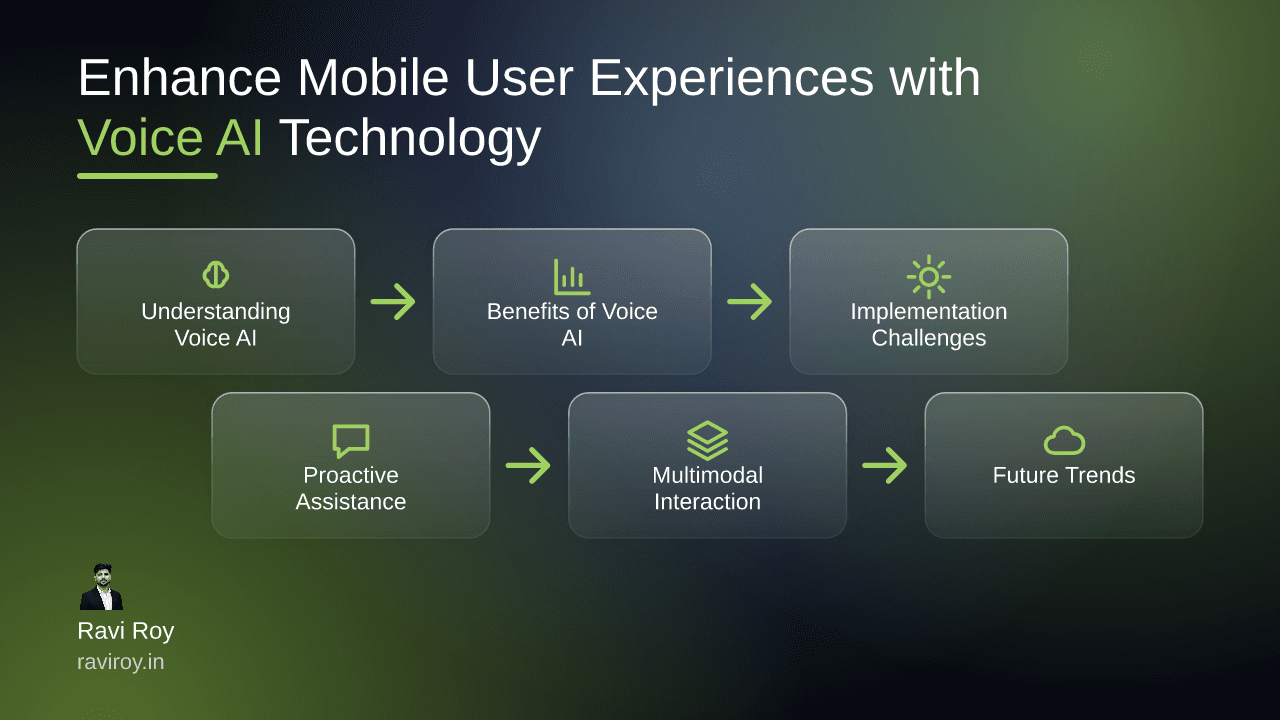
Enhance Mobile User Experiences with Voice AI Technology
Imagine navigating your favorite app effortlessly, only using your voice. Voice AI isn't just a modern convenience; it's revolutionizing how we interact with mobile technology. With notable advancements in voice recognition and processing, the integration of Voice AI in mobile applications enhances user experiences in profound ways.
Understanding Voice AI in Mobile Experiences
What is Voice AI?
Voice AI refers to technology that enables devices to recognize and respond to spoken commands. This core functionality encompasses speech recognition, natural language processing, and voice synthesis. With Voice AI, users can engage with apps through simple voice interactions, making technology more intuitive and accessible.
Voice AI systems utilize machine learning models that analyze and interpret spoken language, allowing them to understand context and intent. This not only makes user interactions seamless but also elevates the overall engagement level by offering a hands-free experience.
How Does Voice AI Work in Mobile Apps?
Behind the scenes, Voice AI operates through a combination of algorithms, data processing, and cloud computing. Speech recognition software captures audio inputs, processes them through phonetic analysis, and converts them into actionable commands.
For instance, in mobile apps, Voice AI integrates with APIs that facilitate speech processing. Developers can utilize existing frameworks, such as Google Cloud Speech-to-Text or Amazon Alexa Voice Service, to incorporate voice functionalities into their applications easily. This means that your favorite shopping app could soon allow you to add items to your cart, all through voice commands.
Benefits of Voice AI for Mobile Applications
Improved User Engagement
One of the standout benefits of Voice AI is its ability to enhance user engagement significantly. Studies show that incorporating Voice AI into an app can increase interaction rates by up to 30% compared to touch-based interactions. This is because users find it more efficient to utilize voice commands, allowing them to perform tasks quickly and effortlessly.
Additionally, Voice AI can lead to higher user retention rates. When users find an app that understands and responds to their voice, they are more likely to keep returning. This form of engagement turns routine interactions into seamless experiences, encouraging users to delve deeper into app functionalities.
Accessibility Enhancements
Voice AI plays a critical role in making applications more accessible. Users with disabilities can greatly benefit from voice commands as it allows them to engage with technology that might be otherwise challenging. For example, individuals with motor impairments can navigate through apps without needing to tap or scroll.
Moreover, Voice AI can support multiple languages and dialects, catering to a diverse user base and ensuring that everyone can utilize mobile applications effectively. This enhances inclusivity and broadens the reach of mobile apps, making them more valuable to the entire user community.
Challenges of Implementing Voice AI in Mobile Apps
Technical Limitations
While the advantages are compelling, there are challenges developers need to overcome when integrating Voice AI. Common technical hurdles include differences in accent and pronunciation, which can affect recognition accuracy. Furthermore, ambient noise can interfere with voice commands, disrupting user experiences.
To tackle these issues, developers can employ adaptive learning algorithms that consistently improve performance based on user interactions. Continuous improvements in voice recognition accuracy are crucial for providing users with a reliable experience.
Privacy Concerns
With increased functionality comes increased scrutiny regarding privacy. Users often express concerns about how their voice data is collected and used. Developers must prioritize data security by implementing robust encryption and ensuring compliance with regulations such as GDPR and CCPA.
Additionally, ongoing transparency with users about data usage can help mitigate privacy concerns. Regularly updating privacy policies and giving users control over their Voice AI interactions can encourage trust and ensure a commitment to ethical practices in data handling.
Proactive and Contextual Assistance Through Voice AI
Personalization of User Experience
Voice AI can enhance personalization by tailoring interactions based on individual user behaviors. For example, if a user consistently asks for dinner recommendations, the app can remember this preference and proactively suggest relevant options in future interactions.
The more the app learns about a user's habits and preferences, the more contextually relevant and valuable the experience becomes. For instance, a travel app utilizing Voice AI can provide tailored recommendations on flights or accommodations based on previous searches.
Real-Time Assistance
Voice AI is particularly effective in delivering real-time assistance in customer service contexts. Imagine a scenario where a user is facing an issue with an app's functionality. They can simply ask for help, and an AI-powered voice assistant can provide immediate guidance or troubleshooting steps.
This capability enhances user satisfaction, as resolve times decrease and users feel supported throughout their app interactions. An example includes banking apps that employ Voice AI to provide users with on-the-spot information regarding transactions or account inquiries.
Multimodal Interaction with Voice AI
Voice and Visual Integration
The future of user experiences in mobile applications lies in multimodal interaction, where voice and visual elements work together. By integrating Voice AI with visual components, developers can create more engaging and interactive experiences.
For instance, a fitness app may show an animated avatar demonstrating exercises while the user follows along, guided by voice instructions. This integration can help users retain information better and create a more immersive environment in which to learn and engage.
Augmented Reality Use Cases
Innovative use cases of Voice AI in augmented reality (AR) are already emerging. For example, AR applications for home design can allow users to visualize furniture in their spaces while receiving voice-guided suggestions on styles and placements. This seamless interaction enhances the shopping experience, making it both engaging and insightful.
The combination of voice and visual feedback encourages users to explore and interact with technology more comfortably and confidently, shaping how they approach tasks.
The Future of Voice AI in Mobile User Experiences
Current Trends
As Voice AI technology evolves, several trends are emerging that will shape its future in mobile applications. Companies are increasingly incorporating natural language understanding to facilitate more sophisticated interactions. The shift toward conversational interfaces means that apps will not only respond to commands but interpret context, allowing for a much more human-like experience.
Moreover, advancements in machine learning are enabling better predictive capabilities. The more data these systems obtain, the more they will tailor experiences to individual users.
The Role of AI Ethics
As we look toward the future, the ethical implications of AI technology cannot be overlooked. Adhering to ethical standards in AI development is paramount, ensuring that users' voice data is handled responsibly and with consent.
Transparency, fairness, and accountability will be critical as AI systems become more ingrained in everyday life. Developers must remain committed to building technology that respects user privacy and fosters trust.
Conclusion
Voice AI has the potential to transform mobile user experiences significantly. From improving engagement to enhancing accessibility and providing real-time support, its benefits are undeniable. However, as with any technology, there are challenges to overcome, particularly around privacy and technical limitations. By staying abreast of current trends and adhering to ethical principles, developers can create meaningful, user-centric experiences.
How has your experience with Voice AI in mobile applications changed your interaction with technology?
💬 Join the conversation — share your take in the comments and tell us what you’d add.