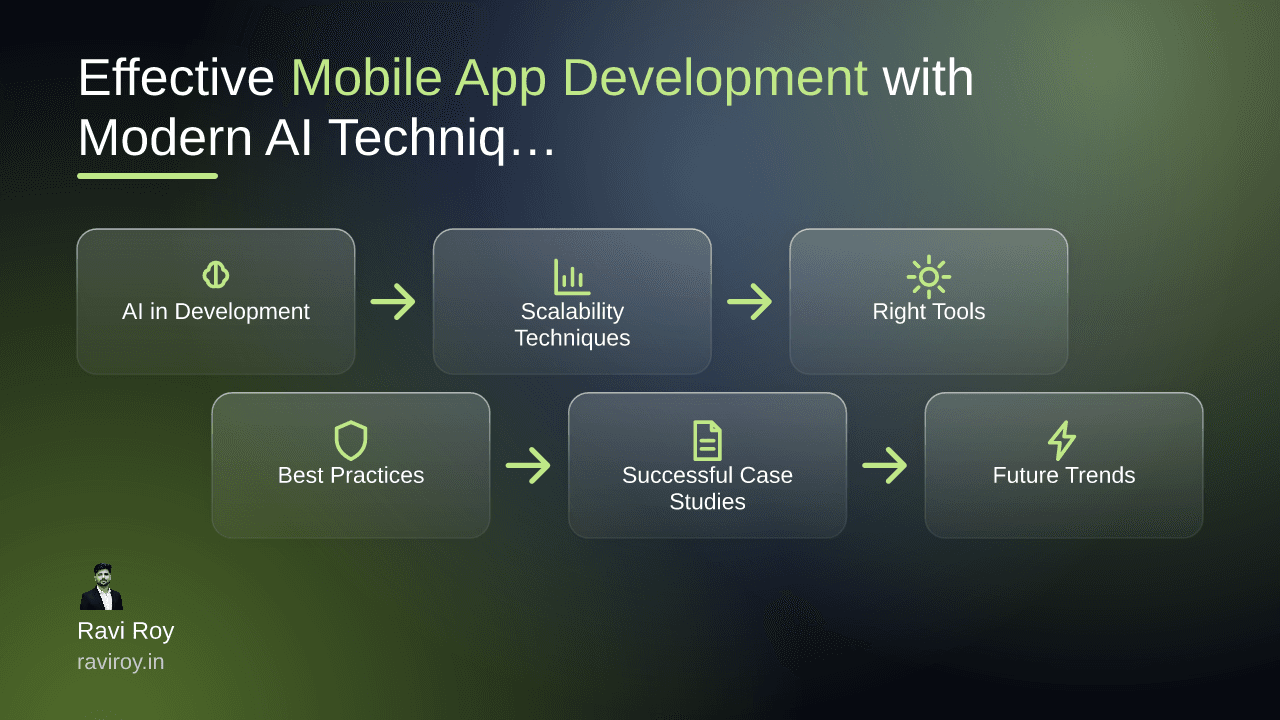
Understanding Mobile App Development in the AI Era
Mobile app development is no longer just about creating engaging interfaces; it now intertwines deeply with artificial intelligence (AI). As businesses strive for better user engagement and retention, understanding how AI enhances mobile app evolution becomes essential.
The Intersection of AI and Mobile Technology
Today’s mobile apps leverage AI to create personalized experiences. Algorithms analyze user behavior, enabling apps to offer tailored content and recommendations. For instance, music streaming services use AI to curate personalized playlists based on listening habits, ensuring a unique user experience each time.
Moreover, AI allows for real-time data processing. This capability can significantly enhance app responsiveness and functionality, contributing to smoother interactions. By utilizing techniques such as predictive modeling, developers can anticipate user needs, leading to more dynamic applications.
Benefits of AI in App Scalability
Scalability is crucial in mobile application design, especially as user bases grow. With AI, data analytics play a pivotal role in scaling operations. For instance, predictive analytics can help app developers forecast app performance under various conditions and optimize resources accordingly. Utilizing these data-driven insights, companies can ensure their applications maintain performance levels even during peak usage times.
Implementing AI-driven features allows for dynamic scaling; the app can allocate resources intelligently, ensuring optimal performance without unnecessary overhead. This not only enhances user satisfaction but also reduces operational costs.
Key AI Techniques for Scalable Mobile App Development
As the landscape of mobile app development evolves, certain AI techniques stand out in their potential to create scalable applications that meet modern demands.
Machine Learning for Personalization
Machine learning (ML) algorithms are foundational to creating personalized user experiences. For example, e-commerce apps utilize ML to analyze previous purchases and browsing history, offering tailored product recommendations. This personalized approach enhances user engagement and increases conversion rates.
To implement ML, developers can employ libraries like Scikit-learn or TensorFlow. Here’s a simplified code example for using machine learning to provide recommendations based on user interaction data:
import pandas as pd
from sklearn.model_selection import train_test_split
from sklearn.ensemble import RandomForestClassifier

# Sample data
data = pd.read_csv('user_interactions.csv')
X = data[['button_clicks', 'time_spent', 'last_purchase']]
y = data['product_recommendation']

# Splitting the data
X_train, X_test, y_train, y_test = train_test_split(X, y, test_size=0.2)

# Training the model
model = RandomForestClassifier()
model.fit(X_train, y_train)

# Making predictions
predictions = model.predict(X_test)
This simple example depicts how user interactions can be transformed into actionable recommendations, enhancing the app’s appeal.
Natural Language Processing (NLP)
Natural Language Processing (NLP) allows mobile apps to understand and respond to user inputs more naturally. Chatbots, powered by NLP, enhance customer engagement by providing quick answers and facilitating interactions without human intervention. For instance, applications like Siri or Google Assistant utilize NLP to comprehend and process spoken commands, making user interaction seamless.
Integrating libraries like SpaCy or NLTK can dramatically improve your app’s conversational capabilities. Here’s a brief code snippet demonstrating basic sentiment analysis using NLP:
import nltk
from nltk.sentiment.vader import SentimentIntensityAnalyzer

# Sample text
text = "I love this app! It's truly amazing."
nltk.download('vader_lexicon')

# Analyzing sentiment
sia = SentimentIntensityAnalyzer()
score = sia.polarity_scores(text)
print(score)  # Output will show sentiment score
This analysis allows you to gauge user sentiment and respond accordingly, optimizing user engagement in real time.
Cloud Integration
Integrating cloud services revolutionizes mobile app development by providing scalable infrastructure. Cloud platforms like AWS or Google Cloud ensure applications can efficiently handle varied workloads, deploy updates seamlessly, and manage large datasets.
The benefits are vast, including reduced latency and enhanced data security. Through cloud-based services, developers can utilize analytical tools and machine learning capabilities, streamlining the app development process.
Choosing the Right Tools and Frameworks
The selection of appropriate tools and frameworks can greatly influence the effectiveness of AI integration in mobile apps.
Popular AI Frameworks
Frameworks such as TensorFlow and PyTorch are at the forefront of AI development. TensorFlow, developed by Google, is known for its flexibility and extensive resources. In contrast, PyTorch is favored for its simplicity and efficiency, especially in research and development.
Choosing between these frameworks often depends on project requirements. TensorFlow might be more suited for large-scale applications requiring robust scalability, while PyTorch could be ideal for faster prototyping and iteration.
Development Platforms
Several mobile development platforms support AI integration effectively. Platforms like Flutter and React Native simplify the process of building cross-platform apps while allowing seamless AI feature integration. Flutter, with its widget-based structure, provides extensive customization options, making it a popular choice among developers seeking unique user experiences.
Best Practices for Implementing AI in Mobile Applications
Moving beyond just implementation, establishing best practices is crucial for sustainable development.
Data Privacy and Ethics
As developers integrate AI, data privacy and ethics must remain a priority. Ensuring compliance with regulations like GDPR is essential to maintain user trust and avoid legal complications. Measures should be in place to anonymize user data and offer opt-out options for personalized features.
Continuous Learning and Updates
AI technologies evolve rapidly, making continuous learning a prerequisite for developers. Regular updates based on user feedback can foster innovation and improve app features. Conducting user surveys and analyzing app usage patterns can help refine the application's effectiveness and usability over time.
Case Studies: Successful Applications of AI in Mobile Development
Examining successful case studies can illuminate effective AI integration strategies.
Leading Companies Using AI
Notable companies, such as Google and Amazon, have successfully utilized AI to enhance their mobile applications. Google’s use of AI in Google Assistant exemplifies how natural language processing can create highly personalized user experiences. Similarly, Amazon’s recommendation engine relies on machine learning algorithms to suggest products, significantly boosting sales.
Lessons Learned
Key lessons from these industry leaders highlight the importance of user-centric designs and continuous adaptation. Emphasizing user feedback, both Google and Amazon continuously iterate on their applications, ensuring they meet evolving user needs.
The Future of Mobile App Development with AI
The future of mobile app development is bright, fueled by continuous AI advancements.
Emerging Trends
Emerging trends indicate a shift towards incorporating augmented reality (AR) and AI-driven analytics. These innovations enable developers to create immersive experiences that blend digital with physical interactions. For example, apps utilizing AR in gaming or retail settings provide unique, engaging experiences for users.
Preparing for AI Innovations
To stay ahead, developers should invest in learning about innovative AI frameworks and continuously monitor industry trends. Attending workshops and online courses can equip you with the tools and knowledge needed to adapt swiftly to new developments.
What unique AI techniques have you implemented in your mobile app development projects, and how have they impacted your success?
💬 Join the conversation — share your take in the comments and tell us what you’d add.