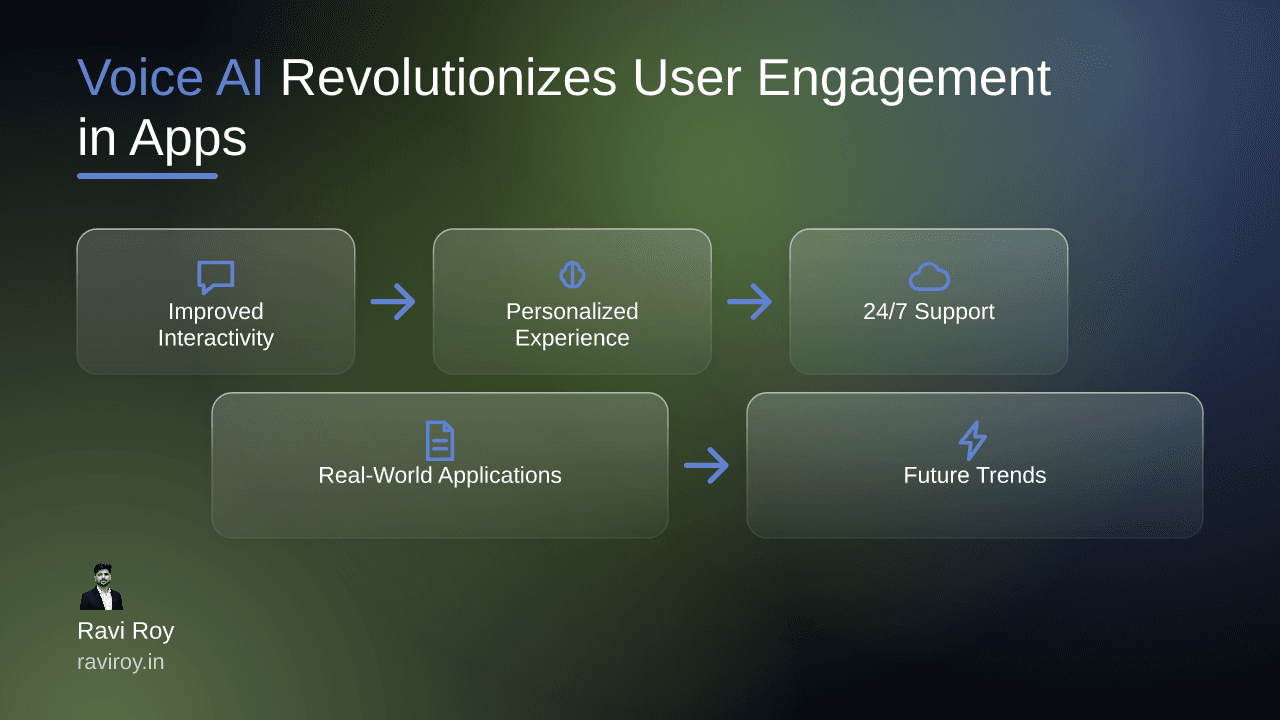
How Voice AI Improves User Engagement in Mobile Apps
Voice AI isn’t just a tech trend; it’s transforming how users interact with mobile applications. By combining the power of language processing and artificial intelligence, Voice AI empowers apps to deliver a user experience that is not only more engaging but also deeply personalized. Let’s dive into the ways this game-changing technology revolutionizes user engagement in mobile apps.
Enhanced Interactivity with Voice Interfaces
Voice AI leverages voice user interfaces (VUIs) to create an interactive experience that's intuitive and engaging. Unlike traditional interfaces that rely heavily on touch, VUIs allow users to communicate with apps through spoken commands. This shift significantly alters the way users interact with their devices.
For example, consider a navigation app like Google Maps. By asking, “Take me home,” users can seamlessly engage without needing to fumble with buttons. This hands-free functionality is particularly valuable in situations where physical interaction is impractical.
To integrate VUIs effectively, developers must focus on designing clear, concise commands and ensuring their back-end systems are capable of processing voice inputs quickly. Adopting frameworks like Dialogflow or Microsoft Azure's Speech Service can streamline this process, allowing developers to build sophisticated VUIs with relative ease.
Personalization through Voice Synthesis
One of the standout features of Voice AI is its ability to personalize user interactions through voice synthesis. This involves creating custom voice outputs that resonate with users. Apps can offer personalized greetings, suggest actions based on user history, and even adapt their tone based on context.
Take, for instance, a fitness app like MyFitnessPal. When users log their meals, a friendly audio prompt may say, “Great choice! How about a workout to complement that meal?” This personalized nudge encourages user engagement while creating a sense of connection.
Developers should consider leveraging machine learning algorithms to analyze user data and tailor voice responses. This doesn’t just make interactions more engaging; it also builds user loyalty by making them feel understood and valued.
Accessibility Benefits for Disabled Users
Voice AI has also made significant strides in enhancing accessibility for disabled users. For individuals who may have difficulty using touch screens, voice interfaces provide an essential means of interaction. Apps can be designed to understand commands from people with varying speech patterns, thereby widening their usability.
Consider a mobile app designed for the visually impaired. By employing Voice AI, the app can read out menu options and respond to voice queries, enabling users to navigate their devices independently. Technologies such as Apple’s VoiceOver or Google’s TalkBack are prime examples of how voice capabilities can empower users with disabilities, fostering inclusivity.
Additionally, developers should consistently test voice functions among diverse user groups to identify gaps in accessibility and continuously improve the design.
Addressing Challenges of Integrating Voice AI in Mobile Apps
While the benefits of Voice AI are numerous, integrating this technology poses certain challenges that developers must navigate.
Technical Barriers
Voice AI integration is not without technical hurdles. Issues such as ensuring accurate voice recognition in diverse environments can hinder user experience. Background noise, accents, and dialects often affect performance, leading to frustrating interactions.
To address these challenges, developers should focus on employing robust Natural Language Processing (NLP) tools. Pre-built solutions from companies like IBM Watson and Google Cloud can offer the essential frameworks needed to build efficient voice recognition features while minimizing integration headaches.
User Acceptance and Preferences
User acceptance is pivotal for Voice AI's success. The transition from traditional input methods to voice commands is often met with resistance from users who are accustomed to tapping and swiping. Particularly among older demographics, there might be hesitation to trust voice interactions.
To boost acceptance, developers can implement guided onboarding processes that introduce users to the advantages of Voice AI. Tips, tutorials, and interactive demos can ease this transition, demonstrating the efficacy and convenience of voice interfaces.
Data Privacy Considerations
With the rise of Voice AI, data privacy concerns have come to the forefront. Users are rightfully cautious about sharing their voice data, especially in light of rising cybersecurity threats. Addressing these concerns is critical for user retention and trust.
Mobile apps must adopt transparent data policies, informing users about data collection methods and purposes. Privacy-first design principles, such as on-device processing and voice anonymization, can further reassure users as they engage with Voice AI.
Real-World Applications of Voice AI in Mobile Apps
To truly appreciate the impact of Voice AI on user engagement, let’s explore real-world applications.
Case Studies of Voice AI in Popular Apps
One of the most successful implementations of Voice AI is within the Spotify app. By enabling voice commands like “Play my favorite playlist,” Spotify has streamlined user engagement, making music discovery effortless. The integration has led to increased usage time, with Spotify reporting a 25% rise in user interactions due to voice commands.
Another compelling example is the Duolingo app, which uses Voice AI to facilitate language learning. Users can practice pronunciation by speaking directly into the app, receiving immediate feedback. This interactive feature has not only improved engagement but also helped users learn more effectively.
Impact on Engagement Metrics
Statistics reveal that apps employing Voice AI witness substantial improvements in engagement metrics. According to a study by ResearchAndMarkets, apps with voice capabilities experience a 40% increase in active users. Furthermore, engagement rates can see an uplift of over 50% when voice interactions are properly integrated.
For developers, these metrics underscore the importance of embracing Voice AI as a means to enhance engagement and retention in their apps.
Exploring Voice AI's Role in 24/7 Support and Engagement
Voice AI has redefined customer support, offering immediate assistance around the clock.
AI Chatbots vs. Traditional Support
AI chatbots powered by Voice AI provide efficient user support compared to traditional methods. Unlike human agents, chatbots can handle multiple inquiries simultaneously, leading to faster resolution times and enhanced user satisfaction.
Apps like Slack leverage AI chatbots to assist users in navigating features and troubleshooting problems in real time. This efficiency not only speeds up problem-solving but also frees up human agents to tackle more complex issues.
Predictive Engagement Analytics
Voice AI’s predictive capabilities can further enhance engagement by anticipating user needs. This technology analyzes user behavior patterns to suggest timely prompts, nudging users toward actions that enhance their experience.
For instance, a banking app may use predictive analytics to remind users about upcoming bill payments through voice notifications. This proactive approach can lead to improved user engagement and loyalty, driving long-term adoption.
Future Trends of Voice AI in Mobile App Development
As Voice AI evolves, it presents new opportunities and challenges.
Multilingual Voice AI Challenges
A major hurdle for developers today is creating effective multilingual Voice AI solutions. Understanding dialects and regional accents can be challenging, leading to miscommunications that frustrate users.
To overcome this, developers need to conduct extensive linguistic research and incorporate diverse datasets during development. Partnering with linguists and using machine learning can improve language models, delivering a more inclusive experience.
Emerging Technologies and Innovations
The future is ripe with innovations in Voice AI, including enhancements in machine learning, natural language understanding, and real-time translation capabilities. Technologies like edge computing could also enable processing power on devices, reducing latency and improving user experience.
Keeping a pulse on emerging trends will allow developers to remain competitive and push the envelope of user engagement through Voice AI.
How has your experience with Voice AI in mobile apps shaped your engagement? Share your thoughts!
💬 Join the conversation — share your take in the comments and tell us what you’d add.