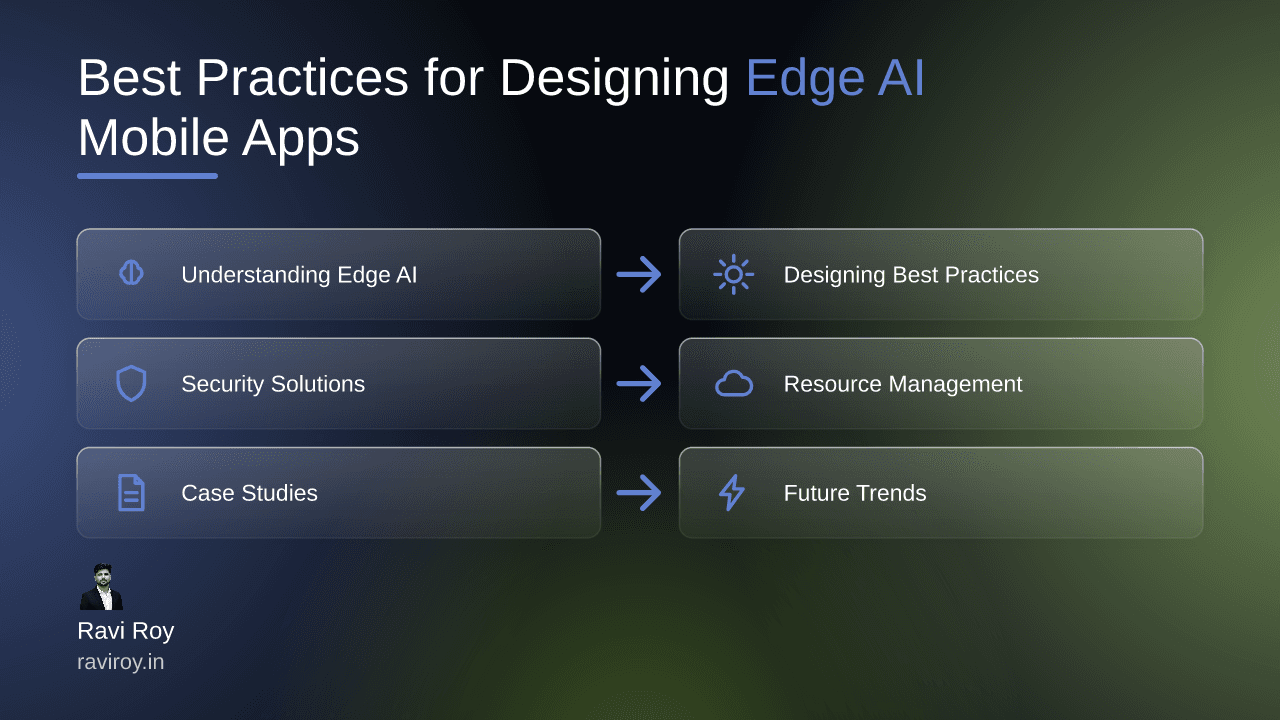
Designing for Edge AI: Best Practices for Mobile Applications
The rapid evolution of Edge AI has transformed the landscape of mobile applications, ushering in unprecedented opportunities for developers and users alike. With the ability to process data near the source, Edge AI enhances user experience and performance. This article dives deep into best practices for designing mobile applications that harness the power of Edge AI, ensuring performance, privacy, and security.
Understanding Edge AI and Its Importance in Mobile Applications
What is Edge AI?
Edge AI refers to the deployment of artificial intelligence algorithms directly on devices at the "edge" of the network, such as smartphones, tablets, or IoT devices. Unlike traditional Cloud AI, which relies heavily on centralized data centers for processing, Edge AI allows for real-time data processing closer to the source. This not only reduces latency but also enhances privacy by minimizing data transfer to the cloud.
The Role of Edge AI in Mobile Technology
The shift from Cloud AI to Edge AI has been monumental in mobile technology. Edge AI leverages local processing to significantly improve performance, enabling applications to react quickly to user inputs and environmental changes. For instance, image recognition apps can provide faster results because they can process images directly on the device without sending data to servers (source). This capability enhances user experience while allowing for more resilient applications that can function even with intermittent connectivity.
Best Practices for Designing Edge AI Mobile Applications
Model Optimization Techniques
Optimizing AI models for mobile devices is paramount for ensuring speed and efficiency. Here are a few techniques:
Quantization: Reducing the precision of the numbers in the model can significantly decrease the model size and execution time without sacrificing much accuracy. For example, converting 32-bit floating points to 8-bit integers can lead to improvements in both speed and memory usage.
Pruning: This involves removing weights that contribute minimally to the output, effectively simplifying the model. Regularly evaluate model performance to identify potential areas for pruning without losing critical functionalities.
Model Distillation: This technique involves training a smaller model (student) to replicate the behavior of a more complex model (teacher). The smaller model performs similarly, allowing for efficient deployment on mobile devices.
Privacy-Enhancing Development Practices
Data privacy is a significant concern with Edge AI applications. Implementing robust privacy-enhancing practices is essential:
Data Anonymization: Before processing, ensure personal data is anonymized to protect user identities. This can involve removing identifiable information or using techniques like differential privacy.
On-device Learning: Train AI models on the user's device to personalize features while keeping sensitive data locally. This not only protects privacy but also improves the relevance of AI responses.
Regular Security Audits: Involve continuous monitoring and audits of your application to detect and address potential vulnerabilities, ensuring compliance with privacy regulations.
User-Centric Design Approaches
Integrating Edge AI effectively requires a user-centric design philosophy. This includes:
Intuitive Interaction: Design user interfaces that facilitate seamless communication with AI functionalities. For instance, utilizing natural language processing allows users to interact with applications more naturally.
Feedback Loops: Incorporate mechanisms for users to provide feedback on AI-generated recommendations. Use this data to refine algorithms without needing to transfer sensitive user information to the cloud.
Accessibility Features: Ensure Edge AI capabilities enhance accessibility for all users, including those with disabilities. For example, voice-activated controls can empower users to navigate applications hands-free.
Security Implications and Solutions for Edge AI in Mobile Apps
Common Security Challenges
While Edge AI offers numerous advantages, it also poses security risks, such as:
Data Interception: Since edge devices communicate directly with each other and the cloud, there's an increased risk of data being intercepted during transmission.
Device Vulnerability: Devices at the edge are often less secure than centralized systems, making them prime targets for attacks.
Implementing Effective Security Measures
Addressing security risks in Edge AI applications is critical. Some strategies include:
End-to-End Encryption: Use strong encryption methods to protect data both in transit and at rest. Implement protocols like TLS (Transport Layer Security) to secure communication between devices.
Regular Updates and Patching: Continuously update software to address newly discovered vulnerabilities. Employ automated tools to facilitate patch management without user intervention.
Anomaly Detection Systems: Integrate AI-driven anomaly detection tools to identify unusual patterns that may signal security breaches, enabling swift responses to potential threats.
Resource Management Strategies for Edge AI Applications
CPU and Memory Optimization
Efficient resource management is essential for maintaining performance in Edge AI applications. Techniques include:
Dynamic Resource Allocation: Utilize systems that can adjust resource allocation in real-time based on the application's demands, ensuring that the application remains responsive.
Memory Management: Implement strategies to recycle unused memory, such as garbage collection, to prevent slowdowns due to memory leaks.
Battery Life Considerations
Optimizing battery usage is critical in mobile applications, especially those utilizing Edge AI. Consider these approaches:
Task Scheduling: Schedule heavy processing tasks during periods of low usage to extend battery life. For example, running updates overnight can prevent battery drain during peak usage times.
Power-saving Modes: Incorporate algorithms that shift processing intensity based on battery levels, reducing activity when the battery level is low.
Case Studies and Examples of Successful Edge AI Implementations
Real-World Success Stories
Several applications have effectively utilized Edge AI to enhance performance and user experience. For instance, Google Photos employs Edge AI for on-device photo recognition, allowing users to search their galleries quickly without needing internet connectivity.
Another success story is the way various fitness tracking applications use Edge AI to analyze users’ movements and fitness routines directly on their devices. This enables real-time feedback and personalized insights without transferring sensitive data to the cloud.
Comparative Analysis of Different Edge AI Frameworks
Different Edge AI frameworks provide various benefits:
TensorFlow Lite: This lightweight version of TensorFlow is optimized for mobile and embedded devices, making it ideal for quickly deploying models with minimal footprint.
ONNX Runtime: The Open Neural Network Exchange allows developers to use models from different frameworks, enhancing flexibility in deploying Edge AI applications.
Each framework has unique strengths, and evaluating them based on specific project needs can lead to more effective Edge AI solutions.
The Future of Edge AI in Mobile Applications
Emerging Trends and Technologies
As Edge AI continues to evolve, several trends are emerging:
5G Integration: The rollout of 5G connectivity enhances Edge AI capabilities by enabling faster data transfer rates and supporting more complex applications in real-time.
Increased Use of Federated Learning: This approach allows multiple devices to collaboratively learn a shared model while keeping data localized, significantly enhancing privacy and efficiency.
Predicted Advances in Edge AI
The future will see advancements like enhanced natural language processing, allowing for more sophisticated voice interactions and context-aware applications that adapt to user behaviors and preferences. Furthermore, as Edge AI becomes more integrated with AR and VR technologies, expect immersive experiences that are immediate and user-oriented.
Have you implemented Edge AI in your mobile applications? What challenges did you face and how did you overcome them? Share your insights below!
💬 Join the conversation — share your take in the comments and tell us what you’d add.