Understanding the Importance of Trust in AI Agents
Building trust in AI agents is essential for fostering user engagement and ensuring successful adoption. With the growing reliance on AI technologies, transparency plays a crucial role in how users perceive these systems. When people understand how AI agents make decisions, it alleviates fears regarding data privacy and the integrity of those decisions.
Why Transparency Matters
The concept of transparency is not merely a buzzword; it directly impacts user satisfaction and trust. Users are more likely to engage with AI that communicates its processes openly. A transparent AI algorithm fosters a sense of security, making it easier for users to accept its recommendations or decisions. Without transparency, users may develop suspicions that can undermine their confidence in the technology.
The Role of Trust in Adoption
Trust is pivotal for the widespread adoption of AI agents. Studies have shown that organizations adopting transparent AI systems experience higher user confidence and greater engagement. When users feel assured that their data is being handled responsibly and decisions are made based on clear criteria, they are far more willing to rely on these technologies for critical tasks.
Implementing Transparency in AI Decision-Making
Creating transparent AI requires a systematic approach to decision-making processes and communication with users.
Techniques for Transparent Algorithms
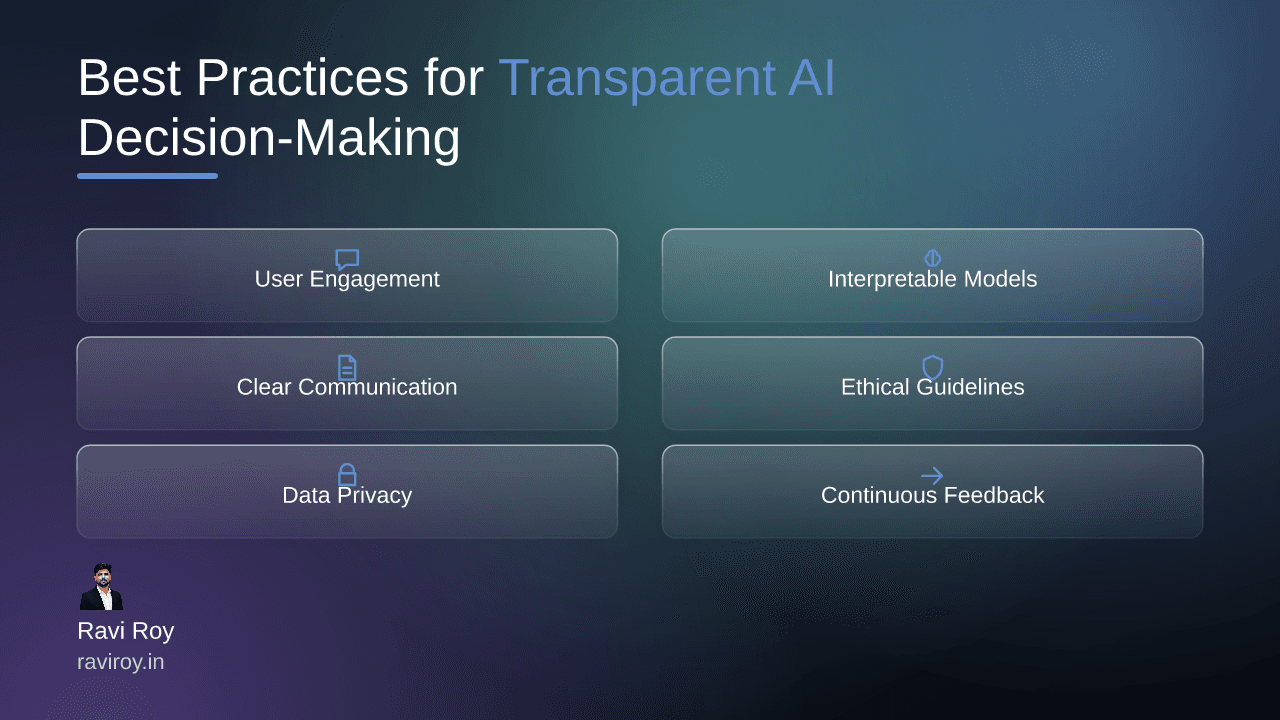
One of the foundational practices in transparent AI is the use of interpretable models. Models like decision trees or linear regression allow users to grasp how input leads to output. If complex models are necessary, techniques such as LIME (Local Interpretable Model-agnostic Explanations) or SHAP (SHapley Additive exPlanations) can help explain predictions without sacrificing performance. These methods provide insights into the contributions of various features, making the decision-making process clear and understandable.
Explaining AI Decisions Clearly
Simply providing technology that works is not enough; users must comprehend how decisions are reached. Alongside using interpretable models, offering context around AI decisions is vital. For instance, when an AI model recommends a financial investment, it should also explain why a specific market condition or data point influenced that recommendation. Clear communication not only builds understanding but also reinforces trust.
Best Practices for Building Trust in Different Industries
Different industries have unique requirements when it comes to transparency and trust. Here’s how to approach transparency in various sectors.
Healthcare
In healthcare, trust can be a matter of life and death. AI recommendations must be supported by clinical evidence. Ensuring that stakeholders understand the data backing AI decisions is crucial. For example, when an AI system suggests a treatment plan, it should reference rigorous clinical trials or patient outcomes that justify its recommendations. This not only strengthens trust but also enhances patient engagement.
Finance
For financial services, transparency about risk assessments made by AI is critical. Customers need clear explanations of how their financial data influences predictions, such as those concerning investment strategies or loan approval. Regularly providing risk summaries and highlighting any changes in the AI’s learning process can demystify decision-making and foster trust among clients.
Customer Service
In customer service, AI interactions should align closely with the brand’s voice. Trust is built when AI responses are empathetic and relevant to the user’s concerns. Implementing chatbots that can escalate more complex issues to human agents ensures users feel valued and understood, further enhancing trust in the system.
Measuring the Impact of Trust on AI Systems
Understanding the effects of trust on AI usage is essential for ongoing improvement.
Key Performance Indicators (KPIs)
Monitoring user feedback can unveil insights into trust levels and the effectiveness of transparency measures. Key Performance Indicators (KPIs) such as Net Promoter Score (NPS) and user retention rates can serve as metrics to gauge how trust influences user interaction with AI systems. Regular surveys can also capture shifting perceptions, enabling organizations to respond promptly.
Case Studies of Trust-Driven AI
Case studies can illustrate the effectiveness of building trust through transparency. Companies that prioritize transparency often report increased user engagement and satisfaction. For example, a financial institution that informs clients about the criteria used in algorithmic trading not only builds trust but also sees greater customer loyalty over time. Analyzing these relationships enables businesses to refine their AI practices continually.
Integrating Ethical Guidelines into AI Development
Ethical considerations are paramount in AI, shaping how transparency and trust are perceived.
Establishing Ethical Frameworks
Developing a clear ethical framework for AI decision-making processes is crucial. This should include principles like fairness, accountability, and transparency (FAT). By formalizing these guidelines, organizations can ensure that their AI systems align with societal values and user expectations. Engaging stakeholders in discussions about ethical implications also enriches this process and helps in risk mitigation.
Regulatory Compliance
Regularly reviewing AI systems for ethical compliance ensures that they meet current standards and user expectations. Staying updated with regulations regarding data privacy and AI usage is not just about compliance; it’s a trust-building measure. Ensuring alignment with these frameworks fosters user confidence and encourages broader adoption.
Challenges and Solutions in Making AI Transparent
Creating a transparent AI environment comes with its set of challenges.
Common Obstacles
Addressing biases in AI algorithms is a common obstacle to transparency. If biases are not adequately managed, transparency efforts can become moot. Furthermore, the complexity of AI systems can lead to difficulties in explaining their processes clearly.
Proven Solutions
To overcome these challenges, organizations can implement robust user education programs that help users understand how AI functionalities work. Additionally, leveraging machine learning explainability tools can simplify complex algorithms, making them more accessible to users. By focusing on educational initiatives, organizations can demystify AI technologies and improve user trust and acceptance.
Building trust in AI agents is not just a technical challenge, but a pivotal aspect of user interaction and engagement. Adopting transparency-enhancing practices is crucial across various industries to foster confidence and reliability in these systems.
What measures have you taken to ensure transparency in your AI systems, and what challenges have you faced?
💬 Join the conversation — share your take in the comments and tell us what you’d add.