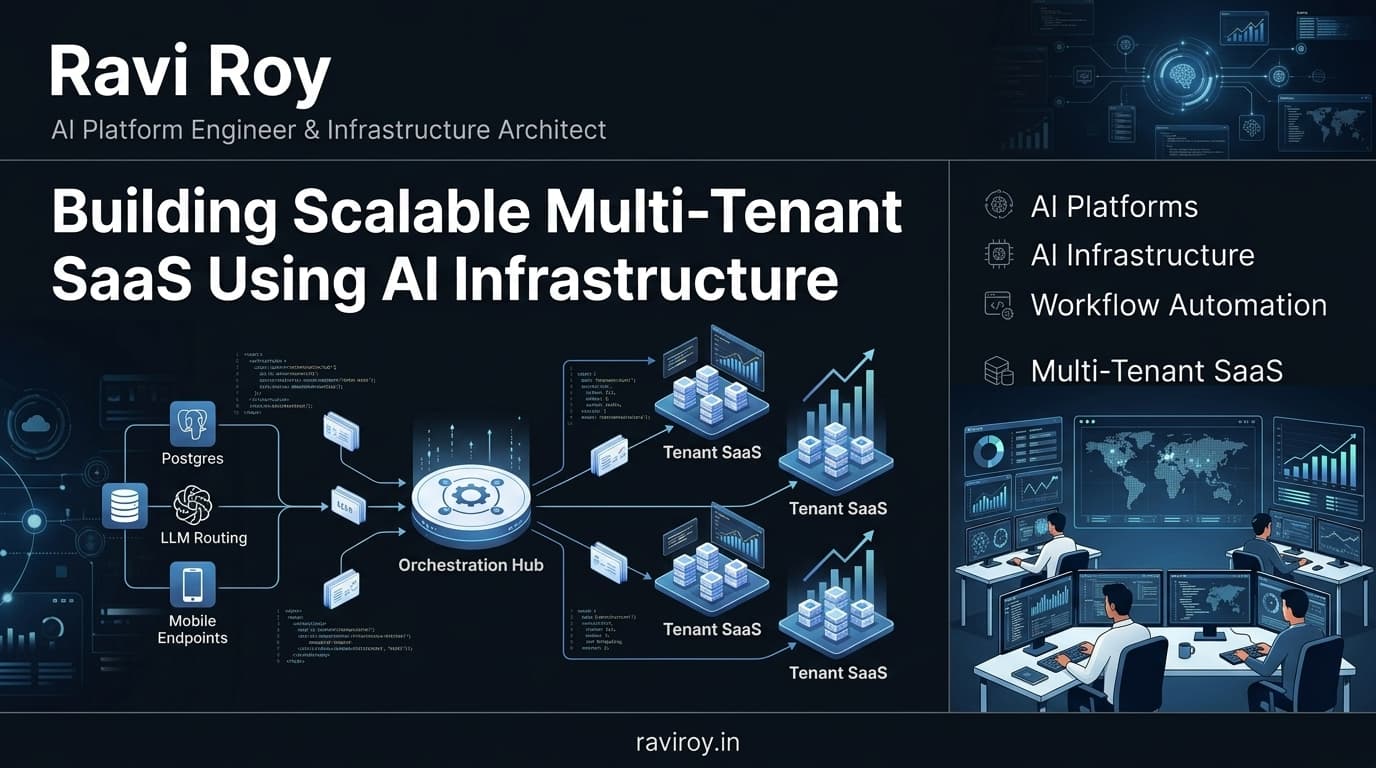
Building Scalable Multi-Tenant SaaS Using AI Infrastructure
The future of software delivery lies in multi-tenant architectures, empowered by advanced AI infrastructure. By leveraging the capabilities of AI, businesses can significantly enhance the scalability, performance, and management of their Software as a Service (SaaS) platforms.
Understanding Multi-Tenant SaaS Architectures
What is Multi-Tenant SaaS?
Multi-tenant SaaS is a software architecture where a single instance of an application serves multiple customers (tenants). Each tenant shares the same infrastructure and application code but operates in a distinct environment, ensuring that data and user experiences remain separate and secure. The core components of a multi-tenant SaaS architecture typically include a centralized database, a shared application layer, and a robust security model to ensure data isolation.
Why Choose Multi-Tenant Architecture?
Opting for a multi-tenant architecture offers several advantages. First, it provides cost efficiency, as resources such as servers and storage can be shared among tenants, leading to reduced operating costs per user. Second, it streamlines updates and maintenance since alterations only need to be made in one instance of the software, thereby minimizing downtime and simplifying deployments.
However, challenges such as data isolation and performance inconsistencies cannot be overlooked. Ensuring that one tenant’s data does not interfere with another’s requires meticulous architecture and robust data security measures.
AI-Driven Infrastructure for Multi-Tenant SaaS
Key Benefits of AI in SaaS
Incorporating AI into a multi-tenant SaaS environment can profoundly enhance scalability and performance. AI algorithms can analyze usage patterns and predict surges in demand, enabling proactive allocation of resources to optimize performance. This capability is crucial for maintaining a seamless user experience, especially during peak usage times.
Implementing AI-Driven Orchestration
To genuinely harness the power of AI, businesses must look at AI-driven orchestration. This involves integrating AI tools to automate processes such as load balancing and autoscaling. By utilizing machine learning algorithms, companies can achieve tenant-aware autoscaling, which recognizes the unique resource needs of each tenant. This ensures optimal resource allocation without unnecessary expenditure, leading to a more efficient system overall.
Optimizing Resource and Cost Management
Strategies for Cost-Optimized Shared Infrastructure
Cost optimization is paramount for multi-tenant SaaS platforms. Implementing strategies such as the use of cloud-native solutions can significantly reduce infrastructure costs. Platforms can leverage cloud services that allow for dynamic resource allocation based on current demand, ensuring that resources are utilized effectively without overspending during low-demand periods.
AI Inference Cost Management
Managing AI inference costs is essential, especially given the complexity and resource-intensity of AI models. Techniques such as model quantization and pruning can help reduce the computational load while maintaining service quality. Additionally, utilizing technologies like Kubernetes for efficient autoscaling helps ensure that resources are allocated based on real-time demand, enabling further cost reduction in AI inference and overall operational expenses.
Tenant Isolation and Data Security
Stronger Tenant Isolation Measures
Tenant isolation is critical for any SaaS platform. It not only protects sensitive data but also assures tenants that their information remains confidential. Employing containerization and virtualization technologies can enhance resource isolation, ensuring that one tenant’s resource usage does not negatively impact another’s.
Data Storage and Model Management Strategies
Best practices for data storage and model management in a multi-tenant environment emphasize the importance of compartmentalization. Utilizing separate database schemas or instances for distinct tenants can mitigate risks and improve performance. Moreover, implementing robust version control for AI models ensures that all tenants have access to the most up-to-date capabilities while maintaining stability and security.
Roadmap for Transitioning from Monolith to Microservices
Why Move to Microservices?
Transitioning from a monolithic architecture to microservices can unlock numerous benefits, such as increased agility, improved scalability, and enhanced fault isolation. Microservices enable teams to deploy updates independently, reducing the risk associated with software releases and enhancing the overall resilience of the system.
Strategic Steps for Transition
To successfully migrate to a microservices architecture, businesses should start with a thorough assessment of current systems and identify components that can be decoupled. Establishing clear APIs for communication between services is vital, and using container orchestration tools such as Docker and Kubernetes will facilitate deployment and management. Additionally, adopting a phased approach to transition allows teams to refine processes before fully committing to a microservices model.
Guidelines for Building Multi-Tenant SaaS
Build vs. Buy Choices for AI Infrastructure
Organizations face a crucial decision when considering their AI infrastructure: build or buy? Building an in-house solution allows for customization but may require significant time and resources. Conversely, purchasing an existing platform can accelerate deployment but may limit flexibility. Each option comes with its own set of considerations, including cost, expertise, and long-term viability.
Recommended Tech Stacks
Selecting the right tech stack is fundamental for both startups and established enterprises. Startups might favor platforms like AWS or Google Cloud for their scalability and integrated AI services, while larger enterprises may lean toward more robust solutions such as Azure or OpenShift, which offer advanced management tools and enterprise-grade security features.
Ready to level up your multi-tenant SaaS? Start building your AI-driven infrastructure today!