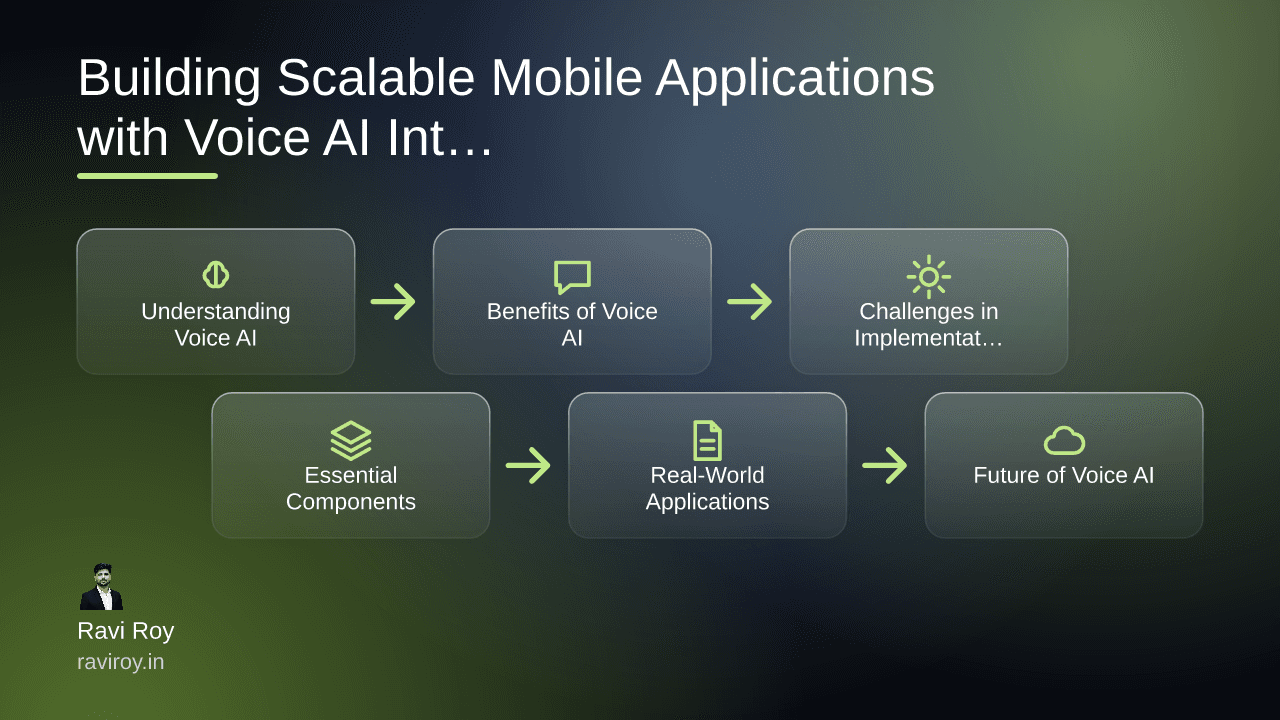
Understanding Voice AI Integration in Mobile Apps
Voice AI is revolutionizing how mobile applications are built and how users interact with them. By enabling users to engage using voice commands, developers can create more intuitive and efficient apps. But what exactly is Voice AI, and how does it enhance user interaction?
What is Voice AI?
Voice AI refers to the technology that allows devices to understand and respond to spoken commands. It encompasses natural language processing (NLP) and machine learning algorithms that facilitate voice recognition and comprehension. Applications powered by Voice AI can perform tasks ranging from simple commands to complex queries, making technology more accessible and user-friendly.
Key Features of Voice AI
Some of the standout features of Voice AI include:
Natural Interaction: Users can speak naturally, as opposed to relying on menus or buttons, enhancing the overall user experience.
Real-Time Processing: Voice AI can process commands almost instantaneously, resulting in a seamless interaction flow.
Contextual Understanding: The technology can recognize context, allowing for more relevant and personalized responses.
These features collectively serve to provide an engaging and responsive user experience.
Benefits of Integrating Voice AI into Mobile Applications
Integrating Voice AI into mobile applications isn’t just about keeping up with technology trends; it offers a multitude of benefits that can drive user engagement and provide competitive edges.
Improved User Engagement
Voice AI enables a level of engagement that traditional interfaces cannot match. For example, apps like Google Assistant and Siri allow users to interact seamlessly while multitasking or on the go. Studies have shown that users who engage with voice features are more likely to return to the app, and this high level of engagement can lead to better retention rates.
Enhanced Accessibility
For users with disabilities, Voice AI serves as a powerful tool to enhance accessibility. Features such as voice commands and speech-to-text play a crucial role in allowing these users to interact effectively with mobile applications, which might otherwise be challenging. By integrating these voice features, developers can create more inclusive applications and widen their user base.
Voice Commerce Opportunities
With the rise of e-commerce, voice commerce has become an essential component of mobile applications. Platforms like Amazon Alexa allow users to make purchases through voice commands, simplifying the shopping experience. This integration has opened a new realm of possibilities for app developers, as businesses can leverage this technology to drive sales and streamline customer experiences.
Challenges in Implementing Voice AI
Despite its benefits, integrating Voice AI is not without challenges. Understanding these hurdles is essential for developers seeking to implement this technology successfully.
Technical Hurdles
Integrating Voice AI involves several technical challenges. Developers may face issues with natural language processing accuracy, scalability, and the computational power required for real-time voice recognition. Ensuring that the system can handle a variety of accents and dialects is another vital consideration that adds complexity to the integration process.
Privacy and Security Concerns
With voice data collection comes significant privacy concerns. Users may be apprehensive about how their voice data is used and stored. Developers must ensure that they comply with data protection laws and clearly communicate how they manage user information. Employing strong encryption and anonymization techniques when processing voice data can help mitigate these concerns.
Device Compatibility
Voice AI applications must function across various devices and platforms. Ensuring compatibility with different operating systems and hardware can pose challenges that developers must address. Testing thoroughly across multiple environments can help identify and fix compatibility issues before launch.
Essential Components for Successful Voice AI Integration
For voice AI integration to be successful, a number of essential components need attention.
Frameworks and Tools
There are several frameworks and tools available for developers looking to integrate Voice AI into their applications. Dialogflow and Amazon Lex are popular choices for building conversational interfaces. These tools offer comprehensive features for intent recognition and natural language understanding, making it easier to create effective voice applications.
User Experience Design
User Experience (UX) plays a critical role in the effectiveness of Voice AI applications. By designing intuitive voice interfaces, developers can ensure that users feel comfortable and engaged. Conducting usability tests early in the design process can help identify areas for improvement.
Testing and Optimization
Testing and optimization are essential stages in the development of voice interactions. A/B testing can be a useful method for evaluating different voice functionalities and response styles. Continuous monitoring and adjustment based on user feedback can significantly improve voice interaction quality.
Real-World Applications and Case Studies
Examining real-world use cases can provide valuable insights into successful Voice AI integration.
Successful Use Cases
Many companies have successfully integrated Voice AI features. Uber allows users to book rides through voice commands, simplifying the user experience. Similarly, Spotify lets users search for and play music using their voice, making it easier to enjoy music while multitasking.
Lessons Learned from Projects
Learning from past implementations is crucial. For instance, one app involved creating a voice-driven medical assistant, which faced challenges when users' accents caused misinterpretations. Conducting extensive user interviews and refining the NLP model helped address these issues significantly.
Industry Trends
As industries continue to evolve, key trends like voice commerce and proactive voice engagement are emerging. Companies are increasingly using voice interfaces to initiate interactions rather than wait for user commands, setting the stage for highly interactive experiences.
Future of Voice AI in Mobile Development
Looking ahead, voice AI is positioned for significant growth and development.
Emerging Technologies
Emerging technologies such as advanced NLP and machine learning algorithms promise to enhance Voice AI capabilities. Innovations like real-time language translation could significantly broaden access, allowing users from different linguistic backgrounds to engage.
Hyper-Personalization Trends
As data analytics improve, hyper-personalization in voice AI will enable apps to cater to individual user preferences. This trend will lead to more tailored experiences, enhancing user satisfaction and engagement.
Cross-Platform Development
Cross-platform frameworks are increasingly crucial for voice AI integration. Frameworks that enable seamless deployment across iOS, Android, and web will empower developers to reach a broader audience, capitalizing on the rapidly changing tech landscape.
To integrate Voice AI effectively, it's crucial to consider these aspects and continue evolving in line with user needs and technological advancements.
What challenges have you faced while integrating voice AI into your mobile applications? Share your experiences below!
💬 Join the conversation — share your take in the comments and tell us what you’d add.