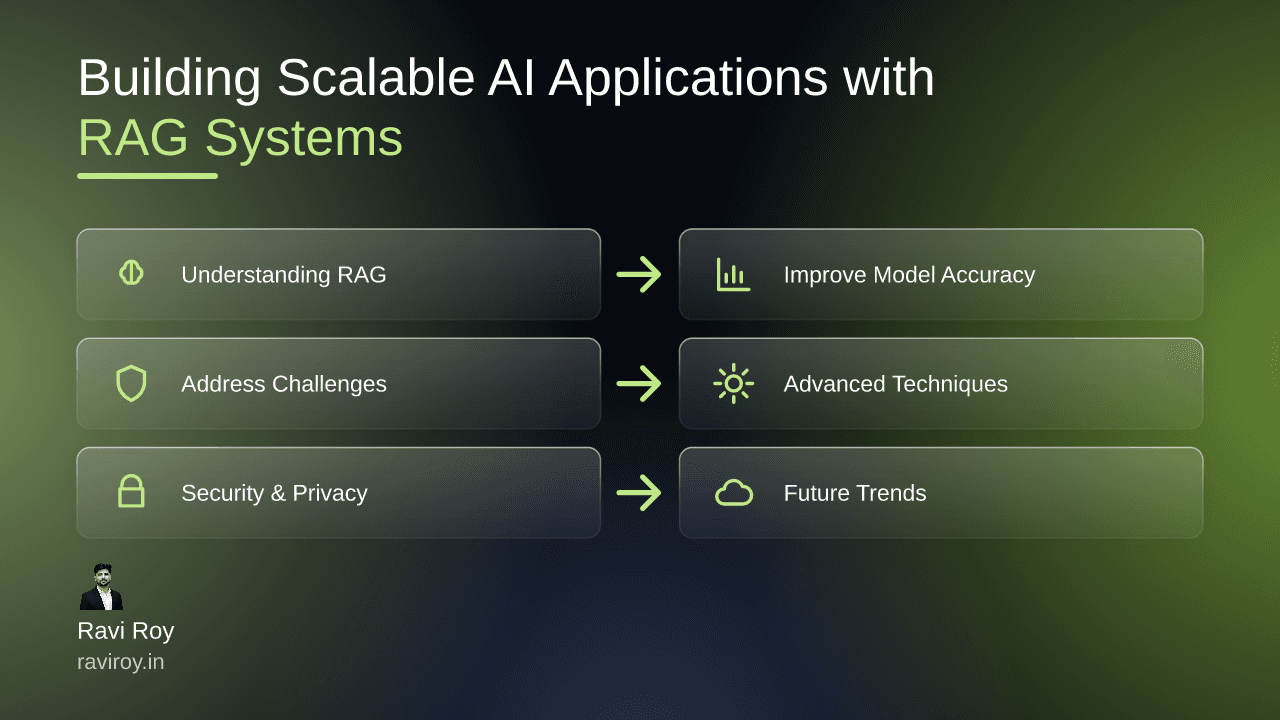
Understanding RAG Systems
In the quest to build scalable AI applications, Retrieval-Augmented Generation (RAG) systems are emerging as a game-changer. By effectively integrating access to vast data repositories, RAG systems can significantly enhance both the accuracy and contextual relevance of AI-generated content.
What are RAG Systems?
RAG systems are advanced models that combine two key components: retrieval and generation. The retrieval mechanism allows AI models to access extensive knowledge bases, while the generation component synthesizes this information into coherent outputs. This synergy not only enriches the AI's responses but also sharpens its accuracy, leading to more reliable results in various applications ranging from chatbots to content creation.
Key Components of RAG Systems
The efficacy of RAG systems hinges on their core components:
Data Sources: These are the databases and knowledge bases from which the system retrieves relevant information. Sources can range from structured databases to unstructured text.
Retrieval Mechanisms: This aspect determines how effectively the system finds and pulls pertinent data. Common techniques include keyword searches, semantic searches, and vector-based retrieval.
ML Models: The underlying machine learning algorithms that power the generation aspect. They create responses based on the retrieved data, ensuring they are contextually appropriate.
By prioritizing these components, organizations can harness the full potential of RAG systems.
How RAG Systems Improve AI Model Accuracy
RAG systems shine in their ability to refine AI model accuracy by effectively leveraging data.
Mechanisms of Improvement
Through a combination of retrieval and contextual understanding, RAG systems improve response quality. When the model generates answers based on real-time data fetched from its sources, it minimizes the chances of inaccuracies associated with static knowledge bases. This real-time access allows for nuanced, factually correct outputs, transforming the user experience across various applications.
Real-World Examples
Consider a customer support chatbot that traditionally relied on a limited FAQ database. After integrating a RAG system, the bot now retrieves information from an extensive product documentation library. Metrics show that customer satisfaction scores increased by 30%, and resolution times dropped by 50% following this implementation. This transformation points to RAG's potential to influence not just performance but also user sentiment.
Challenges of Building Scalable RAG Systems
While the advantages of RAG systems are clear, building and deploying them comes with its unique set of challenges.
Integration with Existing Systems
One of the primary hurdles organizations face is integrating RAG systems with legacy technologies. Often, existing databases or models may be incompatible with new retrieval methods. To tackle this, a phased integration strategy is advisable. Start with a pilot project that tests RAG in a controlled environment before a full-scale rollout.
Data Freshness and Quality
Maintaining data freshness is critical for RAG systems. Stale or inaccurate data can compromise the system's integrity. To address this, organizations should implement continuous data validation methods. Techniques like scheduled updates and real-time monitoring can help maintain high data quality, ensuring that the RAG system delivers current and reliable information.
Advanced Techniques for RAG Systems
As organizations delve deeper into RAG systems, several advanced techniques can enhance their capabilities and performance.
Hybrid Retrieval Methods
Hybrid retrieval methods combine various retrieval strategies to boost accuracy and adaptability. By utilizing both keyword-based search and semantic understanding, RAG systems can enhance recall. For instance, Elasticsearch offers capabilities that can apply both methods, improving context relevance and retrieval speed.
Modular RAG Architectures
Modular architectures allow for increased scalability and adaptability. By breaking down the RAG system into manageable modules—each responsible for specific tasks—it becomes easier to upgrade or replace components without disrupting the entire operation. This leads to better performance and a more streamlined approach to development. For example, implementing chunking strategies improves retrieval accuracy by limiting the amount of data processed at once, making it easier to manage and optimize.
Ensuring Security and Privacy at Scale
As RAG systems expand, security and privacy concerns become paramount.
Challenges in Security
One of the major security challenges RAG systems face is data breaches, specifically concerning sensitive information. The merging of large databases can create vulnerabilities if not carefully managed, leading to potential incidents of data theft.
Best Practices
Implementing robust encryption protocols is critical for protecting data integrity. Additionally, organizations should adopt the principle of least privilege, ensuring that users only have access to the information necessary for their roles. Utilizing frameworks such as the General Data Protection Regulation (GDPR) can also help to ensure compliance while scaling RAG applications.
Future Trends and Use Cases for RAG Systems
The landscape of RAG systems continues to evolve, offering exciting possibilities for the future.
Emerging Technologies
Emergent technologies such as agent-driven pipelines and enhanced AI models are pushing the boundaries of what RAG can achieve. These approaches allow RAG systems to proactively collect and generate information, further enriching user interactions.
Specific Use Cases
Industries such as healthcare and finance stand to benefit tremendously from RAG systems. In healthcare, for instance, RAG can be used to generate patient-specific treatment recommendations based on real-time data pulled from various clinical databases. Similarly, in finance, it can assist in automated report generation, pulling the most recent market data for analyses.
By staying vigilant about these trends, organizations can not only adopt current best practices but also anticipate future developments that could enhance RAG capabilities further.
In building scalable AI applications with RAG systems, the benefits are substantial, but the journey isn't without its challenges. As you explore the integration of RAG systems into your solutions, consider the practical steps highlighted here.
What integrations have you found most effective when implementing RAG systems in your AI applications?
💬 Join the conversation — share your take in the comments and tell us what you’d add.