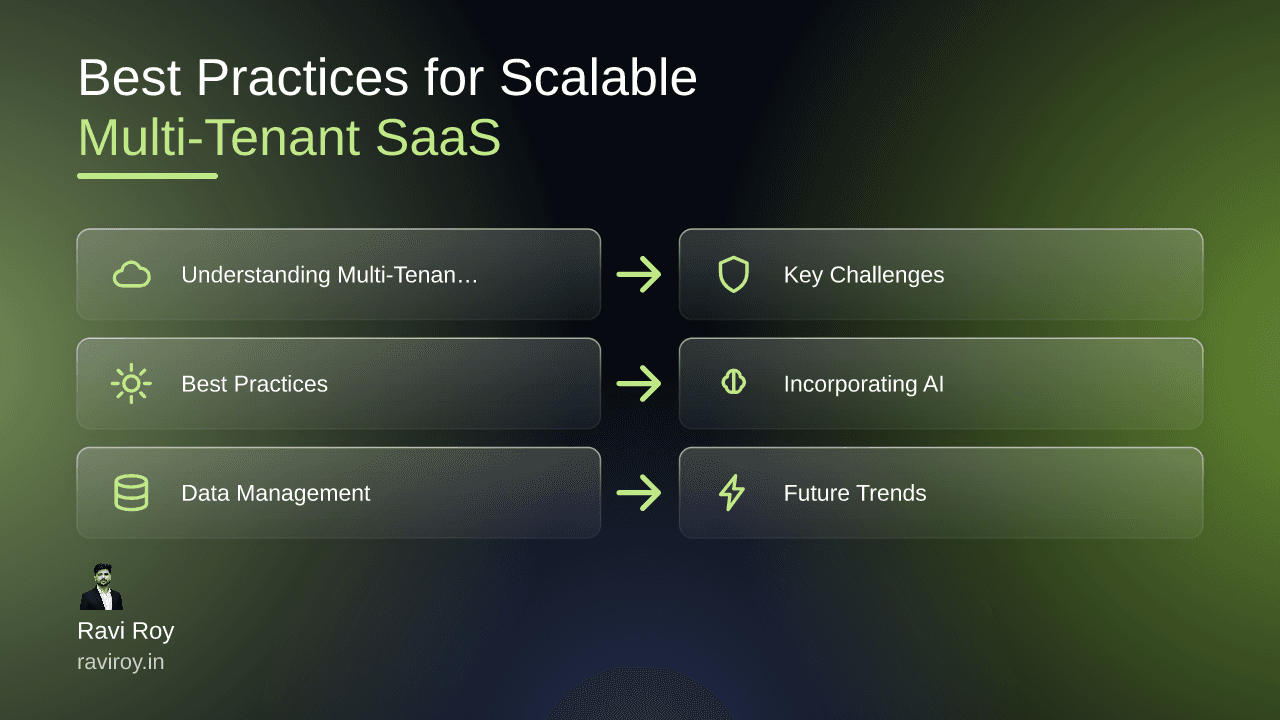
Understanding Multi-Tenant SaaS Products
Definition of Multi-Tenancy
Multi-tenancy is a software architecture that allows a single instance of an application to serve multiple customers, known as tenants. Each tenant operates within a shared environment while maintaining a degree of separation and data privacy. This architecture is particularly prevalent in Software as a Service (SaaS) products, where significant advantages such as cost efficiency and reduced maintenance efforts can be realized.
Benefits of Multi-Tenant Architectures
The adoption of multi-tenant architectures brings notable benefits, including:
Cost Efficiency: By sharing resources, businesses can reduce the total cost of ownership (TCO) and achieve economies of scale.
Resource Optimization: Multi-tenancy allows servers and storage to be utilized more efficiently, resulting in better performance and less downtime.
Ease of Updates: When a provider deploys an update, it can be rolled out to all tenants simultaneously, ensuring everyone has access to the latest features without individual downtime.
In this system, recognizing the tenant context becomes critical. The tenant context serves as an infrastructure attribute that allows applications to distinguish between different tenants, ensuring that application logic and data integrity are preserved.
Key Challenges in Multi-Tenant Architectures
Data Isolation Strategies
Creating a secure and efficient multi-tenant architecture involves addressing data isolation challenges. The concept of the "noisy neighbor" problem emerges when one tenant's workload excessively uses shared resources, adversely affecting the performance of others.
To mitigate this, consider adopting one or more of the following strategies:
Logical Data Isolation: Segregate tenant data at the database level with different schemas per tenant.
Physical Data Isolation: Use separate databases for each tenant when data sensitivity and performance are critical.
Observability and Operations: Implement tenant-aware metrics to monitor resource usage, ensuring that one tenant’s processes do not disrupt service quality for others.
Managing Scalability and Performance
Scalability in a multi-tenant system requires a robust architecture. Common techniques include:
Load Balancers: By distributing requests efficiently across multiple instances, load balancers can prevent performance bottlenecks.
Vertical and Horizontal Scaling: Ensure your architecture can scale both vertically (adding resources) and horizontally (adding more instances).
Incorporating automated scaling solutions like Kubernetes can greatly enhance responsiveness under load, resulting in better overall system performance.
Best Practices for Designing Scalable SaaS Products
Tiered Isolation Techniques
For optimal performance, tiered isolation techniques enable varying levels of resource allocation according to tenant specifications:
Basic Tier: Suitable for smaller tenants with fewer resource needs, often utilizing shared databases and lower compute power.
Enhanced Tier: For larger tenants that require dedicated resources, employing separate databases, and tailored performance metrics.
Enterprise Tier: Complete physical separation, offering high availability and compliance features for the most demanding clients.
Leveraging Serverless Computing
Serverless computing revolutionizes the scalability potential of multi-tenant architectures. By offloading infrastructure management to cloud providers, developers can focus on coding rather than provisioning:
Dynamic resource allocation ensures that tenants can experience optimal performance tailored to their specific needs without the overhead of managing servers.
Worked Example: A microservice architecture using AWS Lambda can enable developers to create event-driven applications capable of handling varying loads. When tenants exceed their baseline allocation, new instances can automatically spin up, maintaining performance seamlessly.
# Example lambda function to process requests
def lambda_handler(event, context):
    # Process tenant-specific requests
    tenant_id = event['tenant_id']
    # Logic for processing, e.g. accessing SQL database based on tenant_id
    return {
        'statusCode': 200,
        'body': 'Processed request for tenant ' + tenant_id
    }
Incorporating AI Workloads in Multi-Tenant Environments
Governance of AI Workloads
As AI capabilities continue to expand, governing AI workloads in a multi-tenant environment is essential:
Establishing clearly defined permissions ensures compliance with regulations while giving each tenant adequate control.
Regularly audit AI models for bias and effectiveness based on tenant data, ensuring fairness and transparency.
Security Considerations
Security is paramount in multi-tenant architectures. Key practices include:
Data Encryption: Ensure all data, both at rest and in transit, is encrypted.
Regular Security Audits: Perform routine checks to reveal vulnerabilities and ensure compliance with industry standards.
Data Management and Compliance in Multi-Tenant Architectures
Enhancing Data Isolation
Strengthening data isolation is vital for protecting tenant data:
Implement Access Control Lists (ACLs) that define which users can access specific datasets.
Consider using tokenization techniques to limit data exposure.
Compliance Strategies
Understanding compliance requirements for multi-tenant SaaS products is essential. Regulations such as GDPR and HIPAA impose specific obligations on how tenant data is handled. Strategies to meet these include:
Data Minimization: Only collect and retain data necessary for services.
Regular Compliance Training: Ensure that teams are updated on regulations and best practices.
Future Trends in Multi-Tenant SaaS Design
Distributed and Hybrid Architectures
As workloads grow and become more complex, distributed architectures will start to gain more traction in multi-tenancy. This will allow organizations to balance load across various geographical locations, enhancing both performance and redundancy.
Scalability Techniques
Advanced techniques, like container orchestration and microservices, will enable developers to build applications that dynamically scale based on real-time usage patterns. Efforts will increasingly focus on seamless integration and smooth operations across various environments, be it public or private clouds.
What specific challenges have you faced in creating scalable multi-tenant SaaS products, and how did you overcome them?
💬 Join the conversation — share your take in the comments and tell us what you’d add.