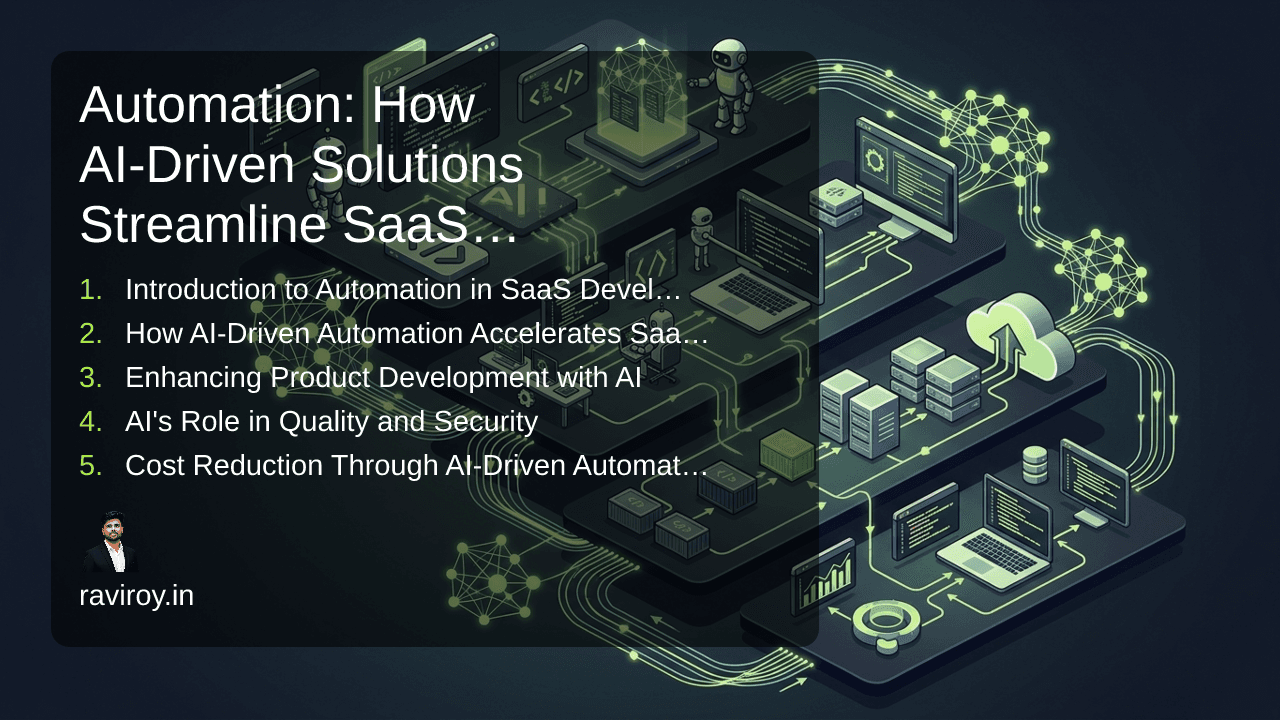
Introduction to Automation in SaaS Development
Automation is revolutionizing the Software as a Service (SaaS) industry, enabling rapid development cycles and smarter resource management. As more SaaS companies adopt AI-driven solutions, the focus on streamlining operations becomes a key differentiator in a crowded market.
Understanding AI-Driven Automation
At its core, automation in SaaS development refers to the utilization of technology to execute repetitive tasks with minimal human intervention. This can encompass everything from code generation to automated testing. The integration of AI in this process takes automation a step further by introducing machine learning and natural language processing, effectively enhancing decision-making capabilities within development teams.
The trend toward AI is not merely a buzzword; it represents a paradigm shift in how software is created, tested, and deployed. Given its ability to analyze vast amounts of data, AI makes it possible for teams to predict potential roadblocks and proactively address them.
The Importance of Streamlining
Streamlining the development process is crucial for SaaS companies striving for competitive advantage. In a landscape where time-to-market can make or break a product's success, optimizing every aspect of development—from coding to deployment—can significantly influence overall business performance. A streamlined process not only speeds up development but also reduces costs and increases the quality of the final product.
How AI-Driven Automation Accelerates SaaS Development
The integration of AI-driven automation brings velocity to various stages of SaaS development, making it essential for teams looking to stay ahead.
Faster Development Cycles
Case studies illustrate how tools like GitHub Copilot and Codex have enabled teams to significantly reduce their development timelines. Developers report up to 50% faster coding due to intelligent auto-completion and context-aware suggestions, allowing them to focus on more complex issues rather than repetitive tasks (Atlassian). This accelerated pace enables faster iterations and a more responsive approach to market demands.
Improved Collaboration
AI-powered collaboration tools like Slack integrations and Microsoft Teams have revolutionized how teams communicate. By utilizing bots for task assignments and status updates, these tools foster a fluid exchange of information, minimizing bottlenecks. Team members can collaborate in real-time, share resources instantly, and track tasks effortlessly, enhancing the overall team dynamics and project management.
Code Quality Enhancement
AI not only speeds up the process; it also elevates the quality of the code produced. Tools such as DeepCode and SonarQube analyze codebases for possible vulnerabilities and stylistic issues, providing real-time feedback to developers. By minimizing human error, AI dramatically improves the robustness and security of the software, leading to fewer bugs and enhanced user satisfaction.
Enhancing Product Development with AI
AI extends its benefits beyond acceleration, diving into the realm of product enhancement.
Generative AI for Content and Code
Generative AI tools like OpenAI's Codex have reshaped how SaaS companies approach coding and content creation. These AI tools can generate functional code snippets based on natural language prompts, allowing developers to expedite routine coding tasks. Imagine requesting an API integration just by describing its functionality; AI does the rest, dramatically reducing the initial burden on developers.
Hyper-Personalization in User Experience
AI's capability to analyze user behavior and preferences enables SaaS companies to create personalized user experiences. By utilizing machine learning algorithms, companies can tailor features and functionalities to meet individual user needs. The result? Higher user retention rates. Studies show that personalized experiences can boost engagement by as much as 50% (Gartner). When users feel the product caters specifically to them, they’re more likely to stay.
AI's Role in Quality and Security
Quality assurance and security are paramount in today’s software landscape. Here, AI-driven solutions take center stage.
AI-Driven Testing Solutions
Automated testing tools like Selenium and TestComplete employ AI to enhance testing efficiency. These solutions can simulate user interactions and predict potential failure points, reducing manual testing time and improving overall accuracy. Automated regression tests ensure that new code changes don’t negatively impact existing functionality, taking quality control to the next level.
Intelligent Cybersecurity Measures
Cybersecurity has never been more critical, especially for SaaS companies handling sensitive user data. AI brings significant advantages; machine learning models can identify patterns in network behavior and flag anomalies in real time, enhancing threat detection capabilities. Furthermore, the integration of AI into compliance protocols ensures that teams adhere to regulatory standards, minimizing legal risks.
Cost Reduction Through AI-Driven Automation
Analyzing Cost-Saving Opportunities
The operational costs associated with SaaS can be daunting, but AI-driven automation provides a pathway to financial efficiency. By automating mundane tasks, companies can redirect human resources toward more strategic initiatives. For example, organizations using AI for customer support have reported a reduction in operational costs by up to 30% thanks to chatbots managing common queries.
Optimizing Internal Processes
AI is not just about external-facing solutions; it can optimize internal workflows as well. Automation tools can streamline accounting, project management, and HR processes, reducing errors and freeing up time for teams to innovate. Investing in these technologies leads not only to short-term savings but also establishes a foundation for long-term success.
Future Trends in AI and Automation for SaaS
The landscape of AI and automation is ever-evolving, with exciting implications for the future of SaaS development.
The Rise of Agentic AI
The emergence of agentic AI, capable of making decisions independently, is set to transform SaaS development. This technology will not merely augment human decision-making but potentially take on responsibilities that allow developers to focus on creative and high-level strategy.
Scalability and Flexibility Enhancements
As SaaS companies grow, so does their demand for scalability and flexibility. AI will pave the way for dynamic pricing models and resource allocation, tailoring services based on real-time data and user demand. This adaptability can prove invaluable as companies seek to expand or pivot within rapidly changing markets.
Conclusion: The Path Forward
As automation driven by artificial intelligence continues to reshape the SaaS landscape, embracing these technologies will be essential for future success. From enhancing code quality to streamlining processes and improving user experiences, the benefits are undeniable.
For SaaS companies considering integration, the time to act is now. Analyze current workflows, identify areas for improvement, and actively seek out AI-driven solutions that align with your strategic goals.
What specific AI-driven automation tools have you found most effective in your SaaS projects, and how do they compare in improving your development process?
💬 Join the conversation — share your take in the comments and tell us what you’d add.