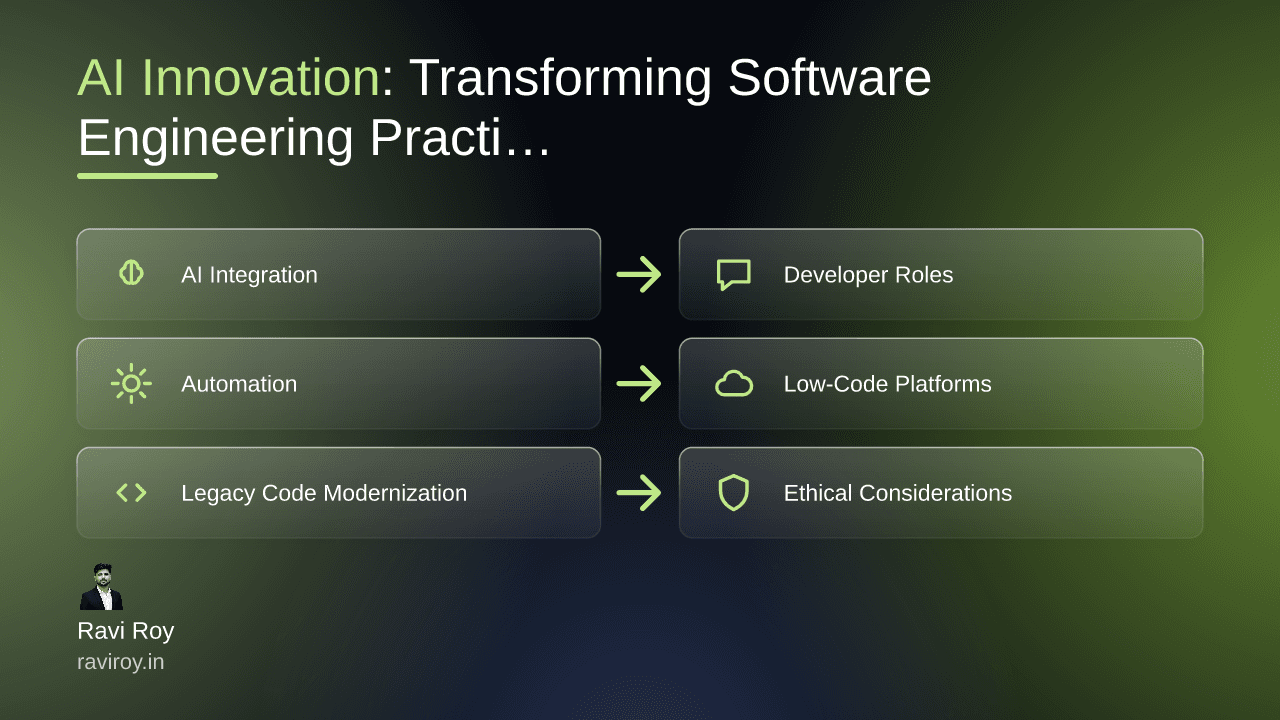
Understanding AI Innovation in Software Engineering
What is AI Innovation?
AI innovation refers to the integration of artificial intelligence (AI) technologies into various processes and practices, significantly changing how software engineering operates. This innovation not only automates mundane tasks but also enables new methodologies that empower developers to focus on higher-level challenges. Major AI technologies, such as natural language processing (NLP), machine learning (ML), and neural networks, are currently reshaping the software development landscape.
The Role of AI in the Software Development Lifecycle
AI's integration within the Software Development Lifecycle (SDLC) is transformative. Each phase—from planning to maintenance—can leverage AI for improved efficiency and effectiveness. In the planning phase, AI tools analyze previous projects to provide better estimations and resource allocations. During design, AI assists in generating optimal architectures through predictive modeling. Coding becomes more efficient with AI-driven code suggestions, while in testing, AI algorithms can identify bugs more accurately. Finally, AI aids in monitoring and facilitating updates during the maintenance phase, ensuring that software evolves with user needs.
The Impact of AI on Developer Roles and Skills
Evolving Developer Skill Sets
As AI elevates software engineering practices, the skill set required of developers is also changing. Familiarity with AI technologies and understanding how to implement them is crucial. Developers now need to embrace skills like data analysis, machine learning model training, and algorithm design. Additionally, those who possess soft skills such as adaptability and continuous learning are becoming invaluable, as rapid changes demand flexible mindsets.
AI's Influence on Team Dynamics
AI is redefining traditional developer roles within development teams. For instance, AI tools can automate repetitive tasks such as code reviews and bug tracking, enabling developers to concentrate on creative problem-solving and innovation. Job descriptions are evolving accordingly, with many positions now requiring expertise in AI frameworks. Companies like Google and Microsoft exemplify this shift: their developers are increasingly expected to merge traditional coding with an understanding of AI-driven processes.
Automation: Streamlining Coding and QA Processes
Enhancing Coding Efficiency
AI is dramatically enhancing coding efficiency by automating repetitive tasks that previously consumed significant developer time. For instance, GitHub Copilot offers AI-assisted coding, providing suggestions and auto-completing lines of code based on context. This level of automation allows developers to minimize errors and accelerate their coding process, reducing typical development timelines.
AI in Quality Assurance
Furthermore, AI plays a pivotal role in quality assurance (QA). Tools such as Test.ai use algorithms to identify bugs effectively and predict outcomes, improving both the speed and accuracy of testing. According to a study by Accenture, incorporating AI into QA processes can improve productivity by up to 30%. Such statistics underline the importance of AI in modern software engineering, making it impossible to ignore its influence in QA practices.
Low-Code and No-Code Platforms: A New Era
Defining Low-Code/No-Code
Low-code and no-code platforms enable users to design applications without extensive coding knowledge. These platforms are revolutionizing software development by allowing non-developers, such as business analysts and project managers, to participate actively in creating applications. Tools like OutSystems and Mendix are paving the way for this technology surge, empowering more people to engage with software creation.
Benefits for Software Engineers
While this trend opens up opportunities for non-developers, it also impacts traditional development roles. Engineers now find themselves focusing more on integration, scalability, and more complex features that low-code platforms cannot address. Moreover, this shift enables development teams to tackle larger projects more efficiently, as collaboration between developers and business stakeholders improves.
Legacy Code Modernization with AI
Challenges of Legacy Systems
Legacy systems present a myriad of challenges, including high maintenance costs, difficulty in integrating with new technology, and scalability issues. As businesses strive to innovate, these outdated systems can become significant obstacles. The time and resources required for complete system overhauls can deter organizations from moving forward with modernization.
AI Solutions for Legacy Code
AI provides robust solutions for modernizing legacy code. Tools such as Codex and Tabnine facilitate code refactoring, allowing organizations to upgrade their systems without extensive rewrites. Case studies have shown that companies like IBM successfully utilized AI-driven modernization approaches that lead to reduced operational costs and improved system resilience. As a result, organizations can better leverage their existing investments while embracing modernization.
Ethical Considerations Surrounding AI in Software Engineering
Bias and Decision-Making
AI technologies are not without their ethical dilemmas. Potential biases in AI-powered tools can lead to unfair outcomes in software applications, affecting everything from hiring discrimination to biased algorithmic decision-making. Developers must remain vigilant in identifying these biases and work towards transparent, equitable practices in their coding processes.
Transparency in AI Tools
Transparency in AI algorithms is also a crucial consideration. Understanding how AI makes decisions empowers developers to trust its findings and integrate it responsibly into their work. Developers can actively promote ethical AI practices by documenting their AI systems' decision-making processes and involving diverse teams in algorithm development, thereby reducing bias.
Future Trends in AI-driven Software Development
Predictions for Next Decade
Looking ahead, we can expect significant developments in AI-driven software engineering. Advances in AI capabilities will lead to more sophisticated tools that enhance every phase of the SDLC. Emerging trends indicate greater collaboration between humans and machines, with AI increasingly capable of tackling complex tasks once reserved for human engineers.
Preparing for the Unknown
To adapt to these changes, teams can invest in continuous learning and upskilling. Online resources, workshops, and collaboration with AI experts are all vital for staying updated. Organizations should foster a culture of experimentation, encouraging team members to explore new technologies and methods without the fear of failure.
Conclusion
As AI continues to innovate and reshape software engineering practices, understanding its implications is vital for developers looking to thrive in this changing landscape. The technologies, frameworks, and methodologies powered by AI open new doors and challenge traditional roles.
How have you seen AI influence your work in software development? Share your experiences!
💬 Join the conversation — share your take in the comments and tell us what you’d add.