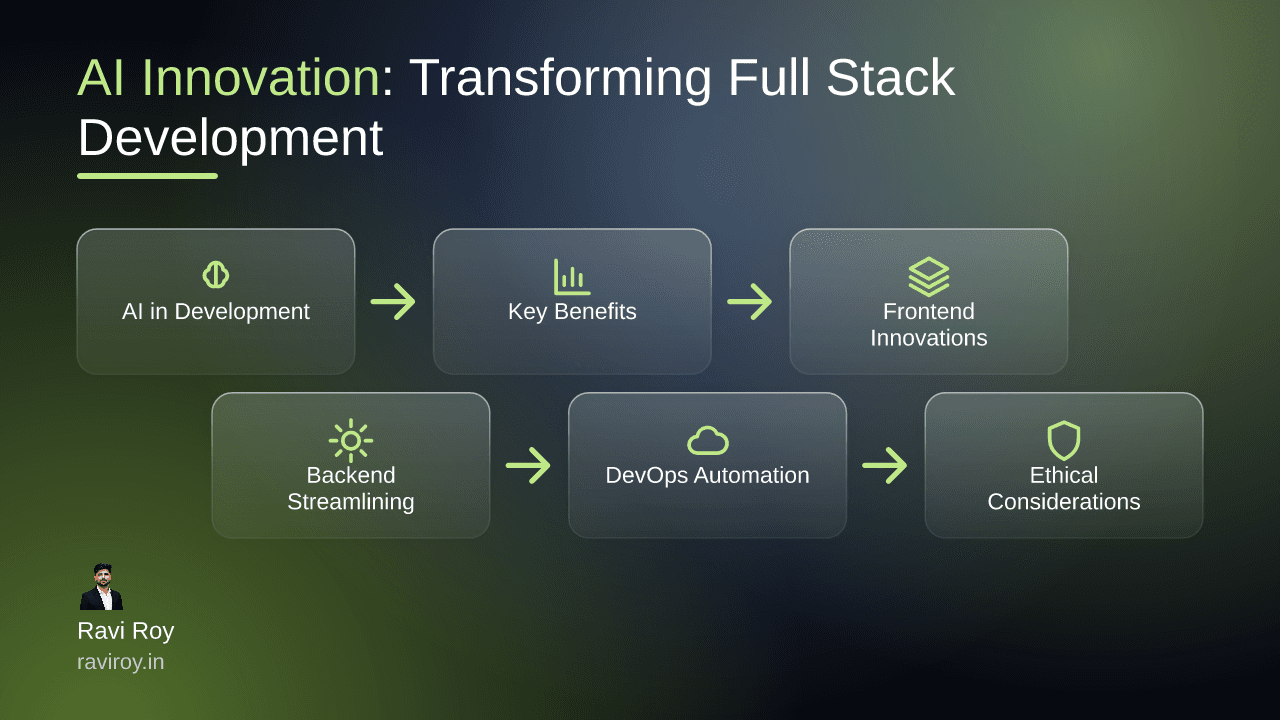
Understanding AI Innovation in Full Stack Development
The revolution of full stack development is profoundly influenced by AI innovation, fundamentally redesigning how developers approach coding and collaboration. By redefining procedures through machine learning and automation, AI elevates development to new heights, enhancing efficiency and effectiveness at every level.
What is AI in Full Stack Development?
AI in full stack development refers to leveraging artificial intelligence technologies to improve both frontend and backend processes. This encompasses machine learning algorithms that assist in automating coding tasks, facilitating real-time collaboration, and optimizing entire project workflows. The relevance of AI innovation in this context cannot be overstated; it empowers developers to focus on solving complex problems rather than getting bogged down by repetitive coding tasks.
How is AI Transforming Full Stack Development?
AI is transforming full stack development in various ways:
Machine Learning in Coding: Machine learning algorithms can analyze codebases and suggest improvements, thereby enhancing the quality and accuracy of the code. A good example is using AI tools like GitHub Copilot, which provides predictive recommendations as developers write code.
Real-time Collaboration: AI enhances real-time collaboration features in development tools. Tools like Git and platforms like Slack are integrating AI to facilitate better communication, track project progress, and even automate issue tracking.
Change Initiatives: Many companies are adopting AI-augmented platforms that can assess existing development practices and suggest initiatives for improvement, guiding teams toward more efficient workflows.
Key Benefits of AI Innovation for Full Stack Developers
Enhanced Coding and Code Generation
One of the most significant advantages of AI in full stack development is improved coding accuracy through predictive recommendations. AI-driven tools such as TabNine employ machine learning to predict what developers might want to code next, reducing the time taken to write code and minimizing human errors.
Moreover, AI tools for automatic code generation are becoming increasingly sophisticated. Tools like OpenAI Codex can generate code snippets from simple user descriptions, accelerating the development timeline significantly. For instance, an engineer can describe a function in natural language, and Codex will generate the complete code.
Improved Deployment Processes
AI optimizes deployment processes by enhancing DevOps and continuous integration strategies. AI algorithms analyze past deployment failures to identify patterns and provide better decision-making support for future releases. Successful deployments using AI tools have shown significant reductions in rollout times and increased efficiency.
For example, companies that implement AI-driven CI/CD tools have reported improvements in deployment success rates of up to 30%, as verified by various industry case studies.
AI Innovations Transforming Frontend Development
Creating Immersive User Experiences
AI is reshaping frontend development by facilitating dynamic and context-aware user interfaces. This allows for real-time adjustments based on user interactions. For instance, AI tools can analyze user behavior to alter an app's interface instantly, significantly improving user experience.
Personalization and Predictive Analytics
The integration of AI for enhancing user experience is evident in the personalization of applications. Case studies highlight how organizations that utilize AI-driven analytics have successfully engaged users, increasing user retention rates by up to 50%. Tools like Google Analytics and Adobe Analytics leverage AI to provide insights into user behaviors and preferences, helping developers create more targeted content.
Predictive analytics also introduces significant benefits in frontend design, allowing developers to foresee user behavior and adapt interfaces accordingly. For example, e-commerce sites now use machine learning algorithms to predict what products a user is likely to purchase based on their browsing history, which leads to a highly personalized shopping experience.
Streamlining Backend Development with AI
Optimizing Database Management
AI's role in backend development is also noteworthy, particularly with efficient database management. Machine learning algorithms can optimize database queries, thereby improving loading times and overall system performance. For instance, AI can automatically index frequently queried data, leading to faster retrieval and reduced server load.
Enhancing Security Protocols
AI technologies like anomaly detection systems have proven effective at securing backend infrastructures. By autonomously identifying unusual activity, these systems can respond to threats in real time. Ongoing trends show an increasing reliance on AI for backend security protocols, with organizations continuously investing in AI solutions to safeguard their data.
However, there is a delicate balance to maintain between automation and potential job displacement. Developers need to adapt and upskill, ensuring that they work effectively alongside AI systems.
AI-Driven DevOps and Continuous Deployment
Automating Testing and Quality Assurance
The integration of AI in DevOps is reshaping how teams approach testing and quality assurance. AI tools can automate testing cycles, leading to faster feedback loops. For example, AI-driven testing platforms can simulate user interactions and find bugs, drastically reducing the time developers typically spend on manual testing.
Continuous Monitoring and Maintenance
Real-time monitoring solutions powered by AI enhance system reliability significantly. These tools can predict malfunctions before they occur and allow teams to deploy resources effectively, minimizing unexpected downtimes. Predictive maintenance strategies supported by AI analytics can lead to required adjustments before issues arise, improving overall system health.
Ethical Considerations in AI Innovation
Addressing Bias in AI Algorithms
As AI continues to evolve and integrate into development practices, the issue of potential bias in algorithms remains a poignant concern. Ensuring that AI systems are fair and inclusive is paramount, as biases could lead to suboptimal outcomes in software development.
The Future of Work: Will AI Replace Developers?
There is widespread debate regarding whether AI will replace developers. While AI has the potential to automate many aspects of development, it also opens up collaborative opportunities between AI and human developers. The focus should be on enhancing skills and fostering an environment where technology complements human creativity and innovation.
Concerns about AI's impact on employment in development are grounded; however, many experts believe that AI can assist rather than replace developers. Ethical handling of user data is also crucial and requires ongoing conversations about responsible use.
Conclusion
AI innovation is not merely a trend but a fundamental shift in how full stack development is conducted. By integrating AI into their workflows, developers can expect enhanced efficiencies, improved code quality, and an overall optimized development lifecycle.
In your experience, how has AI innovation impacted your development processes, and what tools have made the biggest difference?
💬 Join the conversation — share your take in the comments and tell us what you’d add.