Understanding AI Innovation and Its Future Impact
The landscape of development is undergoing a radical transformation, driven by the relentless pace of AI innovation. As technologies evolve, the applications of artificial intelligence begin to seep into every nook and cranny of our lives, promising to both enhance and disrupt the way we engage with the world.
What Does the Future of AI Look Like?
The future of AI is particularly bright, exhibiting a range of trends that will redefine how we interact with technology. From generative AI capable of creating rich content to personalized adaptive learning systems, the innovations are varied and evolving. Tools like OpenAI’s ChatGPT and DALL-E already demonstrate generative AI’s ability to create text and images, but this is just the tip of the iceberg. AI is set to impact areas such as healthcare, finance, and entertainment, transforming sectors with efficiency and creativity that was once unimaginable.
Will AI Take Our Jobs?
Amidst the excitement for AI's capabilities arises a common fear: will AI take our jobs? The answer isn't black and white. While some roles may become obsolete, AI innovation is also set to create entirely new jobs that we can't yet envision. For instance, as doctors start using AI in diagnostics, they may shift their focus to more patient-centric roles that require empathy and interpersonal skills—qualities that machines can't replicate. According to a McKinsey report, as many as 375 million workers may need to switch occupational categories due to automation by 2030. However, this disruption also presents a unique opportunity for reskilling and job creation within emerging fields.
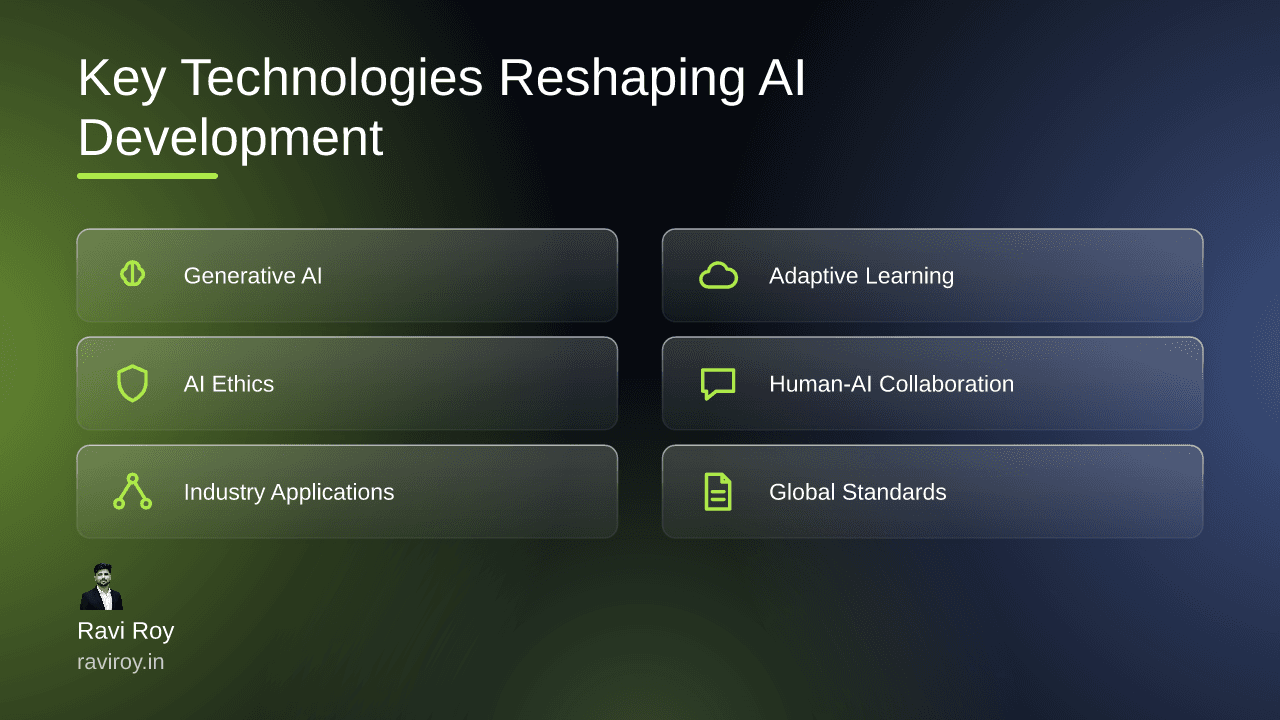
Key Technologies Reshaping AI Development
The advancements in AI technology are fascinating and varied. Understanding these key technologies can offer insights into their implications for the future.
Generative AI
Generative AI has mushroomed beyond simple content creation into applications that span various fields. In architecture, for example, AI can generate functional designs based on user inputs and constraints, streamlining the creative process. In the field of medicine, it can help synthesize new drugs by modeling how different chemicals interact, thereby accelerating the discovery phase, which traditionally takes years.
Multimodal AI
The rise of multimodal AI enhances the way machines process varied inputs—text, images, and sounds—simultaneously. For example, Google’s AI models can analyze a video, not just transcribe and interpret spoken words, but also recognize actions and objects, leading to more contextual understanding. As organizations leverage multimodal AI, they can improve their data integration and user interactions, creating a seamless experience that boosts engagement and productivity.
AI Robotics and Automation
Advancements in robotics integrated with AI are proving to be game-changing. Imagine a warehouse where robots equipped with AI can adaptively find the most efficient route for picking items, working alongside human workers to improve productivity. Companies like Amazon are already utilizing such AI-driven robots to enhance logistic operations, resulting in significant cost savings and improved workflow efficiency.
Ethical AI: Navigating the Challenges Ahead
While AI brings numerous benefits, it also poses challenges that require thoughtful consideration.
Importance of Ethical AI Principles
Ethical AI emphasizes the need for a framework that governs AI’s development and deployment. As reliance on AI grows, issues such as bias, accountability, and transparency become critical. In a world where algorithms can make life-altering decisions—from job applications to loan approvals—ensuring fairness is essential. Organizations like the AI Ethics Lab are developing guidelines to help navigate these complex waters, emphasizing the need for diverse data sets and transparent methodologies.
Primary Concerns Regarding Data Security in AI
Data security is a significant concern in AI development. Many AI applications rely on vast amounts of data, making them susceptible to breaches. With increasing reports of cyber-attacks, protecting user data and ensuring secure AI systems is paramount. Implementing robust encryption, regulatory compliance, and constant monitoring of algorithms are vital steps companies must take to safeguard sensitive information.
Human-AI Collaboration and Its Transformational Potential
AI isn’t just a tool; it’s becoming an integrated partner in our workflows.
Changing Workflows
The nature of work itself is shifting as human-AI collaboration becomes more prevalent. Traditional tasks are evolving, blending human intuition and creativity with AI’s efficiency. For example, in customer service, chatbots can handle basic inquiries, allowing human agents to focus on more complex matters, thereby enhancing the customer experience. This shift is indicative of a more harmonious relationship between humans and technology, enhancing productivity and engagement within the workplace.
Impact on Knowledge Management
AI is altering how we manage knowledge. Tools like AI-assisted note-taking applications can synthesize and categorize information, making it easier to retrieve data when needed. As a result, workers are increasingly relying on AI to organize knowledge, fostering an environment where information is accessible and actionable. Examples such as Notion AI or Roam Research illustrate this shift, as they blend human insights with AI capabilities adeptly.
AI Innovation Across Industries
Far from being confined to tech, AI innovation is finding its footing in diverse sectors.
Integration in Niche Industries
AI is making waves in niche markets, impacting industries that have traditionally lagged in technological adoption. For instance, in agriculture, AI-driven analytics are helping farmers predict crop yields and optimize resource usage. Case studies highlight how businesses like precision farming startups are gaining traction, leveraging AI to make data-driven decisions that enhance productivity and sustainability in farming practices.
Impact on Small Businesses
Small businesses stand to gain significantly from AI advancements, allowing them to compete against larger entities. Tools such as automated customer relationship management (CRM) systems are making it easier for small business owners to analyze customer data, deliver personalized marketing, and improve sales strategies. While the adoption of these technologies comes with its unique challenges—such as budget constraints and training needs—the long-term benefits can be substantial.
Global Perspectives on AI Ethical Standards
As AI development continues to flourish, ethical considerations vary greatly around the globe.
Comparative Analysis of Ethical Standards
Different countries approach AI ethics in unique ways, each influenced by cultural and regulatory contexts. For example, European Union guidelines emphasize transparency and citizen engagement, while the U.S. is taking a more flexible, industry-led approach. This disparity highlights the need for a global dialogue on best practices in ethical AI usage.
AI Regulations Around the World
Regulatory frameworks play a crucial role in shaping AI's future. Countries like Canada and Japan are actively working to create strategies and laws that address both innovation and ethics in AI. Notably, the EU's General Data Protection Regulation (GDPR) has become a benchmark for data protection, guiding how organizations worldwide handle personal information in an AI-driven landscape.
AI innovation is reshaping the future of development, presenting new opportunities and challenges across industries. The intersection of cutting-edge technology and ethical considerations will define the next chapter of artificial intelligence.
What unique challenges or opportunities do you think AI innovation will create in your industry?
💬 Join the conversation — share your take in the comments and tell us what you’d add.